
Using traditional musical instruments, many folk artisans in Dong Nai are quietly preserving, creating, and passing on the music of a land with nearly 330 years of formation and development.
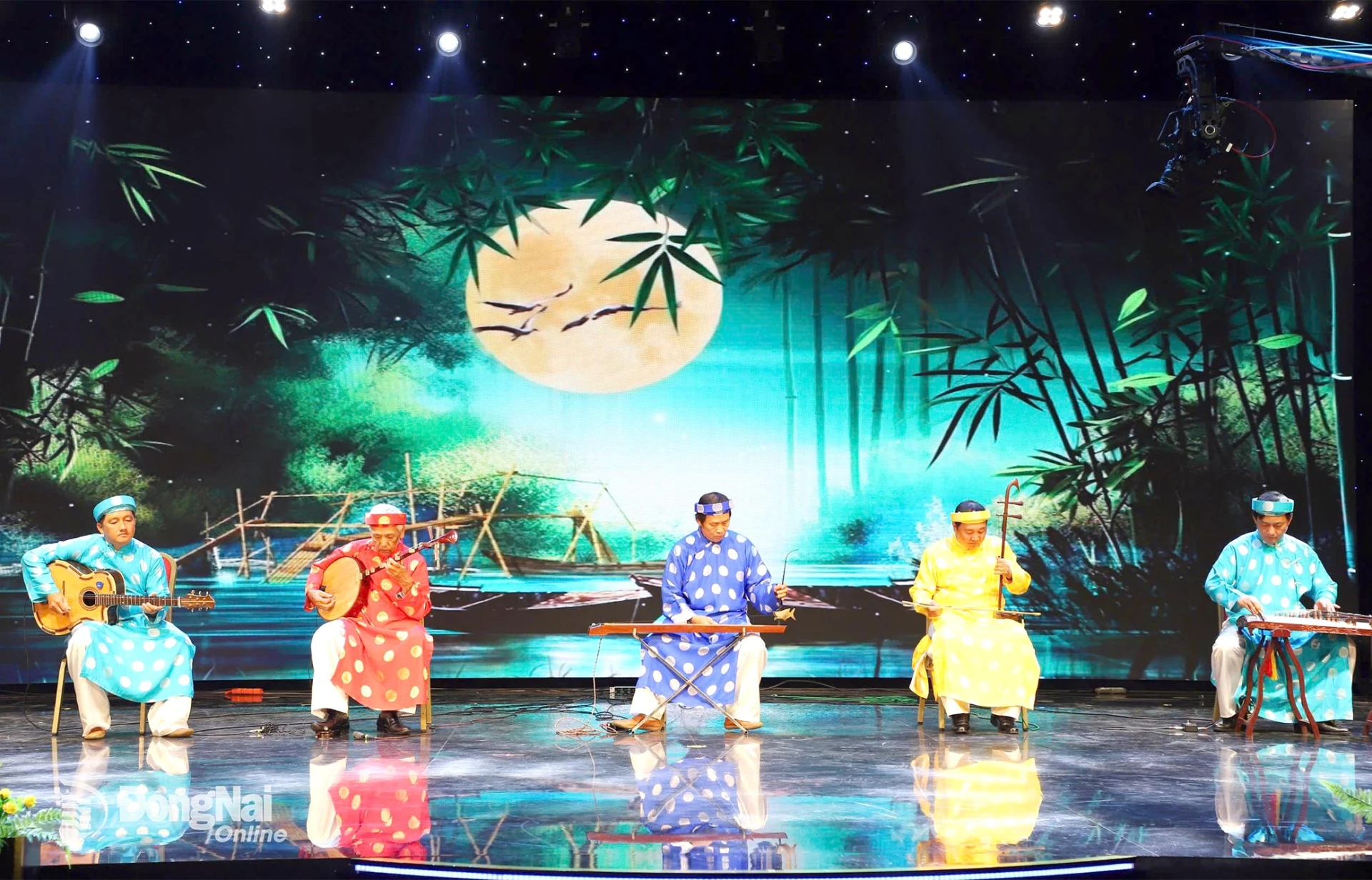 |
| From left: folk artisans Van Ut, Le Van Loi, Tran Van Ri, Luu Tan Quoc, and Pham Van Nhan, members of the Dong Nai City Don Ca Tai Tu Club. |
In 2026, the Vietnam Folk Arts Association conferred the title of Folk Artisan on six artists from Dong Nai: Pham Van Nhan, Luu Tan Quoc, Pham Ngoc Trai, Tran Van Ri, Le Van Co, and Luong Thanh Tung. The recognition acknowledges their long-standing dedication and efforts to promote traditional cultural values within the community.
Telling Dong Nai’s stories through traditional music
Musician Pham Ngoc Trai (stage name Van Ut), from Trang Dai Ward, is one of Dong Nai’s folk artisans who took up the guitar out of a love for the instrument. Since he began learning the instrument, the guitar has accompanied him at numerous art programs and cultural events in Dong Nai and Ho Chi Minh City. In addition to performing, he has composed music and participated in many bands and traditional ceremonial music ensembles.
In 2008, Van Ut officially joined the city's Don Ca Tai Tu (Southern Amateur Music) Club and has since actively brought the sound of his instrument to audiences, particularly to people in remote and isolated areas. He frequently joined fellow club members in city and regional Don Ca Tai Tu competitions and festivals, winning numerous gold and silver medals.
"For me, every time I have the opportunity to pick up my instrument and perform for people in Dong Nai, whether at a major event or on a small stage, it is a joy. The music helps me connect with the audience and contributes in a small way to bringing ethnic music closer to daily life. The applause from listeners after each performance motivates me to continue learning, practicing, and remaining dedicated to the instrument, contributing to the preservation of our homeland's traditional musical values," said artisan Van Ut.
Also choosing folk music as part of his life, folk artisan Pham Van Nhan has more than 30 years of experience in amateur artistic activities. He can play various instruments, including the dan tranh (16-stringed zither), the organ, and the guitar, and is currently a member of the Dong Nai City Don Ca Tai Tu Club.
Without formal professional training, Nhan acquired most of his playing skills through listening, memorization, and self-practice. Cultural exchanges, festivals and arts performances have provided opportunities for him to hone his craft, learn from his predecessors, and perfect his performance skills.
According to artisan Pham Van Nhan, technique is only one part of what is required of a dan tranh player in the Don Ca Tai Tu Club. What is important is knowing how to listen and coordinate with other instruments so that the instrumental music blends with the vocals.
"A musician must be very precise. Just one wrong beat can affect both the music and the vocals. Therefore, every time we go on stage, members must remain focused and coordinate well. Through folk music, we want to tell the public more stories about the culture and people of Dong Nai," said Nhan.
For folk artisan Luu Tan Quoc, the dan co (two-string fiddle) has been his companion for nearly 30 years. During this length of time, he has also actively participated in mass arts movements in Long Thanh Ward and the activities of the Dong Nai Center for Culture and Cinema.
According to Quoc, learning and performing the dan co are not too difficult. However, to become a skilled player capable of performing in many places, one needs more than talent; passion remains the most important factor. It is this passion that has kept him attached to the city's Don Ca Tai Tu Club for many years, through which he inspires others and shares his love of traditional instruments with those who appreciate traditional music.
The title adds motivation to pass on the craft
For those passionate about keeping the flame of traditional art alive, receiving the Folk Artisan title in 2026 holds special significance. The title recognizes their efforts to practice, preserve, and pass on the nation's folk artistic values. It also motivates them to continue their work, which requires a great deal of time and effort but rarely puts them in the spotlight on stage.
Folk artisan Pham Lo, Head of the city's Don Ca Tai Tu Club, believes that recognizing folk artists in traditional art teams, groups, and clubs is a great source of encouragement. To keep a craft alive, practitioners must first have love and perseverance; they must then take responsibility for passing on what they know to the younger generation.
"The city's Don Ca Tai Tu Club currently has seven folk artisans who have been awarded the title by the Vietnam Folk Arts Association. This is a joy for the club members, while also placing a greater responsibility on us to preserve, conserve, and promote the values of the art form, which has been inscribed by UNESCO on the Representative List of the Intangible Cultural Heritage of Humanity. We will continue to create more opportunities for young people to gain exposure to Don Ca Tai Tu, learn to play instruments and sing, and better understand the art form through local cultural activities," emphasized Lo.
In today's cultural life, the sounds of the dan tranh, dan co, guitar, and dan bau (monochord) continue to be heard on stages, at festivals, and in community artistic activities. With their passion, perseverance and suitable forms of presentation, Dong Nai's folk artisans are contributing to the preservation and transmission of traditional music, ensuring that the melodies associated with the culture of this land—with its nearly 330 years of formation and development — continue to resonate and spread throughout the community.
On September 23, at the Dong Nai Literature and Arts Association, the city's Folk Arts Chapter organized a meeting and presented decisions conferring the Folk Artisan title in the field of Don Ca Tai Tu. This was also an opportunity for the artisans to meet, exchange views and share experiences from their artistic activities and their journeys to preserve and promote the cultural values of the Dong Nai region.
By My Ny – Translated by Minh Hong, Thu Ha

Thông tin bạn đọc
Đóng Lưu thông tin