
Amid rapid advances in science and technology, elevating urban culture in the digital age will help preserve and promote traditional cultural identity while making greater use of modern technology to build smart and livable cities.
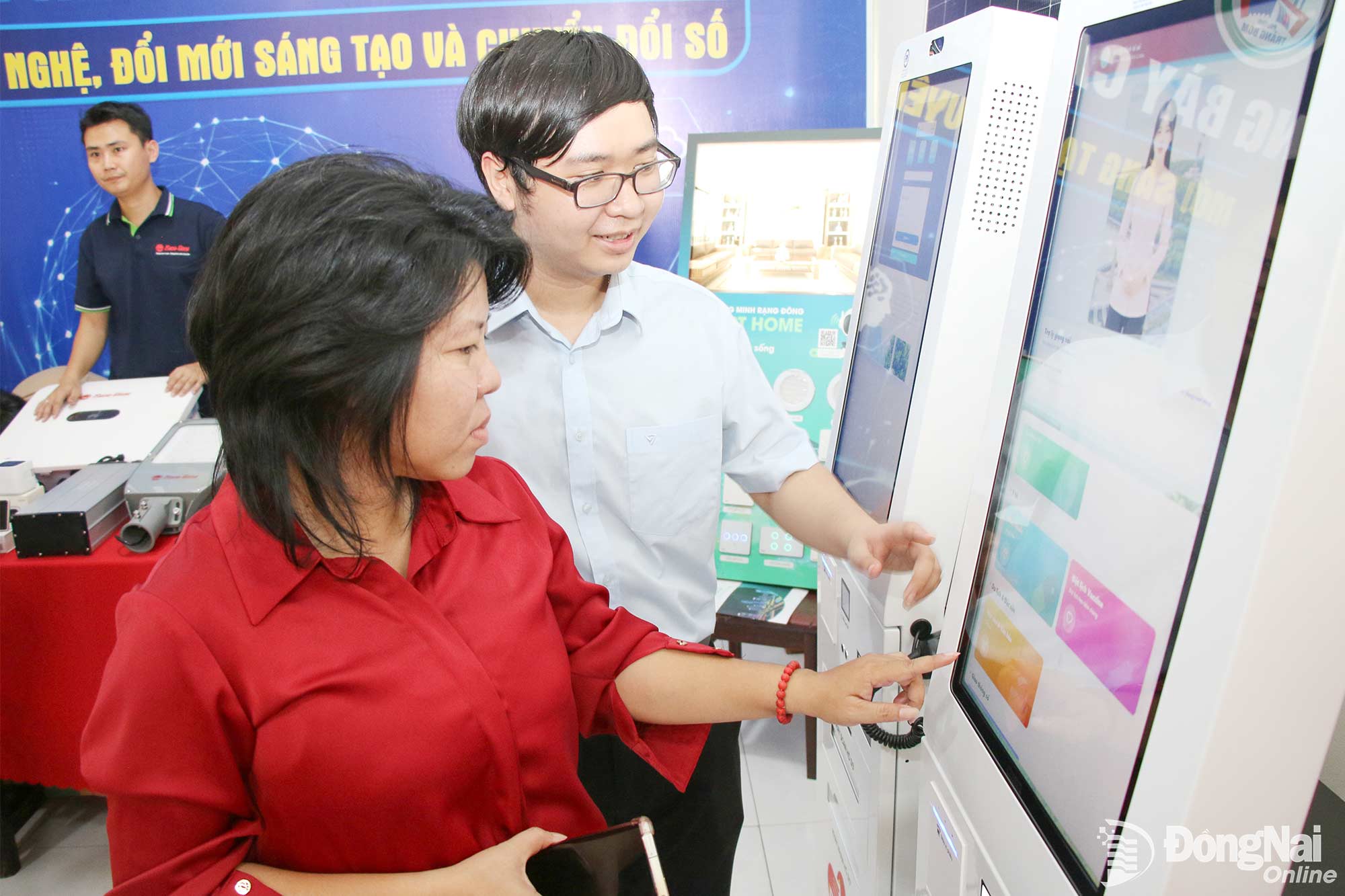 |
| Residents experience digital technology products showcasing local cultural features and specialties at the launch ceremony of an innovation hub in Trang Bom Ward. |
The Politburo’s issuance of Resolution No. 80-NQ/TW on the development of Vietnamese culture and Resolution No. 57-NQ/TW on breakthroughs in science and technology development, innovation and national digital transformation carries strategic significance. For the city, the combination of the two resolutions is the “key” to making an important contribution to realizing the goal of rapid growth and sustainable development.
Promoting civilized and modern urban development
Advancing science and technology alongside cultural development will create favorable conditions for building a civilized and modern city. Developing culture in tandem with sustainable industry and services and smart urban development, particularly by capitalizing on local potential and advantages when Long Thanh International Airport becomes operational, will provide an important resource for Dong Nai’s comprehensive development.
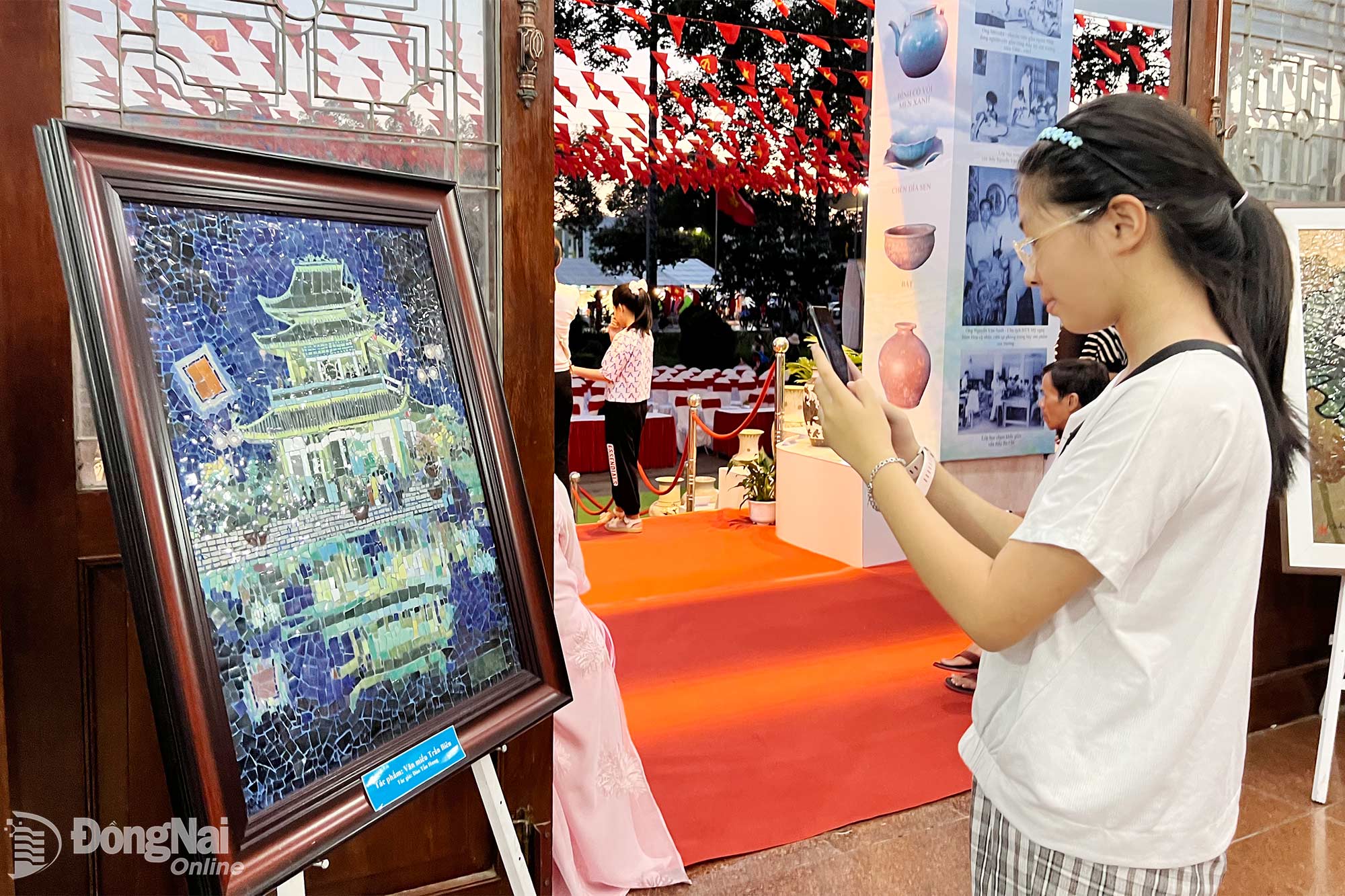 |
| Residents visit an exhibition of Bien Hoa ceramic paintings at the Dong Nai Museum. |
Prof. Dr. Ngo Thi Phuong Lan, President of the University of Social Sciences and Humanities, Viet Nam National University Ho Chi Minh City and Member of Dong Nai City’s Socio-Economic Advisory Group, said the emergence of Long Thanh Airport City and new growth poles would raise numerous issues related to migration, housing, employment, social welfare, public services, urban culture and relations among communities. The social sciences and humanities can contribute to managing the social and cultural changes generated by the development process, ensuring that urban development is not only modern in terms of infrastructure but also livable, inclusive and rooted in local identity.
Prof. Dr. Ngo Thi Phuong Lan, President of the University of Social Sciences and Humanities, Viet Nam National University Ho Chi Minh City, said that in the fields of culture and urban governance, the university could work with Dong Nai to identify, preserve and promote cultural values, develop a cultural heritage asset map and study the establishment of a “Dong Nai Heritage Route” connecting layers of heritage, landscapes, communities and memories of the region into a shared narrative. This would not only serve as a tourism product but also connect spaces, build a shared identity and transform cultural values into development resources.
Similarly, Assoc. Prof. Dr. Vu Tuan Hung, Director of the Southern Institute of Social Sciences, said preserving and promoting cultural values is an important resource for developing cultural industries and tourism, thereby creating a sustainable development ecosystem and promoting resources for local socio-economic development. When cultural elements are appropriately utilized while cultural values are preserved and promoted amid integration, industrialization and modernization, they can generate sustainable development value and stimulate service sectors, particularly tourism-related activities. The cultural industry can contribute to comprehensive development while providing an important boost to local GRDP growth and the goal of double-digit economic growth.
Applying science and technology to preserve and promote cultural values will create favorable conditions for the development of the cultural sector and society as a whole amid the locality’s new development context.
Pham Van Trinh, Member of the City Party Committee and Director of the Department of Science and Technology, said that science, technology and innovation have been identified as the foundation and core drivers. Meanwhile, digital transformation is a key tool for accelerating breakthrough socio-economic development in Dong Nai City. However, he noted that such growth can only be truly sustainable when built on a strong cultural foundation. The intersection of technology and culture can make major contributions by creating new economic drivers through the “digital cultural industry” and ensuring balanced and sustainable development.
In particular, Dong Nai’s digital transformation process puts residents and businesses at the center. Applying digital technology to culture, sports and community-based tourism will not only improve the quality of social life but also enhance interaction and strengthen ties between the authorities and local communities.
Focusing on sustainable development solutions
Amid efforts to shift toward a more in-depth growth model, driven by breakthroughs in science and technology, digital transformation and innovation and by smart urban development, cultural development remains an important foundation for sustainable growth.
Ly Hoang Hoai Anh, a resident of Tran Bien Ward, said: “What many young people and I look forward to most is a breakthrough in investment in local cultural facilities and institutions. To match the stature of a modern city, young people like us need creative cultural spaces, as well as modern, multifunctional arts and sports centers.”
According to many experts, science and technology create speed, while culture serves as a “regulator.” Combining the two will help Dong Nai proactively identify and mitigate the negative impacts of technology on the environment and society, while ensuring that residents can benefit from the fruits of development in a safe and healthy environment.
Pham Van Trinh added that to effectively integrate digital transformation with the preservation and promotion of cultural values, Dong Nai City’s science and technology sector has identified several key solutions, including digitizing heritage and developing cultural databases; strengthening coordination and deploying digital platforms for cultural and tourism management; creating and protecting a safe digital cultural environment; and stepping up communications and improving digital skills among the population.
By Hai Quan – Translated by Mai Nga, Minho
Thông tin bạn đọc
Đóng Lưu thông tin