
Dong Nai has a diverse agricultural sector, with large, concentrated raw-material areas serving its processing and export industries. However, the treatment of agricultural by-products remains an environmental challenge. In recent years, local businesses have partnered with Japanese companies on circular economy projects that turn by-products into useful resources, reduce waste and make more efficient use of available materials.
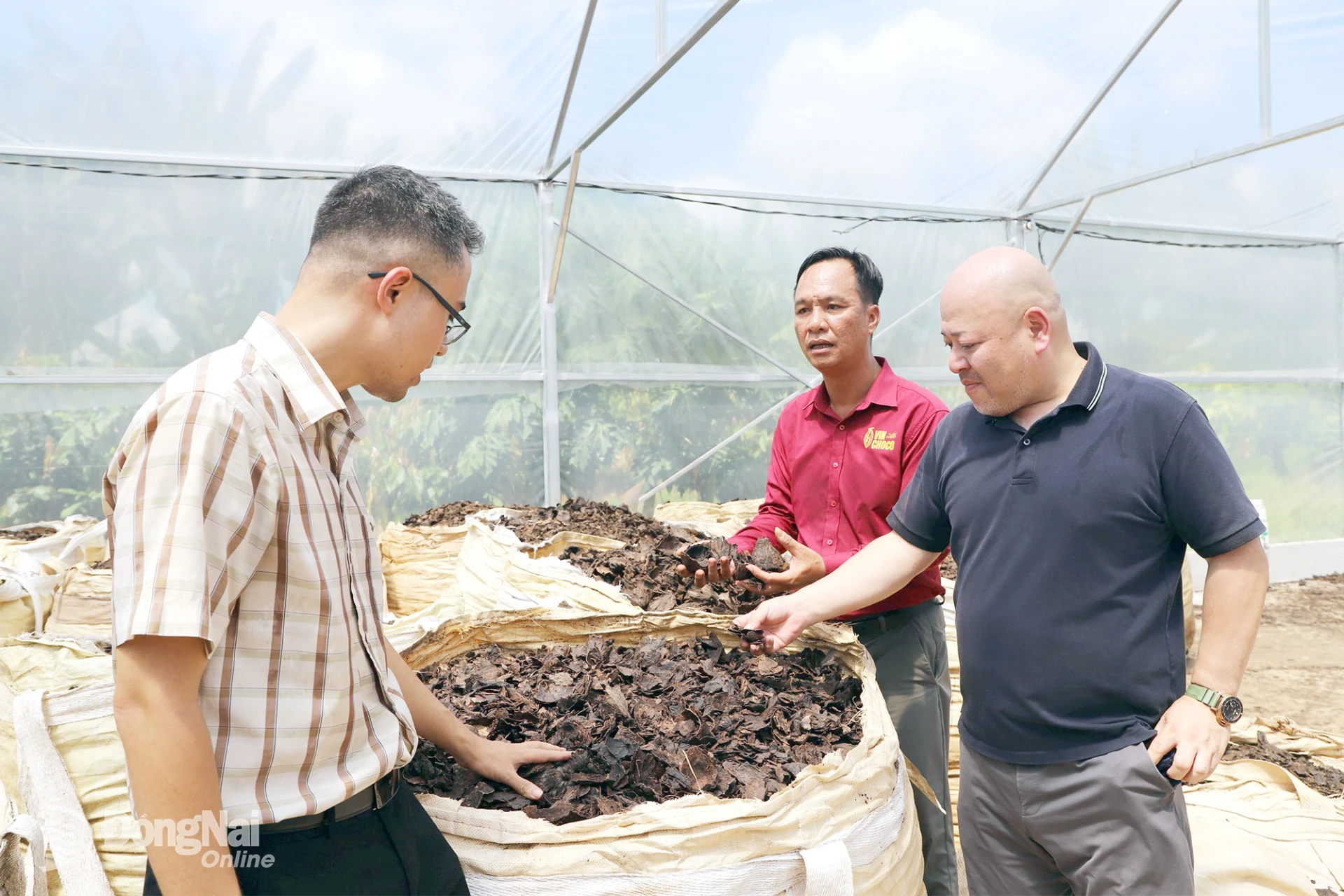 |
| A representative of Tromso Joint Stock Company (JSC) (right) inspects the production of biochar from cocoa shells at Trong Duc Cocoa Co., Ltd. in Phu Hoa Commune. |
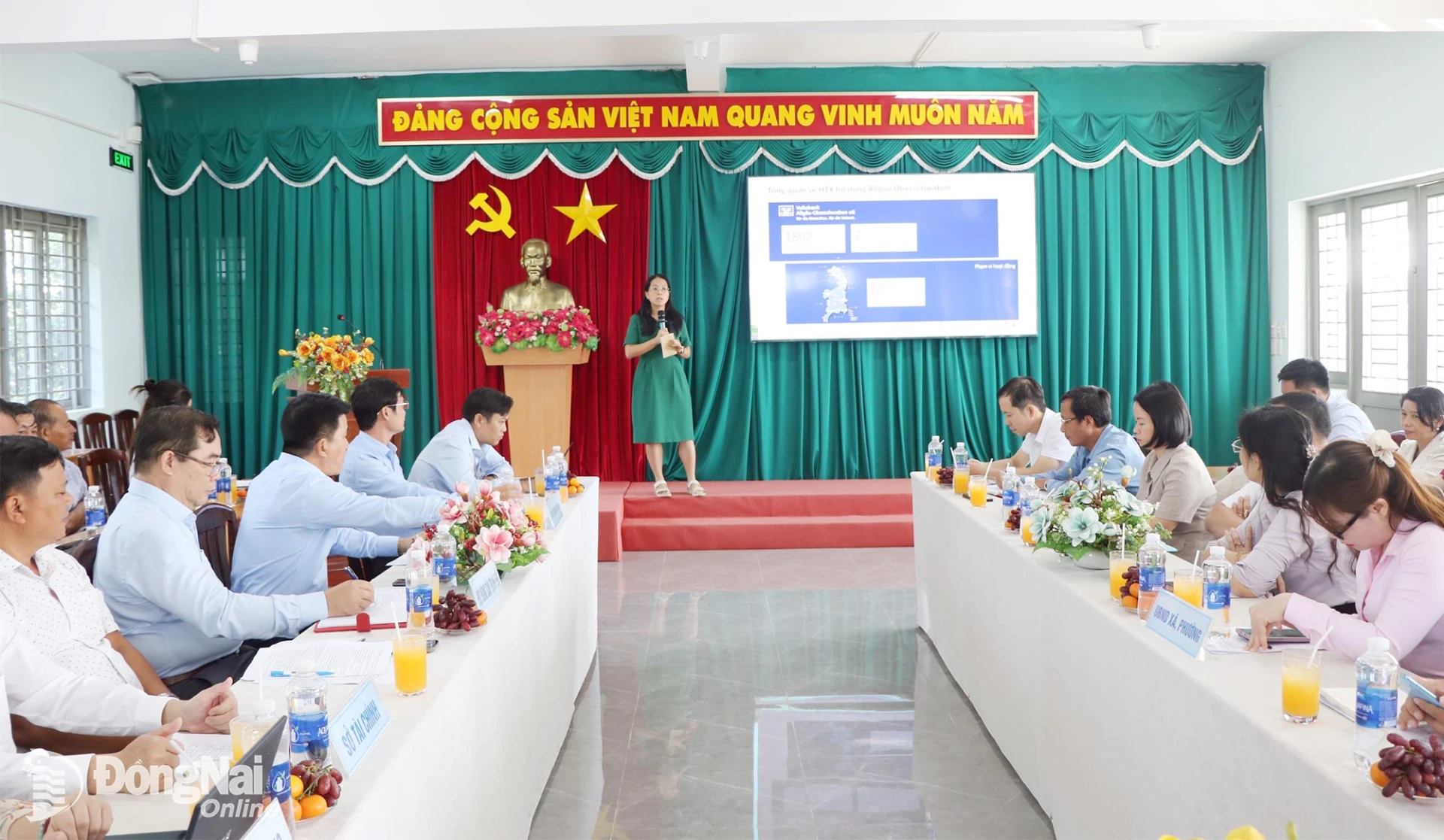
The partnership was also a key focus of a conference to sign a cooperation agreement between the Dong Nai Department of Agriculture and Environment (DoAE) and the Commerce, Industry and Labor Bureau of Hiroshima Prefecture, Japan. The cooperation is in line with Dong Nai's plans to restructure its agricultural sector toward high-tech, circular and low-emission production models, contributing to Vietnam's goal of achieving net-zero emissions by 2050.
Promoting cooperation and circular economy development
Dong Nai has favorable conditions for developing large-scale commercial agriculture linked to processing industries and markets. The city has approximately 4 million pigs and 36.5 million poultry. More than 90% of solid livestock waste, including manure and bedding materials, is collected and treated, providing a substantial source of materials for organic fertilizer production and other circular economy activities. In crop production, agricultural land covers more than 1 million hectares, accounting for 84.32% of the city's natural area. More than 1.5 million tonnes of by-products from cultivation and preliminary processing are generated each year, of which approximately 551,000 tonnes are collected and treated. These materials have considerable potential for reuse in agricultural production and processing.
Le Thi Anh Tuyet, Deputy Director of the DoAE, emphasized that environmental protection and circular economy development in agriculture are key areas of cooperation between Dong Nai and Hiroshima Prefecture. Dong Nai is particularly interested in working together on solutions for treating livestock waste and production wastewater, utilizing agricultural by-products and reducing emissions.
Kakegawa Masako, Director of Industrial Policy at Hiroshima Prefecture's Commerce, Industry and Labor Bureau, said that since 2012, Hiroshima has supported local businesses in expanding their environmental technology operations overseas, primarily in Southeast Asia. The Hiroshima Environmental Business Promotion Council was established to promote business development in the environmental and energy sectors, both in Japan and overseas. The project jointly undertaken by Hiroshima-based Tromso JSC and Dong Nai's Trong Duc Cocoa Co., Ltd. to turn cocoa shells into biochar has paved the way for a memorandum of understanding on cooperation between Dong Nai and Hiroshima Prefecture.
“We hope to help address Dong Nai's environmental challenges by applying technologies and solutions developed by businesses in Hiroshima Prefecture. We also hope that the two localities can promote economic development by expanding business ties between companies on both sides,” Kakegawa said.
Recycling agricultural by-products for green farming
In recent years, businesses in Dong Nai have partnered with Japanese companies on projects to turn agricultural by-products into useful resources, contributing to green and circular farming practices.
For more than a year, Trong Duc Cocoa Co., Ltd. and Tromso JSC have been working together on a project to convert cocoa shells into biochar for agricultural use, while also exploring the potential for generating carbon credits.
Uesugi Masaaki, Chairman and General Director of Tromso Vietnam Co., Ltd., said the company chose to work with Dong Nai because of the extensive areas devoted to cocoa, durian and coffee cultivation, which provide a plentiful supply of by-products for biochar production. Under its partnership with Trong Duc Cocoa, the company has invested in production facilities, drying systems, machinery and technology to make biochar from cocoa shells. In the initial phase, the facility is expected to process approximately 6,000 tonnes of cocoa shells and 8,000 tonnes of durian shells annually. Heat generated during biochar production is reused to dry cocoa and durian shells before they are fed into the production process. The company has also sent engineers to operate the equipment and specialists to guide farmers in making the most effective use of biochar.
Uesugi noted that the Japanese Government offers various support policies for businesses implementing cooperative projects in Vietnam, while Dong Nai has also shown strong interest in the initiative and created favorable conditions for its implementation.
Dang Tuong Khanh, Chairman and General Director of Trong Duc Cocoa Co., Ltd., said the company has developed cocoa-growing areas covering more than 1,300 hectares nationwide, including nearly 82 hectares in Dong Nai. The company purchases cocoa fruit from farmers for deep processing, generating substantial volumes of by-products. Cocoa shells alone account for approximately 6,000 tonnes a year, making effective collection and treatment essential. The project is testing cocoa-shell biochar as a soil amendment for both cocoa seedlings and mature trees. The biochar helps improve soil structure and the trees' ability to absorb nutrients, supporting healthy growth and higher yields. The partnership is expected to benefit not only the businesses involved but also farmers in the supply chain, who can use biochar to improve cultivation efficiency.
Meanwhile, Queen Farm Ecological Agricultural Limited Company in Phuoc Son commune, Dong Nai, has joined forces with Japan's Urabe Industrial JSC to test an organic lime product made from oyster shells. The product is being tested for soil improvement in durian cultivation, with the aim of helping growers meet export standards. The initiative is another example of a circular economy model that turns by-products into useful resources.
Urabe Shohei, General Director of Urabe Industrial JSC, said the company is working with Queen Farm Ecological Agricultural Limited Company to test whether the oyster-shell-based product can reduce the use of chemical fertilizers, improve soil quality and, in particular, limit cadmium uptake by durian trees. This could help growers address one of the challenges in meeting export standards for durian. The cooperation is expected to improve soil conditions in durian-growing areas and enhance the quality of durians for export. The partners also plan to expand the initiative to other fruit crops and vegetables. Vietnam has abundant supplies of oyster shells, which the company intends to source locally to produce fertilizer for domestic agriculture in the next phase.
With its extensive and diverse agricultural production areas, Dong Nai hopes to expand cooperation with Japanese businesses in post-harvest technology, deep processing, cold storage and logistics. The city also aims to strengthen trade ties with Japan and increase exports of its agricultural products to the market.
By B.Nguyen – Translated by M.Nguyet, Thu Ha
Thông tin bạn đọc
Đóng Lưu thông tin