
Long Thanh International Airport is a particularly important transport infrastructure project, envisioned as a new international aviation gateway for Southern Vietnam and the country as a whole. Beyond its strategic significance, the airport also boasts a number of distinctive and impressive features.
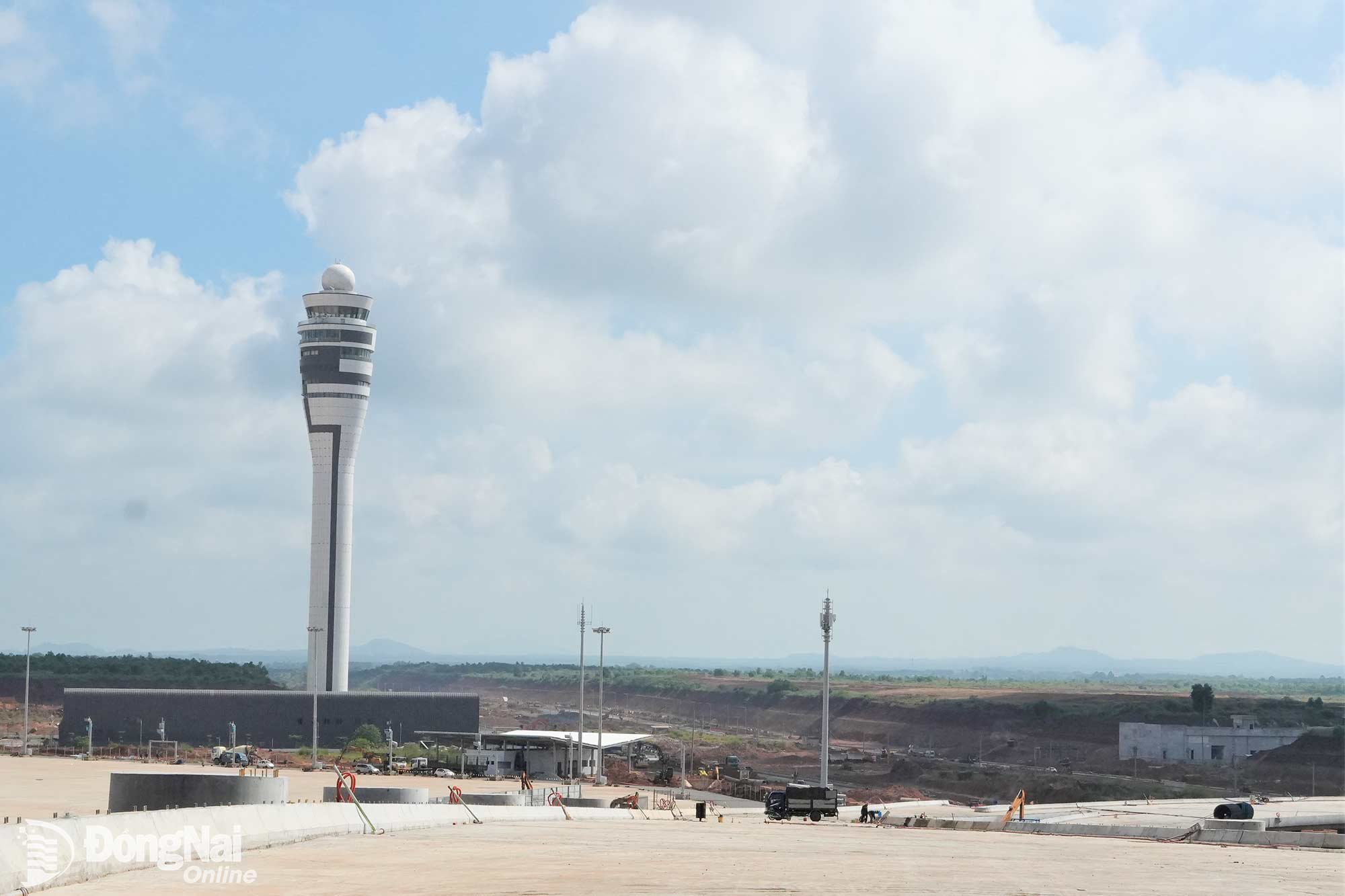 |
| Long Thanh Airport’s air traffic control tower. |
Given its scale, architecture, technology and supporting ecosystem, Long Thanh Airport is a nationally significant landmark and is expected to become one of Vietnam’s major international aviation hubs.
Capable of accommodating the world’s largest aircraft
According to Airports Corporation of Vietnam (ACV), the investor of Component Project 3 of the Long Thanh Airport project, Phase 1 is scheduled to officially commence operations on December 24. Earlier, at an early-October 2026 meeting with a Government delegation led by Politburo Member, Standing Deputy Prime Minister Pham Gia Tuc, Nguyen Duc Hung, Acting General Director of ACV, said the corporation would submit an official report to the Government and notify airlines of the airport’s planned opening date so they could proactively prepare their operational plans.
According to the ACV leader, the airport will be brought into operation following a phased approach, with its scale gradually expanded. Its commercial opening will mark an important milestone in the modernization of Vietnam’s national transport infrastructure network and help turn the country's aspiration of becoming a major international aviation transit hub into reality.
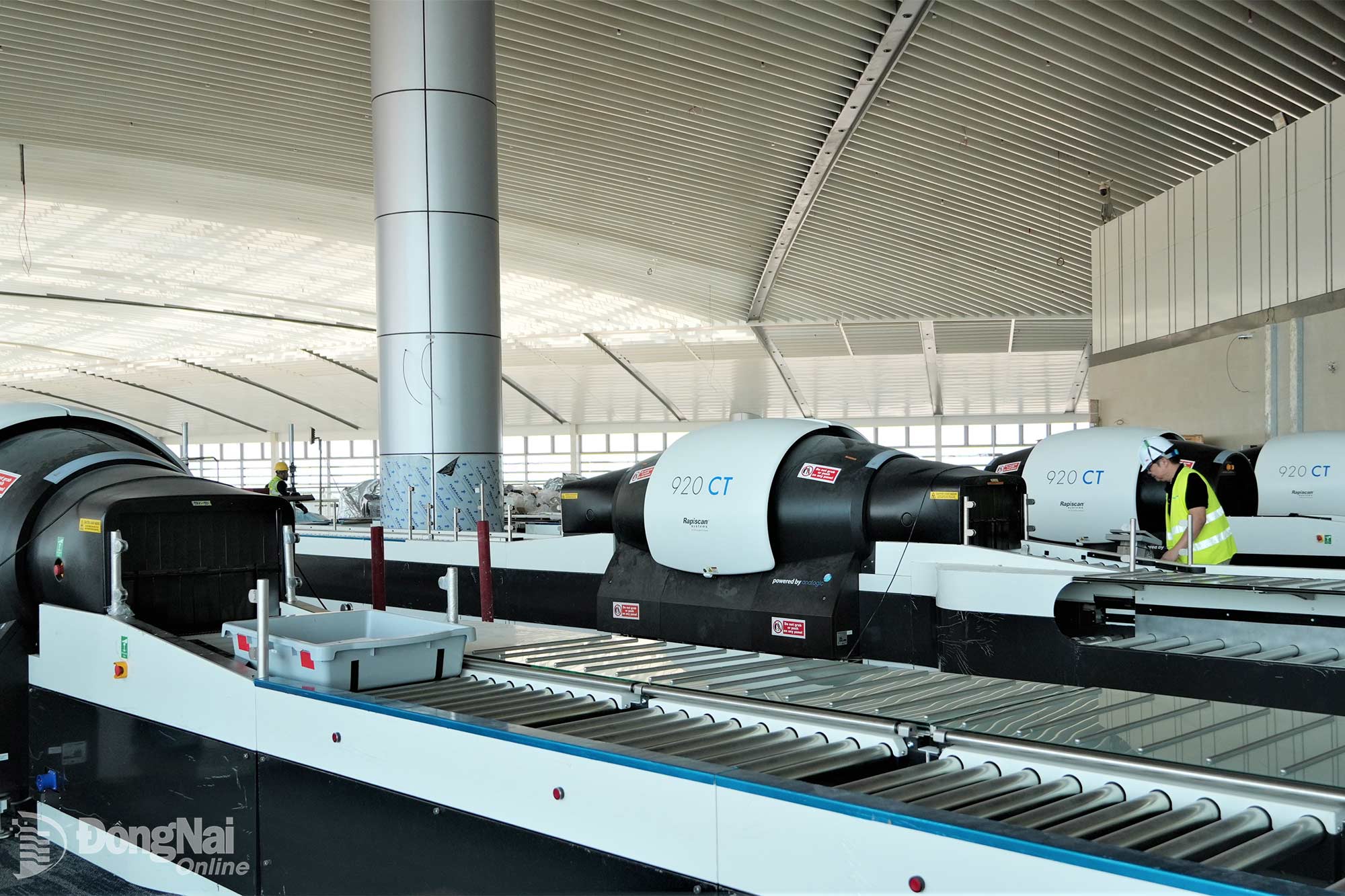 |
| Modern 3D baggage screening systems installed at Long Thanh Airport’s passenger terminal. |
Long Thanh Airport is being developed on a site covering 5,000 hectares in Long Thanh Ward. Upon completion of all phases of construction, it will have a capacity of up to 100 million passengers and 5 million tonnes of cargo annually, far exceeding that of other airports in Vietnam. Phase 1 alone is designed to handle 25 million passengers and 1.2 million tonnes of cargo per year.
Notably, the airport is planned to have four runways, each measuring 4 kilometers in length, making them the longest runways at any airport in Vietnam today. Two runways will be built during Phase 1. ACV said the runways at Long Thanh Airport will be capable of accommodating the world’s largest passenger and cargo aircraft currently in operation, including the Airbus A380 and Boeing 747-8.
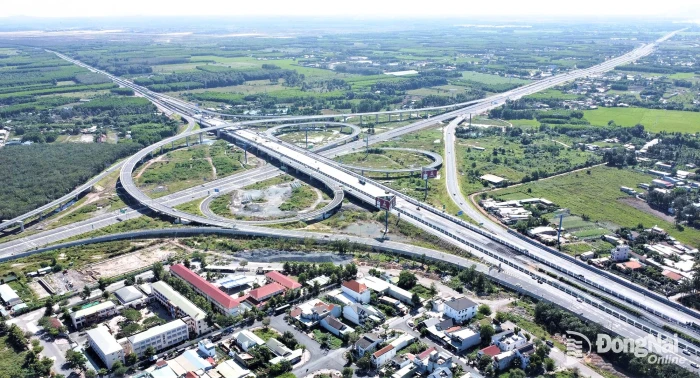
The airport is also being planned and developed alongside one of the country’s most modern and integrated supporting ecosystems, featuring a multimodal transport network comprising roads and railways, including high-speed rail and metro lines.
One notable feature is that Long Thanh Airport is envisioned as much more than a departure and arrival point for flights. Its surrounding area is planned to develop into a vibrant airport city featuring major commercial centers, large-scale duty-free shopping complexes, five-star hotels, international convention and exhibition centers, and modern logistics, aircraft maintenance and repair service hubs.
An architectural landmark
Long Thanh Airport is not only set to become Vietnam’s largest airport but is also being developed with the ambition of becoming a smart, modern airport featuring iconic architecture that helps promote Vietnam’s image, people and culture to the international community.
A key highlight is the architecture of passenger terminal, the “heart” of the airport. It consists of a central terminal and three wings, designed with separate passenger circulation routes. The building has one ground floor and three upper floors, with a roof peak exceeding 45 meters and a total floor area of approximately 376,000 square meters. The roof of the main terminal is designed to resemble layers of overlapping lotus petals, elegantly unfolding outward. The terminal also features a glass roofing system designed to maximize natural lighting, covering approximately 10,000 square meters. Inside, the interior design incorporates various traditional decorative materials, including bamboo, creating a blend of modern architecture and indigenous cultural identity.
In terms of technology, Long Thanh Airport will be equipped with advanced operational systems. These include biometric check-in and facial recognition technology, a high-speed automated baggage handling system (BHS), and an intelligent air traffic control tower.
According to ACV, the air traffic control tower, which serves as the “brain” overseeing all flight operations at Long Thanh Airport, is a smart control facility. Shaped like a lotus bud, the tower stands 123 meters tall, making it the tallest air traffic control tower in Vietnam.
With an architectural design that maximizes the use of natural light, Long Thanh Airport is also expected to be among Vietnam’s pioneering airports in renewable energy applications and efficient electricity and water consumption.
By Pham Tung - Translated by Mai Nga, Thu Ha


Thông tin bạn đọc
Đóng Lưu thông tin