
Behind the greenhouses growing a variety of crops in Bao Vinh Ward are brothers Ha Thanh Thy, 36, and Ha Anh Thuy, 35, who left their former jobs to return to their family’s land and take up farming with a new approach.
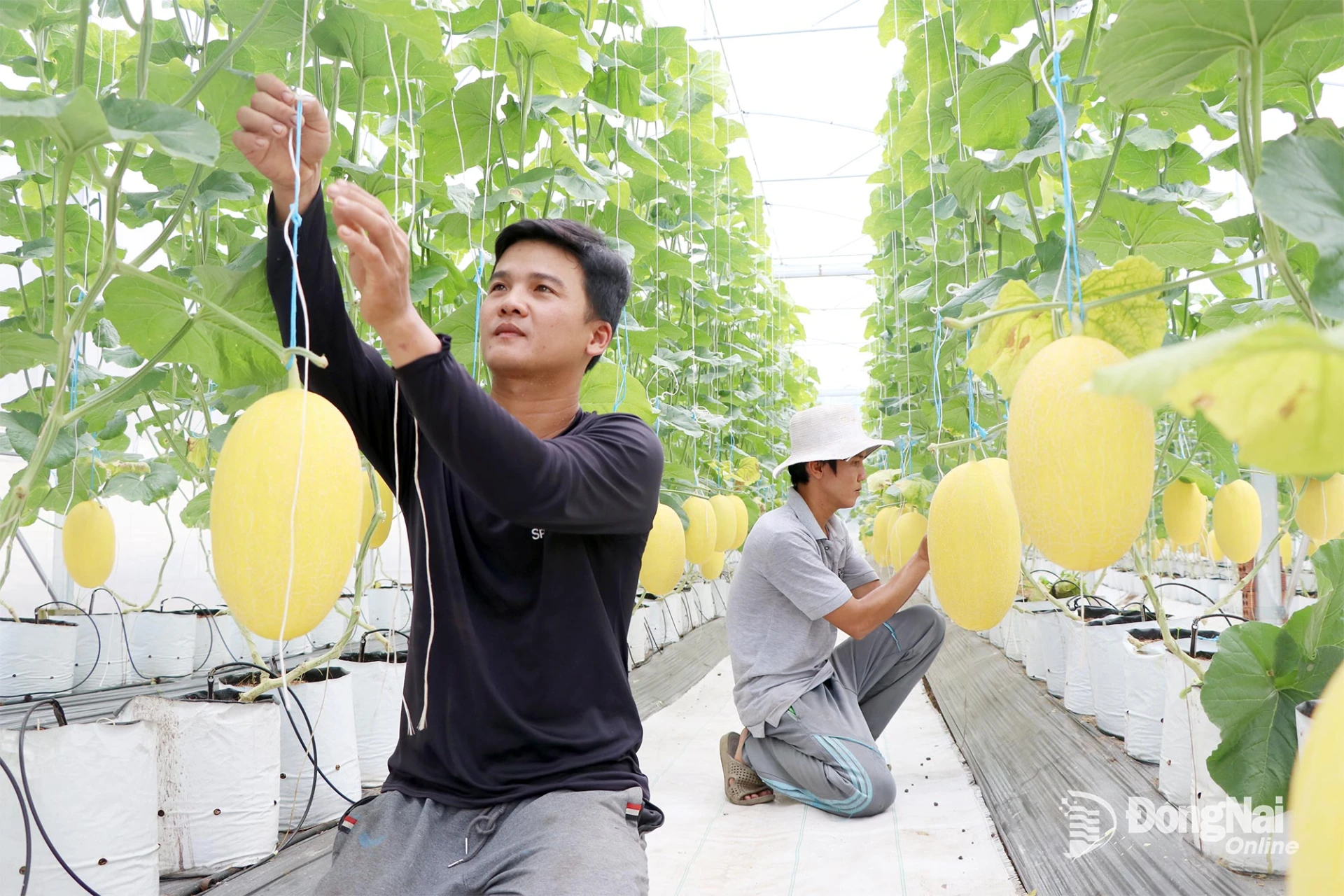 |
| Ha Anh Thuy tends to melons ahead of the harvest. |
Starting with their family garden, the brothers have gradually developed a clean farming model, adopted new technologies and brought safe agricultural products to market.
“Sowing green dreams” on their home soil
At Nhat Khuong Farm, an ecological garden in Bao Vinh Ward, plump yellow melons hang from trellises alongside lush rows of asparagus and growing pumpkins. The green garden today is the result of years of hard work by brothers Ha Thanh Thy and Ha Anh Thuy.
Before becoming young farmers, the brothers spent many years working as painters. Although the job provided a good income, they still hoped to return to their roots and build a livelihood on their family’s land.
Ha Anh Thuy said his parents were farmers. As a child, he often followed his father to the fields and became familiar with the soil, crops and farming seasons. He had always dreamed of turning the family’s land into a beautiful garden. However, their financial situation did not allow it at the time, and he lacked experience in modern farming.
Around 2020, the brothers decided to change direction. They began researching farming models on social media, learning how to build greenhouses, care for crops and experiment with different varieties.
The early years were challenging. As they invested more time, effort and money, the once-abandoned land gradually changed. Greenhouses were built, rows of crops were planted, and different growing cycles were tested. The brothers experienced their share of setbacks, with some crops failing to meet quality standards. Undeterred, they continued working additional jobs to earn an income while tending the garden.
As they gained more experience, their passion for farming grew. Today, their nearly one-hectare garden has several greenhouses where they rotate crops such as melons, asparagus, giant pumpkins, chili peppers and watermelons, with melons as the main crop. The farm generates a monthly profit of around VND50 million.
From the outset, Thy and Thuy have remained committed to clean farming. Their crops are grown using organic-based practices and without chemical inputs, aiming to produce safe food for consumers.
The brothers have also carefully planned production to ensure a year-round supply of produce. While one greenhouse is being prepared for a new crop, another is entering the harvest stage. Growing crops in greenhouses helps reduce their exposure to weather conditions, gradually improving product quality and consistency.
Producing clean food is one thing; getting it to consumers is another. With limited business connections, the brothers initially had to take their melons themselves to stores specializing in clean produce and local markets to introduce their products. Each melon handed directly to a customer gave them an opportunity to listen to feedback, adjust their farming methods and further improve the quality of their products.
As demand grew, the brothers began selling directly to customers in different provinces and cities through word-of-mouth referrals and online channels. They have also maintained a stable price of VND50,000 per kilogram for their melons rather than chasing short-term market fluctuations.
Applying technology to clean farming
If the greenhouses are where the brothers grow their crops, social media has become a “field” where they cultivate their brand.
Building on their initial success, Nhat Khuong Farm has expanded across nearly one hectare, with six greenhouses creating a diversified production area. Besides melons, the brothers also grow asparagus, giant pumpkins and various vegetables. These eye-catching products not only make the garden more vibrant but also open up a new direction for developing agricultural tourism experiences.
According to Ha Thanh Thy, the garden welcomes visitors on weekends to learn about greenhouse farming and purchase its products.
As they gained experience, the brothers chose to share what they had learned rather than keep it to themselves. Through online channels, they regularly share their farming process, crop-care techniques and practical experience. Some people visit the farm to learn from them, while others share their own experiences. In this way, stories about the garden have reached an increasingly wider audience through the brothers’ online channels, which now have more than 50,000 followers.
For the brothers, social media is both a way to reach customers and a means of building their brand and connecting with others working in agriculture. Each video and image of a crop does more than showcase their products. Meanwhile, it also tells the story of a young person pursuing clean farming.
Tran Thi Hong, a resident of Bao Vinh Ward and a regular customer of Nhat Khuong Farm, said her family often buys melons and green asparagus there and is satisfied with the quality of the products. Knowing where the produce comes from also gives her greater peace of mind when choosing food for her family.
According to Tran Van Viet, Chairman of the Bao Vinh ward Farmers’ Association, brothers Thy and Thuy are young farmers who have adopted a number of innovative approaches, particularly to increase the value of their products.
“The ward Farmers’ Association always supports its members throughout the production process, particularly by helping them access science and technology. For the brothers’ farming model, the association will continue to provide support in terms of capital and technical know-how, while creating opportunities for other farmers to visit and learn from them,” Viet said.
The combination of clean production, digital technology, brand building and garden tourism is opening up new avenues for local farmers to expand their businesses and improve their incomes.
“Our long-term plan is to turn this place into an ecological garden with a café, accommodation facilities and opportunities for visitors to experience farm life. For now, however, our main focus is on improving product quality,” Thy said.
By To Tam – Translated by M.Nguyet, Minho
Thông tin bạn đọc
Đóng Lưu thông tin