
Promoting digital transformation and supporting women’s economic development are key priorities for the Dong Nai Women’s Union (DNWU) chapters at all levels.
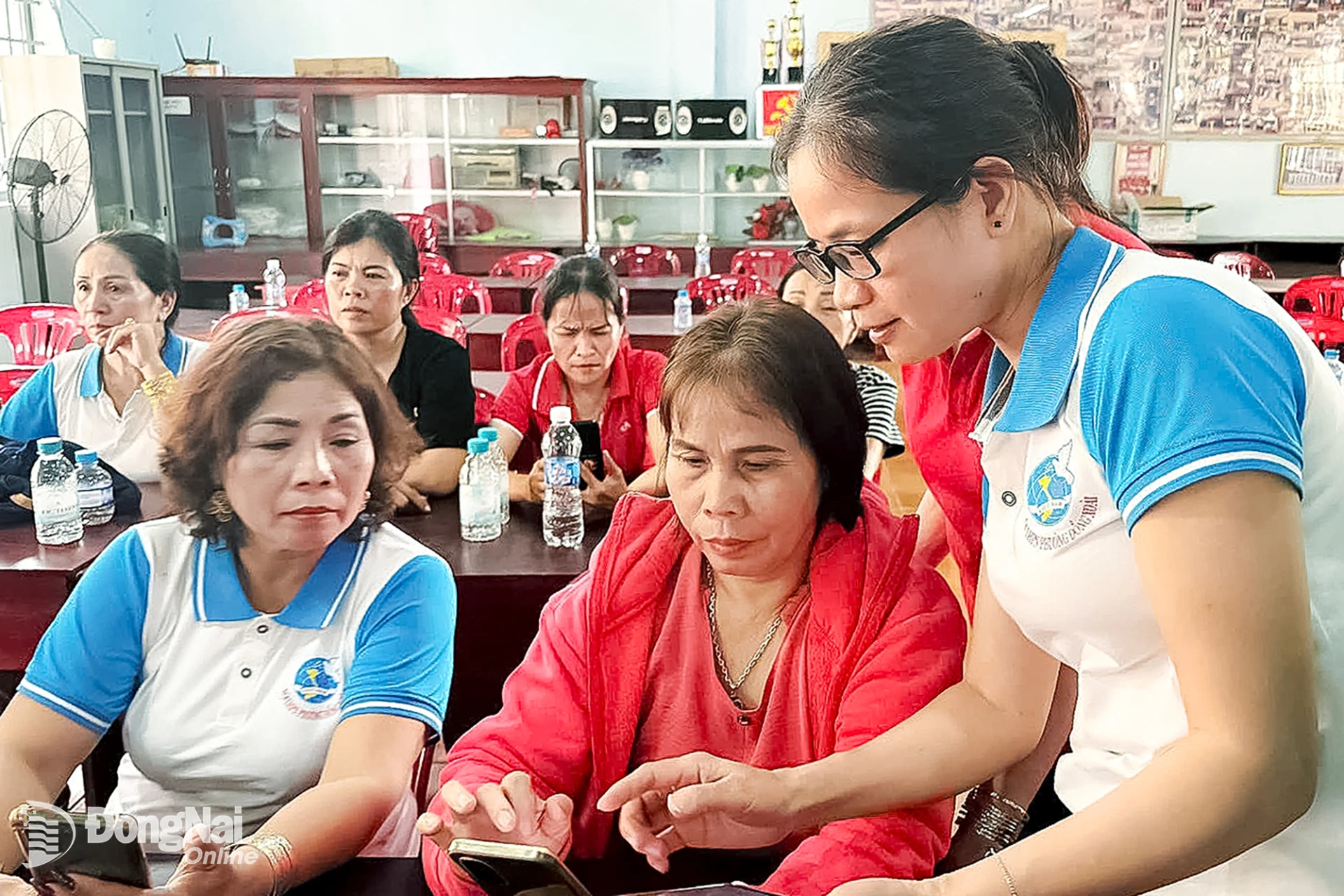 |
| The Dong Xoai ward Women’s Union members install apps for social insurance, Party member management and other services on smartphones. |
Many women who once struggled with technology and lacked confidence in using smartphones and social media have gradually acquired digital skills, enabling them to promote their products, reach new markets and boost their incomes.
Mastering digital technology
To help women build their capabilities comprehensively and adapt to a rapidly changing digital landscape, DNWU chapters at all levels are raising awareness and providing practical digital skills training, particularly for members with limited access to technology. Their initiatives focus on everyday applications, helping women put what they learn into practice.
Nguyen Thanh Phuong, Vice President of the DNWU, said the union had responded to Lifelong Learning Week 2026 by encouraging officials and members to pursue self-directed learning and gain practical experience with digital technology and artificial intelligence. It had also drawn up a 100-day peak campaign to promote the “Digital Literacy for All” model, raise digital awareness and help members install and use the DC4.0 neighborhood and hamlet management platform and the Dong Nai digital citizen app.
The DNWU is expanding the use of digital tools and artificial intelligence, strengthening the digital capabilities of its officials and members, and modernizing its operations. These efforts are helping women become more confident and proficient in using technology while enabling them to participate more fully in the development of digital government, the digital economy and digital society.
Nguyen Thanh Phuong, Vice President of the DNWU
In Dong Xoai ward, a “Women join hands in digital transformation” model has been launched with seven core members, led by Tran Thi Nguyet, Head of the Women’s Union branch in Quarter 1. Nguyet said the initiative provides practical guidance on digital tools and services, particularly for older women who may need extra support in using them.
Hoang Lan Anh, President of the Dong Xoai ward Women’s Union, said the union had worked with the ward’s Public Administration Service Center to help members complete administrative procedures, access online public services and use digital tools in their daily lives. Training has covered VNeID, QR-code payments, bank transfers and safe social media practices.
In Bom Bo commune, home to a large number of ethnic minority women, the commune Women’s Union has launched several models, namely “Digital literacy for all,” the “1+1 digital guides” and “Women support each other to develop digital skills”. Nguyen Thi An, President of the Bom Bo commune Women’s Union, said the commune had more than 1,300 union members, over 300 of whom had registered for these initiatives. Working with the commune public security, the Youth Union and community digital technology teams, the union has helped members activate Level 2 electronic identification accounts, link their health insurance information and adopt cashless payments.
So far, more than 150 members have used social media to promote and sell their own products. Around 1,200 use Zalo groups to share information, access documents and participate in union activities. These figures show how digital tools are becoming part of everyday life while creating new opportunities for women to earn an income.
Bringing products into digital marketplace
As they become more confident using social media and online platforms, many women are turning to digital tools to promote their products, connect with business partners and reach new markets.
Thi Khui, a M’nong woman from Bu Lach hamlet in Tho Son commune, Director of the Bu Lach Grassland Organic Cashew Agricultural Cooperative. She has brought more than 220 households cultivating a combined 1,200 hectares into the cooperative. Women number 165 of its members, accounting for 75% of the total.
Alongside coordinating production and maintaining quality standards, Thi Khui has used digital platforms to promote organic cashews, connect with customers and explore new markets. The cooperative has established links with seven partners in Europe. Digital tools also allow it to exchange information and monitor product quality remotely, helping build trust with potential buyers and support negotiations on sales agreements.
According to the cooperative, it exported 460 tonnes of raw cashew nuts in the 2025 crop year. In 2026, export volume exceeded 500 tonnes, while the cooperative’s profits surpassed VND20 billion.
Online platforms are also helping women bring traditional handicrafts to a wider audience. In Bom Bo commune, Dieu Thi Xia and other women produce and sell brocade textiles and ruou can, a traditional fermented rice wine consumed through long bamboo straws. Their products were previously sold mainly at home or displayed at exhibition spaces in the S’tieng Ethnic Culture Preservation Area in Bom Bo Hamlet. Xia now promotes them on TikTok, Facebook and Zalo, reaching more customers and receiving orders from beyond the local area.
Building on these results, the DNWU chapters at all levels across the city will continue to promote digital transformation and provide training tailored to members’ needs. Women’s unions in communes and wards have so far organized nearly 350 digital skills outreach sessions, recording more than 26,600 attendances, and launched 51 new models and initiatives. They are also making greater use of applications developed by the DNWU to help members apply digital tools more effectively in their daily lives and businesses.
By Q. Minh – Translated by M.Nguyet, Thu Ha

Thông tin bạn đọc
Đóng Lưu thông tin