
From the provision of parks and swimming pools to energy- and water-saving solutions and the coordinated planning of living spaces, green development is becoming a trend attracting growing interest from real estate businesses.
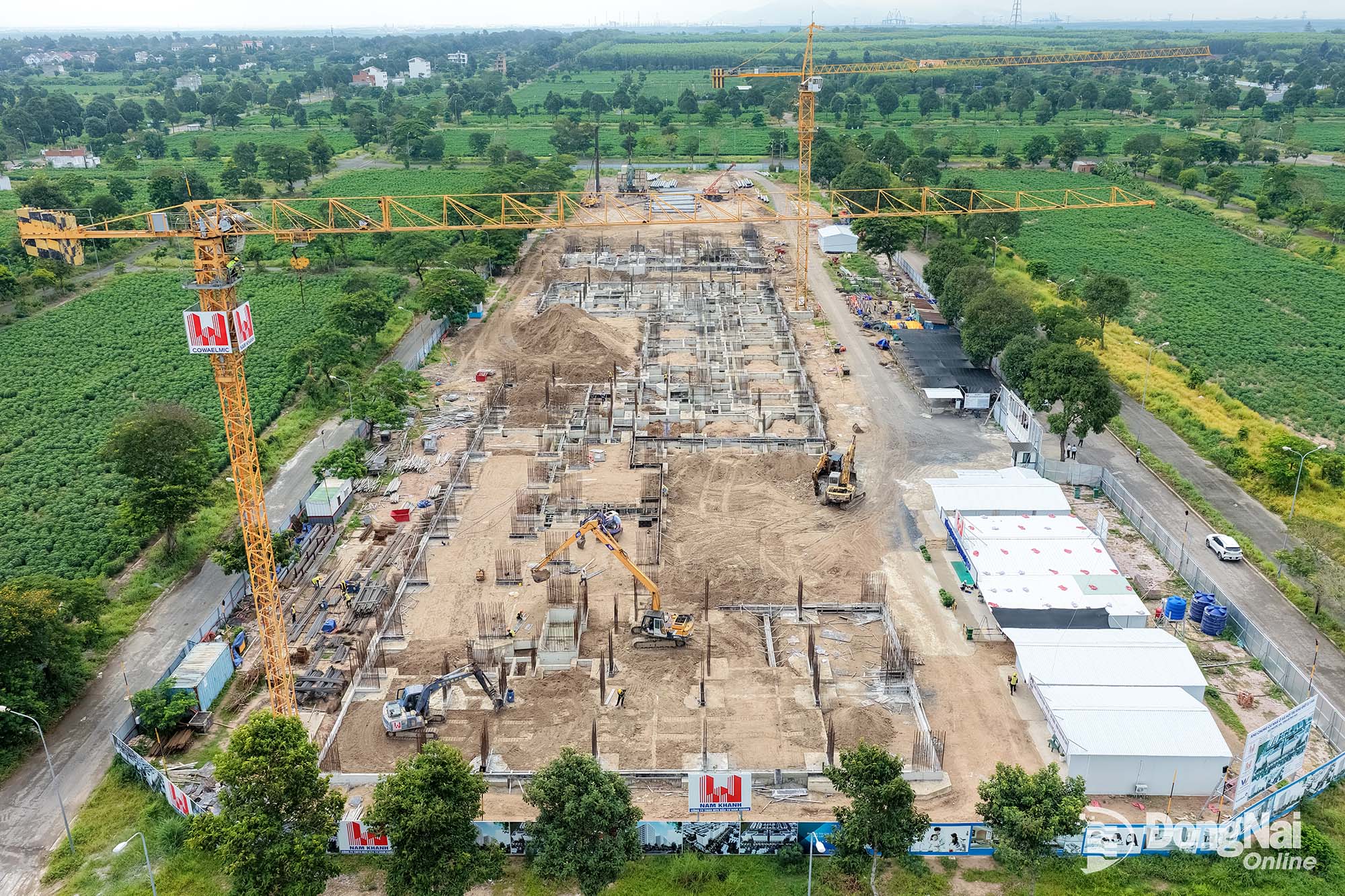 |
| Construction is underway on a housing project for low-income earners in Phuoc An Commune. |
This approach aims to improve residents’ quality of life, increase project value and contribute to Dong Nai’s sustainable urban development.
Greening development from master planning to individual apartments
Dong Nai is experiencing rapid urbanization and substantial population growth driven by migration. Alongside demand for housing, residents are increasingly concerned about the quality of their living environment, available amenities and opportunities to reduce household expenses.
Recognizing this trend, real estate businesses are incorporating green elements into investment and project development. Green spaces, parks, swimming pools and recreational areas are being combined with building design solutions, energy efficiency, water resource management, waste treatment and amenity operations. The goal is to create high-quality, integrated living environments that better meet residents’ needs.
According to Dang Thi Kim Oanh, Chairwoman of the Board of Directors and General Director of Kim Oanh Group, the company follows the principle of “creating value for customers wherever we go.” Its projects, ranging from premium commercial urban developments to housing for low-income earners, prioritize green infrastructure, including parks, outdoor recreation areas, sports facilities and landscaped spaces.
Politburo Resolution No. 16-NQ/TW, dated July 21, 2026, on the construction and development of Dong Nai City through 2035, with a vision to 2065, calls for a renewed approach to development and planning based on a long-term strategic vision. This includes an open development space, multidimensional transport infrastructure, a modern, multi-tiered and polycentric urban structure, and river systems and natural ecosystems as the principal landscape framework. The resolution also calls for the development of smart, green and climate-resilient urban areas.
For commercial housing, businesses are pursuing modern urban developments with integrated infrastructure, including wastewater treatment plants, shopping centers, parks, lighting systems and medium-voltage power networks. Coordinating these components within an overall master plan helps meet residents’ daily needs while providing a sound foundation for project management and operations.
Green development is also receiving growing attention in the social housing segment. Kim Oanh Group is currently developing four projects simultaneously in Dong Nai City, comprising approximately 5,000 apartments in total. These projects are being developed according to the Singapore-standard social housing model, with the aim of meeting the requirements of the international EDGE green building certification system, helping to save electricity and water and reduce emissions during use.
Regarding spatial planning and building management, Le Nhu Thach, Chairman of Bcons Group, said the company is implementing a commercial apartment project comprising more than 2,800 units in the city. The development is designed as a modern residential complex integrating commercial and service facilities, a kindergarten, community spaces, parking areas, greenery and coordinated technical infrastructure. Approximately 7,700 square meters of ground-level green space will help provide additional greenery in a rapidly developing urban area.
Bcons Group is involved in the project from design and construction through to management and operation, allowing quality to be monitored throughout the building’s life cycle. This is particularly important for large-scale residential developments, as the quality of the living environment depends not only on initial design but also on the ability to maintain amenities, infrastructure and landscaping once the project is operational.
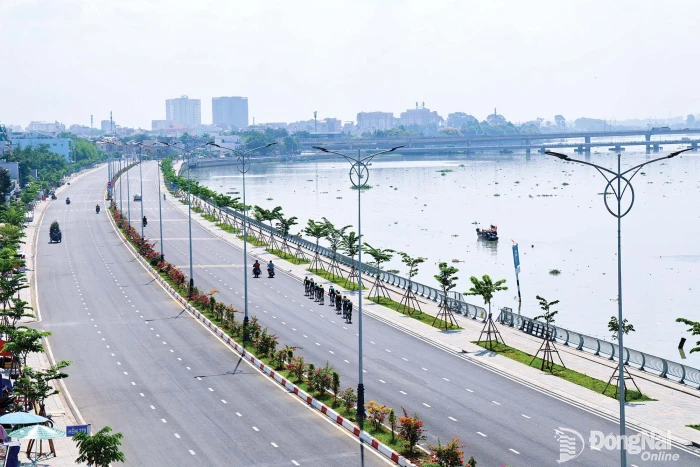
For major riverside urban developments such as Aqua City, Kim Quy Island and SwanBay, investors are also seeking to capitalize on the advantages of natural landscapes. Some projects allocate 70% of their land to amenities and green spaces, creating open areas for residents to relax, socialize and enjoy outdoor activities.
Laying the foundation for net-zero urban development
In early 2024, Dong Nai introduced its Carbon Emissions Reduction Plan through 2030, with a vision to 2050, setting a target of achieving net-zero emissions by 2050. Urban development is one of seven priority sectors identified for emissions reduction. More recently, Politburo Resolution No. 16-NQ/TW on the construction and development of Dong Nai City through 2035, with a vision to 2065, also established a development direction centered on smart, green and climate-resilient urban areas.
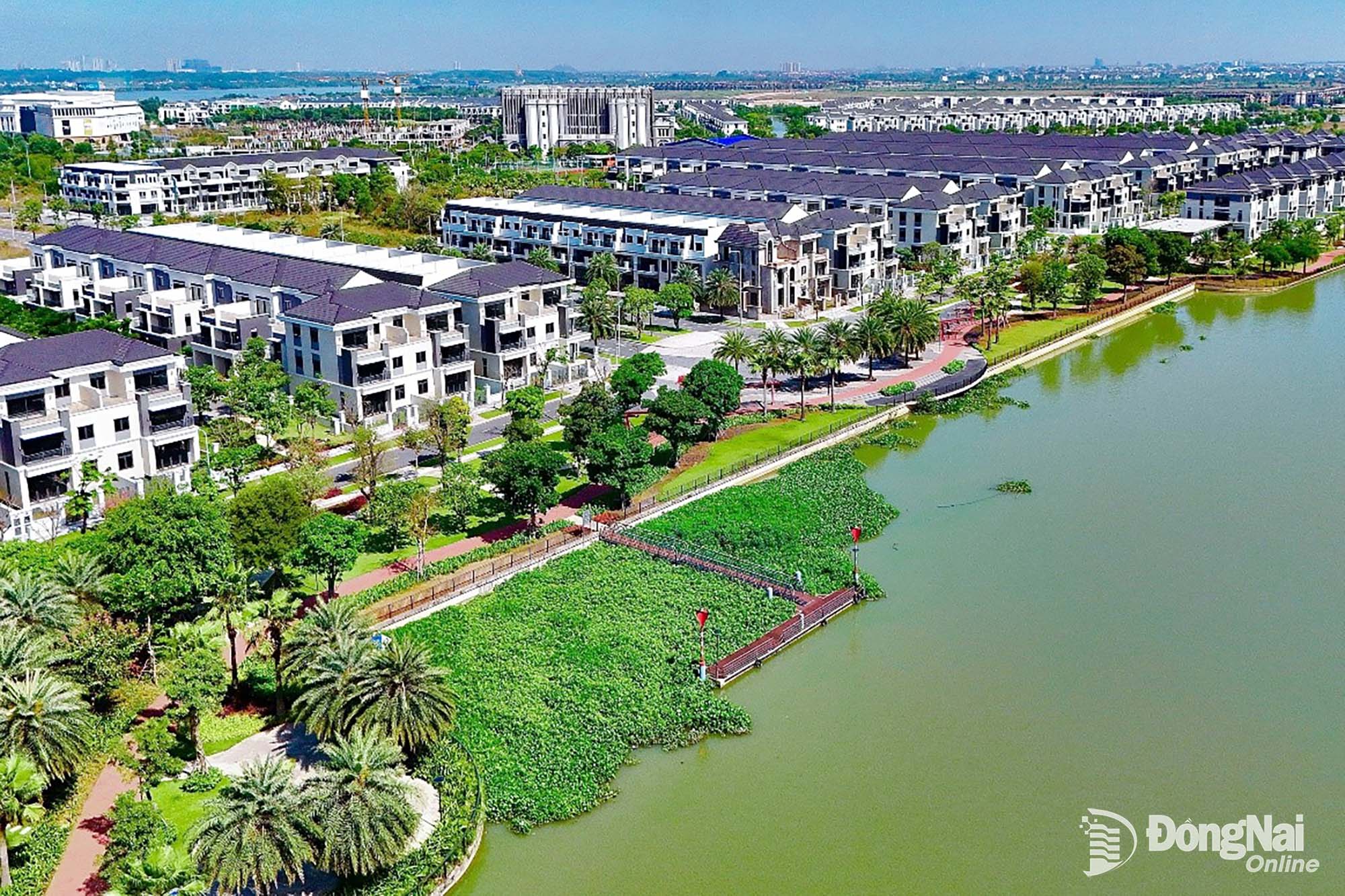 |
| Green space at Aqua City Eco-Urban Area in Long Hung Ward. |
To realize these goals and development orientations, Dong Nai is developing ecological and climate-resilient urban models that build on the city's natural advantages and strategic transport infrastructure. Ho Van Ha, Member of the City Party Committee, Vice Chairman of the Dong Nai City People’s Committee, said the city would focus on making use of riverside and lakeside areas to develop ecological urban districts, create greener living environments, reduce emissions and improve residents’ quality of life. New urban projects will be designed to meet criteria for energy efficiency, increased green space, the use of environmentally friendly materials and the integration of smart infrastructure.
For green development to deliver tangible results, its criteria must be applied consistently throughout planning, design, management and operation. Greenery and landscaped areas must be regularly maintained, while wastewater treatment and waste collection systems must meet construction and environmental requirements throughout a project’s life cycle. Energy- and water-saving measures must also remain effective during operation, helping improve living conditions and reduce residents’ long-term household expenses.
Experience shows that green development is opening up new approaches to apartment and urban development. When green elements are integrated coherently, tailored to residents’ needs, and effectively maintained after handover, they can increase project value while improving the quality of urban development.
As Dong Nai continues to urbanize rapidly, housing development must be accompanied by well-planned green spaces, coordinated technical infrastructure and efficient resource use. Ultimately, the value of an apartment complex or urban development should be measured not solely by the number of units or the scale of its amenities, but also by its ability to provide residents with a convenient, high-quality, and sustainable living environment.
By Hoang Loc – Translated by Mai Nga, Minho
Thông tin bạn đọc
Đóng Lưu thông tin