
FINAL PART: INTEGRATING LOCAL FIRMS INTO GLOBAL SUPPLY CHAINS
Dong Nai has a well-established industrial base, an extensive network of industrial parks and convenient transport links to seaports and Long Thanh International Airport. However, these investment advantages can be fully realised only when domestic businesses become involved in higher-value manufacturing, supply and service activities.
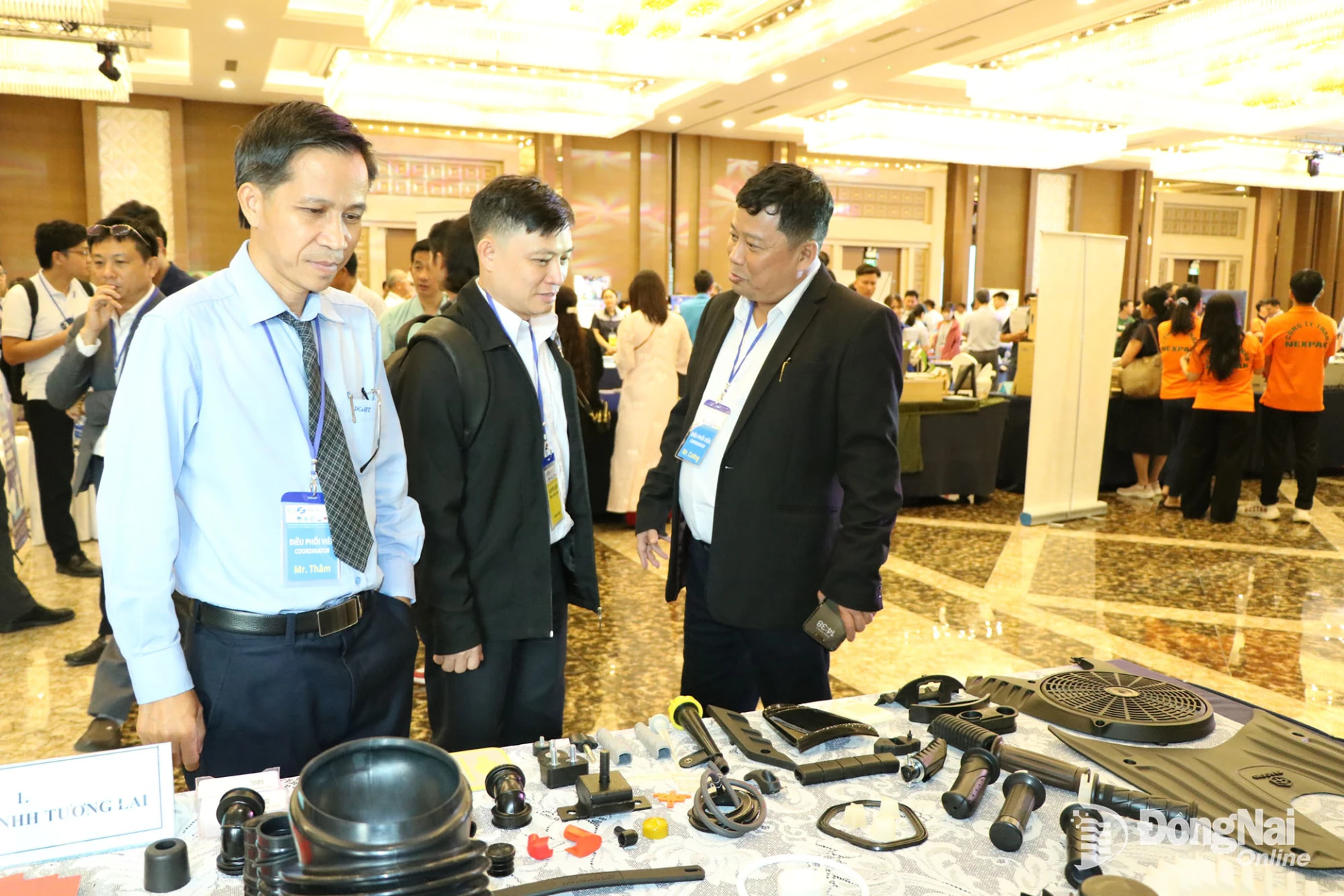 |
| Truong Quoc Cuong (far right), director of Tuong Lai Co., Ltd. in Long Thanh Ward, showcases the company’s products at the 2025 Vietnam–Japan Business Networking Conference. |
The challenge today is not simply to attract more investment projects, but also to help local businesses meet the requirements of major customers, expand their participation in supply chains and retain a greater share of the value generated within the city’s economy.
Building local supplier base
Dong Nai is home to thousands of foreign direct investment (FDI) enterprises engaged in manufacturing. Large-scale factories can generate substantial demand for raw materials, components, packaging, transportation, maintenance, environmental services and other industrial support services. Nestlé, for example, has recently expanded its production capacity in Dong Nai by investing in a coffee packaging line capable of filling more than 350,000 glass jars a day. According to Binu Jacob, General Director of Nestlé Vietnam, the project creates additional opportunities for domestic businesses to supply packaging and raw materials and provide logistics, equipment maintenance and quality testing services. This is helping Vietnamese businesses participate in supply chains with stringent standards while strengthening the competitiveness of the local industrial ecosystem.
However, such demand does not automatically translate into orders for local businesses. To qualify as suppliers, they must demonstrate that they can meet technical requirements, maintain consistent quality, offer competitive prices and deliver on time.
When large enterprises gain access to more capable domestic suppliers, smaller businesses can secure stable markets that support investment, while industrial service providers can become more deeply involved in production. This enables the benefits of economic growth to spread more widely throughout the economy. It also allows Dong Nai’s private sector to grow not only in size but also in its role in local, regional and global value chains.
Speaking at the Dong Nai local dialogue session of the Vietnam Private Sector Forum 2026 (VPSF 2026) on August 7, 2026, Dang Hong Anh, Chairman of the Vietnam Young Entrepreneurs Association, said the city needed to move beyond attracting investment and focus more on building and upgrading value chains. The key question, he said, was not simply how to attract more projects, but what products and services domestic businesses could supply and which stages of those projects’ supply chains they could serve.
Tuong Lai Co., Ltd. in Long Thanh Ward is one of the few businesses in Dong Nai to have begun supplying products to international manufacturers. However, becoming a supplier to major international partners requires a long process of building up experience and capabilities. According to Truong Quoc Cuong, the company’s director, businesses seeking to join global supply chains must upgrade their technology and comply with production standards. For supporting-industry products, even a single substandard component can affect the quality of an entire product assembly. Businesses, therefore, cannot rely on production experience alone but must maintain strict control over every stage, from raw materials and moulds to technical specifications and finished products.
Mobilising resources more effectively
Nguyen Kim Long, Standing Vice Chairman of the City People’s Committee, said the city authorities were committed to supporting residents and businesses and creating favourable conditions for the effective use of development resources. Dong Nai is attracting major international investors, including those in high-tech industries, to establish manufacturing facilities. Priority is being given to investors committed to developing supply chains involving domestic businesses.
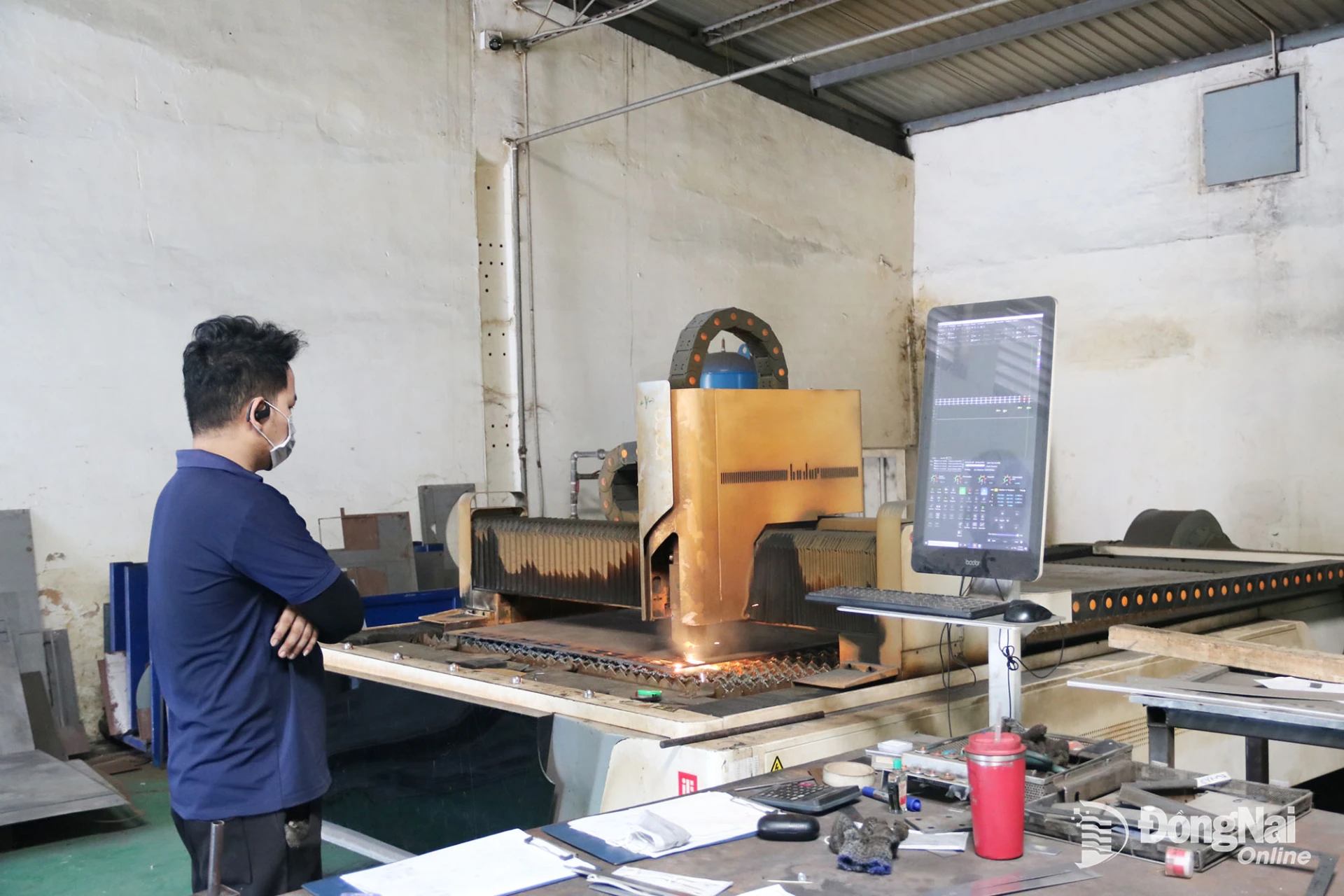 |
| Workers at a mechanical engineering and manufacturing enterprise in Bien Hoa Ward. |
As Dong Nai enters a new phase of development, it has an opportunity to expand its value chains by building on its industrial and agricultural strengths and transport infrastructure. Progress, however, should not be measured solely by the number of investment projects attracted or businesses introduced to potential partners. More importantly, it should be assessed by the number of domestic suppliers capable of securing long-term contracts, the extent to which products are upgraded and the ability of local businesses to take on higher-value stages of production. These advances will help put the local economy on a more sustainable growth path. Experts say Dong Nai needs to develop a database of businesses classified by capabilities, industries and products. This would enable regulatory agencies, business associations and coordinating organisations to identify which companies are ready to meet supply-chain requirements, which need to upgrade their technologies and which require additional certifications or workforce training before they can participate in supply chains.
Dang Quoc Nghi, Chairman of the city’s Young Entrepreneurs Association, proposed that the city identify promising enterprises with strong development potential and focus support on helping them upgrade their capabilities and meet the qualification requirements of major business partners. He added that efforts to upgrade supply chains should include connecting businesses with potential buyers, helping them access relevant information and resolving obstacles that fall within the city authorities’ remit.
Alongside external support, businesses must proactively raise their operating standards. They must also ensure raw-material traceability, comply with environmental requirements, maintain transparent governance and provide appropriate working conditions. These requirements are no longer limited to export-oriented corporations but are increasingly becoming prerequisites for many businesses in Vietnam, particularly those in Dong Nai, to participate in supply networks.
By V The – Translated by M.Nguyet, Minho
Part 1: Helping businesses grow in Dong Nai’s new development phase
Part 2: Clearing bottlenecks to help businesses grow


Thông tin bạn đọc
Đóng Lưu thông tin