
Recognizing digital transformation as one of the approaches to helping farmers adapt to new methods of production and consumption, the Dong Nai City Farmers' Union has recently stepped up efforts to disseminate information and encourage its members and farmers to apply digital technology in agricultural production. Accordingly, Farmers' Unions at wards and communes have proactively established partnerships with enterprises to help farmers gradually digitalize production processes, facilitate product traceability, and expand market outlets.
Electronic logs in vegetable gardens
Nui Cui Organic Vegetable Farm was selected by the Farmers' Union of Gia Kiem Commune, Dong Nai City, as a pilot site for the application of electronic farming logs to improve production management efficiency, ensure information transparency, and facilitate agricultural product traceability. Under the system, farming activities are recorded, updated, and managed separately for each greenhouse, enabling the farm owner to easily monitor crop growth, sowing schedules, plant care, fertilization, irrigation with microbial preparations, and harvesting.
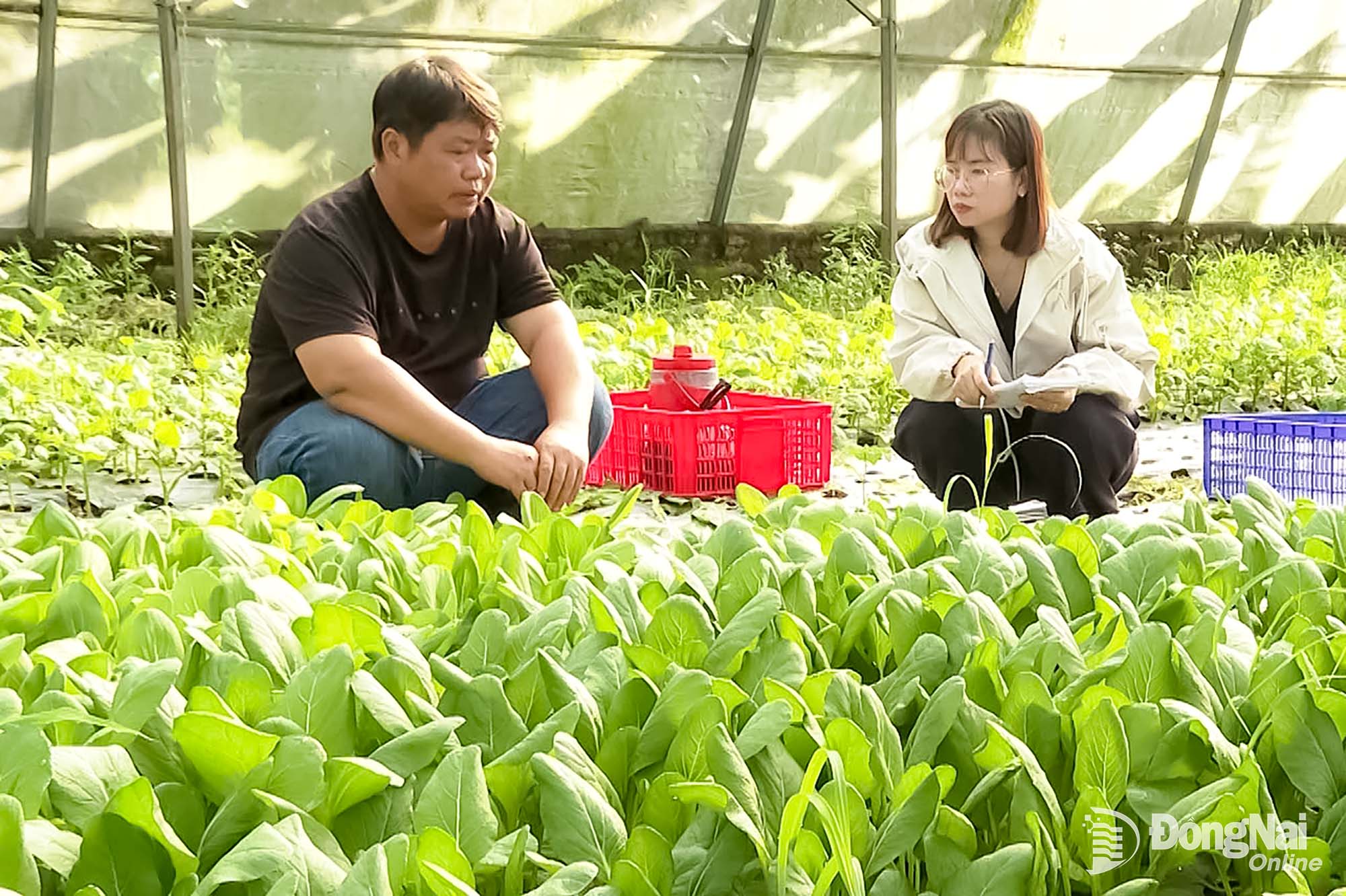 |
| Truong Hoan Thien, owner of Nui Cui Organic Vegetable Farm in Gia Kiem Commune, shares the benefits of electronic logs with reporters. Photo: Quoc Viet |
Truong Hoan Thien, owner of Nui Cui Organic Vegetable Farm in Gia Kiem Commune, said he previously recorded farming activities in paper notebooks, making information retrieval time-consuming. All data are now updated through an application.
"Whenever I need to review the records for a particular type of vegetable, I simply open the application to check the exact dates of planting, fertilization, irrigation with microbial preparations, and any developments arising during the production process. This has made farm management and information retrieval much faster and more convenient," said Thien.
Based on data recorded in the electronic logs, the farm has generated seven QR codes for traceability, each linked to a specific production area and its recorded activities. By scanning the codes with a smartphone, users can access information about the farm, farming activities undertaken, and corresponding images.
As the grower continues to update the electronic logs, the information displayed through the QR codes is updated accordingly. Rather than simply linking to static introductory information, the QR codes are connected to data generated during the cultivation process. Nui Cui Organic Vegetable Farm currently supplies more than 300 kilograms of various safe vegetables to the market each day. The application of digital technology in production has helped enhance product value and create additional market opportunities.
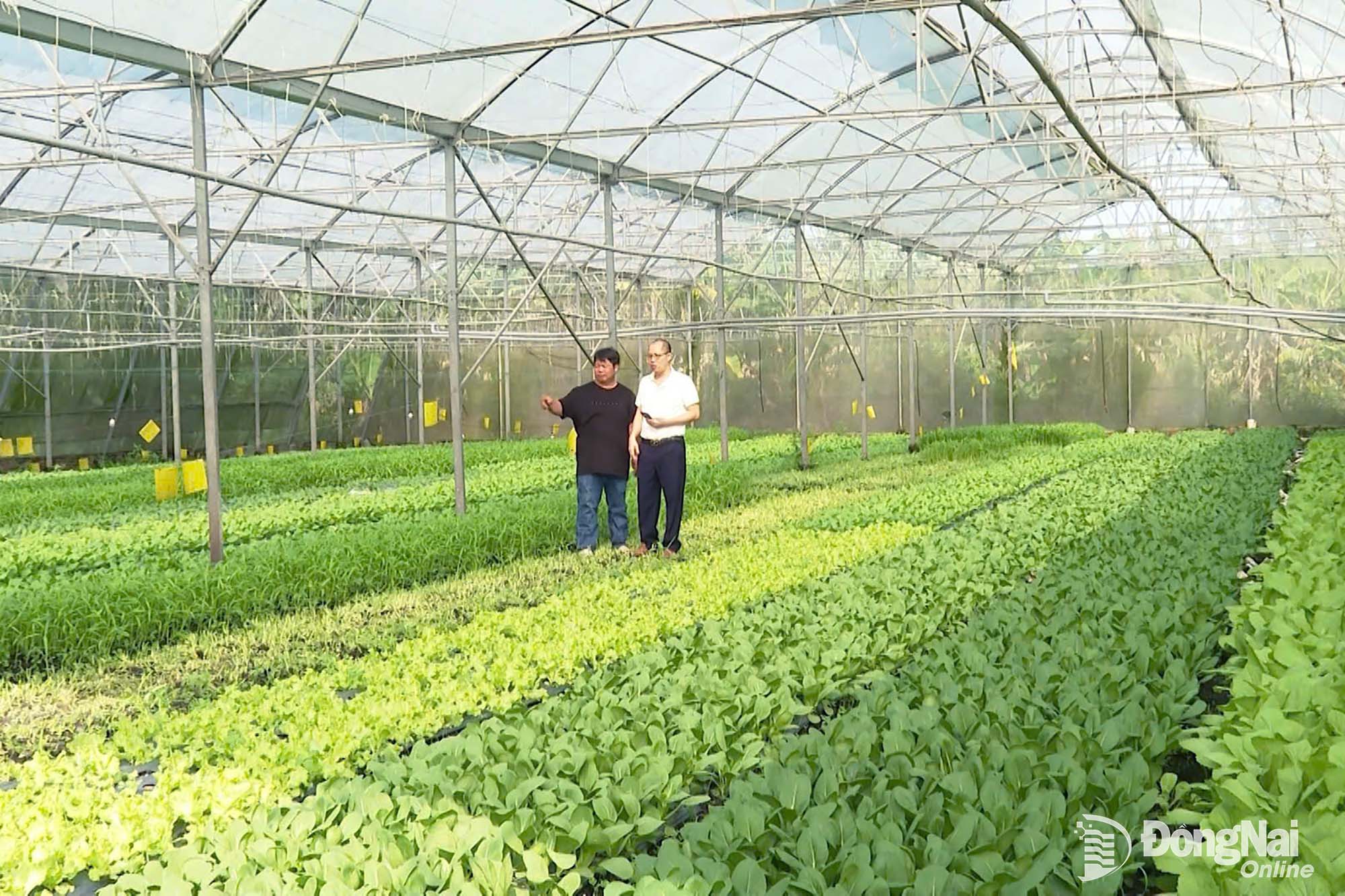 |
| Nui Cui Organic Vegetable Farm, owned by Truong Hoan Thien in Gia Kiem Commune, uses electronic farming logs. Photo: Quoc Viet |
Dinh Cong Thoan, Vice Chairman of the Gia Kiem Commune Farmers' Union, said that building on the pilot model implemented at Truong Hoan Thien's Nui Cui Organic Vegetable Farm, the commune-level farmers’ union would continue to promote, guide, and encourage farmers to apply digital technology in production, maintain electronic farming logs, and trace the origins of their products. These efforts contribute to increasing the value of agricultural products, improving transparency throughout the production process, expanding market access opportunities, and strengthening the competitiveness of locally produced agricultural goods.
Bringing products to market through digital technology
The digital economy is opening up new opportunities for farmers to promote and sell their products through digital platforms, livestreaming, and cashless payment methods. Beyond expanding market outlets, technology also enables farmers to connect directly with customers, enhance product value, and gradually establish a reputation for their products.
Le Loc Quan, owner of Quan Phat Honey Facility in Dau Giay Ward, Dong Nai City, said that, with the aim of gaining access to overseas markets such as Japan, Australia, and the Republic of Korea for its honey products, the facility moved quickly to list its products on e-commerce platforms while developing and refining its product quality standards and working towards One Commune One Product (OCOP) certification. These are important steps toward enhancing product credibility, expanding consumer markets, and increasing opportunities to reach customers.
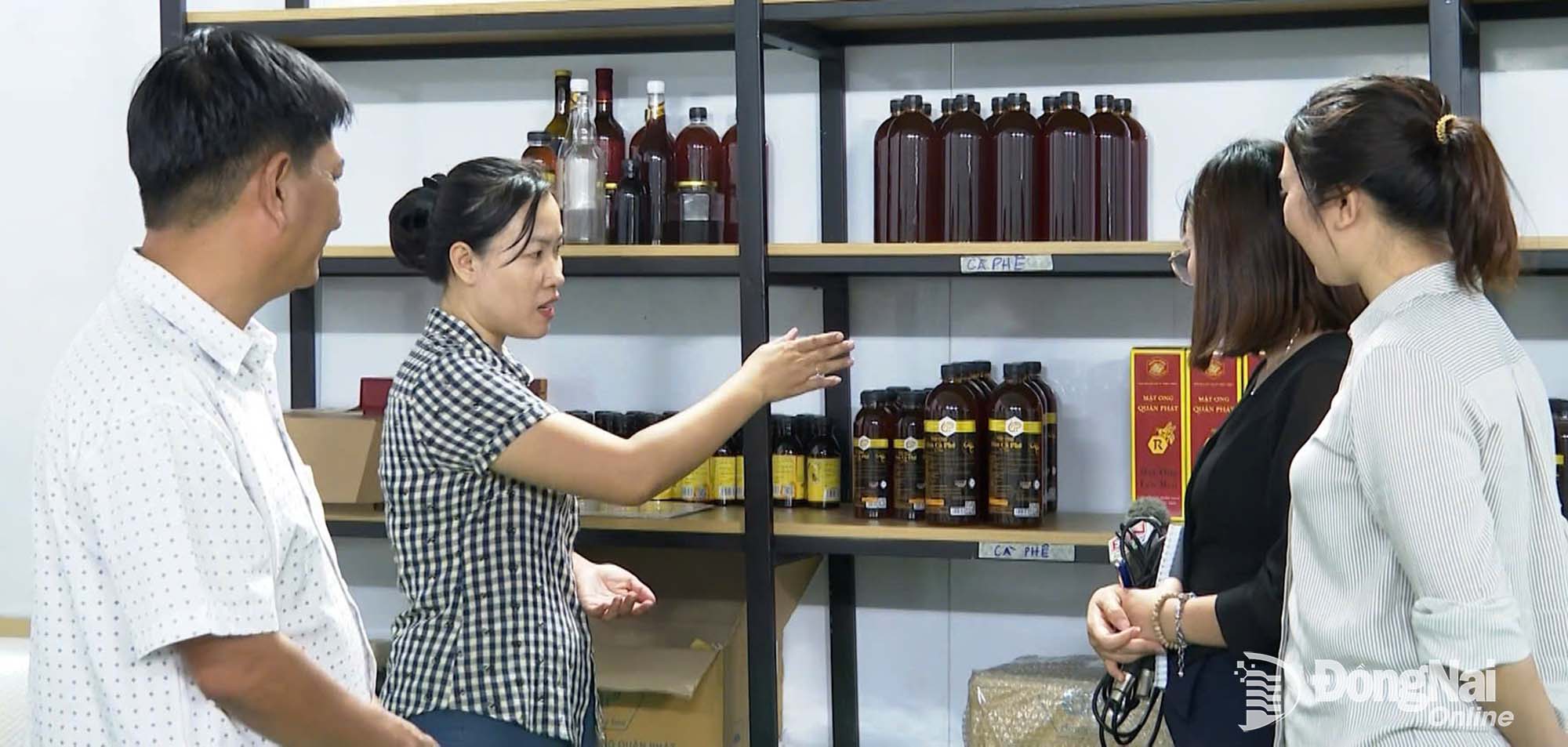 |
| Many products of Quan Phat Honey Facility in Dau Giay Ward hold three- and four-star OCOP ratings. Photo: Quoc Viet |
Quan Phat Honey Facility currently works with 120 beekeeping households. Expanding market outlets, particularly through e-commerce platforms, not only enables its products to reach more consumers but also strengthens trust among participating beekeeping households.
"Recently, the Farmers' Union has helped our facility access state policies, provided guidance on listing products on e-commerce platforms, and assisted us in connecting with customers. As a result, our products have gained more opportunities for promotion, reached a broader customer base, and gradually expanded their distribution markets," said Quan.
Since listing its products on e-commerce platforms, Quan Phat Honey Facility has gained greater opportunities to reach domestic consumers, expand its customer base, and diversify its markets. The facility supplies approximately 1,500 tons of honey to the market annually, of which around 500 tons are consumed domestically. These figures illustrate the facility's market reach, while its adoption of e-commerce is helping expand market outlets and improve market access for locally produced honey.
Nguyen Van Giang, Vice Chairman of the Dong Nai City Farmers' Union, said, "Some farmers still have limited digital skills and lack confidence in selling products online. They are particularly concerned about making mistakes during operations, falling victim to fraud, or being unable to sell their products. Therefore, the union focuses on providing practical, hands-on guidance while coordinating with enterprises and specialized agencies and promoting the role of experienced farmers in helping members advertise and sell products and make secure payments. These efforts gradually enable farmers to master technology and expand their markets."
When production data are connected to traceability systems and distribution channels, digital transformation not only helps farmers adopt more scientific and efficient production methods but also creates a “digital passport” for agricultural products, helping make their journey from production sites to consumers more transparent. As a result, agricultural products have a stronger foundation for affirming their value, strengthening consumer confidence, and expanding market access opportunities. This also demonstrates how digital transformation begins with practical measures that gradually create new development opportunities for farmers.
By Le Thuy – Translated by Minh Hong, Thu Ha




Thông tin bạn đọc
Đóng Lưu thông tin