
Dong Nai is undergoing major changes in its development approach and planning, guided by a long-term strategic vision featuring an open spatial development model, multidirectional transport infrastructure and a multi-tiered urban structure. The city aims to become a strategic gateway to the Southern economic region, strengthening links with other parts of the country and the international community.
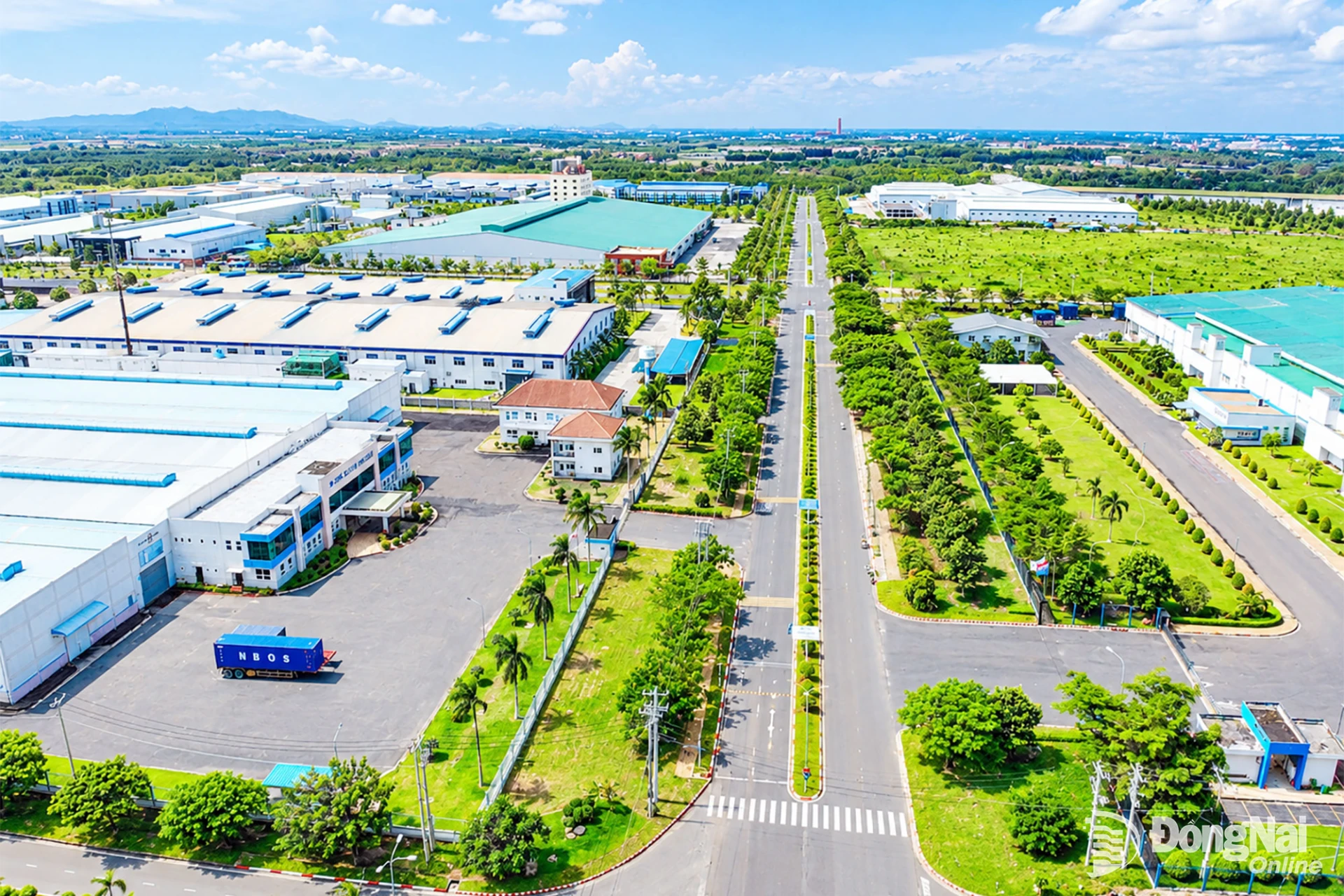 |
| Loc An-Binh Son Industrial Park, located at the gateway to Long Thanh International Airport, is attracting investors with its advantages. |
To achieve its development goals, the city has organised numerous domestic and international seminars and experience-sharing sessions. Departments, agencies and localities are also implementing measures to promote economic growth while improving governance, supporting businesses and helping resolve difficulties facing production and business operations. These efforts are aimed at creating a favourable investment environment and enhancing the city’s competitiveness.
Expanding development space
Dong Nai is located in the heart of the southern key economic region, bordering Ho Chi Minh City and connecting with the Southeast, Central Highlands and south-central regions. The development of Long Thanh International Airport, together with a network of expressways and nearby seaports, is creating a multimodal transport network. These advantages give Dong Nai the potential to develop as a gateway city for the region and an important link in a broader economic network.
Speaking at a seminar on orientations for Dong Nai’s tourism development in the new context, organised by the City People’s Committee, Dr. Le Thi Hanh An of the Ho Chi Minh City University of Economics said Dong Nai has a strategic location and strong multimodal connectivity, along with a sizeable economy, complementary industries, strong appeal to investors, abundant human resources and rich natural resources.
In particular, Long Thanh Airport gives Dong Nai an infrastructure asset that few localities possess. The city also has extensive forests and lakes, a large agricultural sector, industrial and logistics hubs, and distinctive historical and cultural heritage. Yet one of Dong Nai’s current development bottlenecks lies in connectivity, both with neighbouring regions and within the city. Although the city occupies a central position in the southern key economic region and has several strategic transport corridors, its connectivity has yet to match its development potential.
At the same time, Long Thanh Airport and interregional transport corridors should be developed as part of the city’s urban experience rather than viewed simply as transport infrastructure. The international airport could create opportunities for short-stay tourism products centred on local nature, culture and cuisine. Dong Nai also needs an integrated governance framework capable of connecting transport, logistics, tourism and urban development. This will be important for Dong Nai to pursue a strategy to develop a well-connected, multi-centre city with diverse tourism and urban experiences.
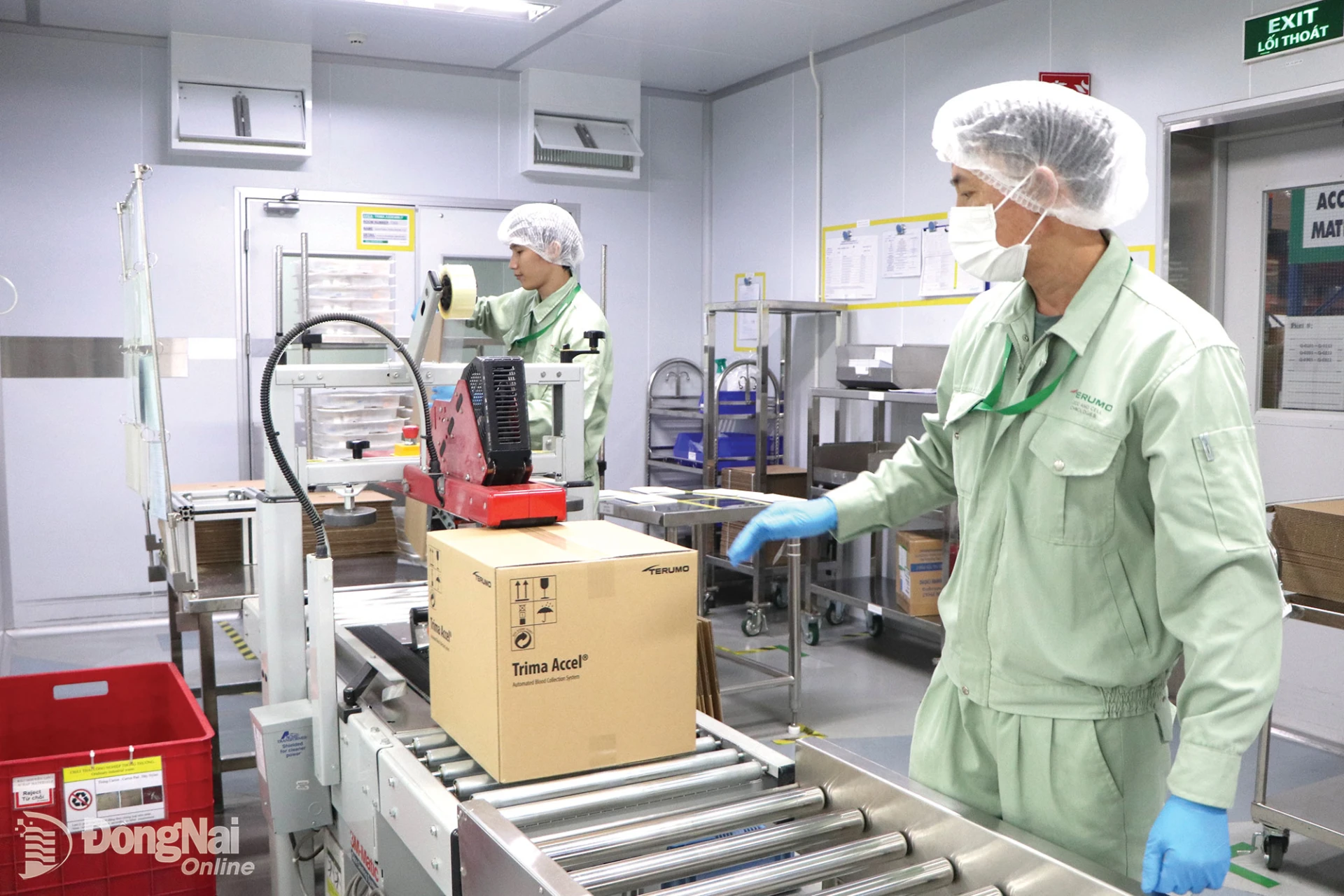 |
| Production line at Terumo BCT Vietnam Co., Ltd. in Long Duc Industrial Park, Binh An Commune. Photo: Ngoc Lien |
Gathering resources
Dong Nai is working to thoroughly implement and concretise the Resolution of the 14th National Party Congress and the Resolution of the first Dong Nai City Party Congress for the 2025-2030 tenure. Action programmes, plans and breakthrough tasks are being developed to closely align with local conditions, with clear objectives, tasks, solutions and implementation responsibilities, reflecting the city’s determination to achieve double-digit economic growth throughout the 2026-2030 period. The city is also working to effectively implement the Politburo’s strategic resolutions.
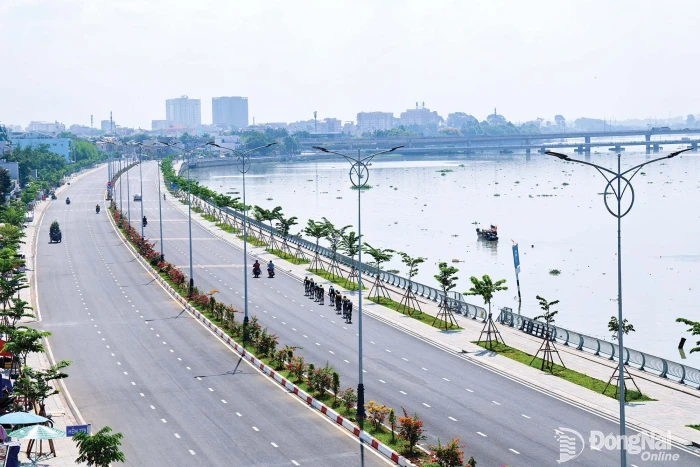
By 2035, Dong Nai aims to develop as an airport city featuring a riverside, multi-centre, multi-purpose, green and smart city and serving as a centre for high-tech industry, aviation and aerospace industries, and an international-standard aviation economy. The city also aims to provide its residents with high incomes and build a civilised, safe and happy society. These goals are set out in Politburo Resolution No. 16-NQ/TW on the construction and development of Dong Nai to 2035, with a vision to 2065.
In particular, the passage of the Urban Development Law by the National Assembly in late August has opened up opportunities for Dong Nai to develop sectors such as high-tech industry, energy, and energy-related industries; services and trade, logistics and free-trade zones, as well as new functional areas and emerging economic forms.
Speaking at a working session with the Standing Committee of the City Party Committee (CPC) in May 2026, Party General Secretary and State President To Lam said Dong Nai must create new sources of growth and move beyond its role as a traditional industrial centre. As a city, Dong Nai should base its development on technological productivity, knowledge and innovation, and its ability to generate spillover effects for domestic enterprises, rather than relying heavily on industrial land, the number of investment projects and low-cost labour.
With Long Thanh Airport as the anchor for restructuring its development space, Dong Nai needs to soon formulate a comprehensive plan for an airport-city ecosystem encompassing aviation services, trade, finance and other high-quality services, as well as a comprehensive development plan for Long Thanh Airport City and surrounding areas. The city’s planning must take a long-term, integrated and feasible approach, capable of supporting development and reorganising urban space toward a multi-centre model.
By N. Lien – Translated by M.Nguyet, Thu Ha
Thông tin bạn đọc
Đóng Lưu thông tin