
In 2026, Dong Nai City aims to have six communes recognized as meeting the new-style rural standards under the city’s 2026-2030 set of commune-level new-style rural criteria. To date, these communes have essentially met the required criteria.
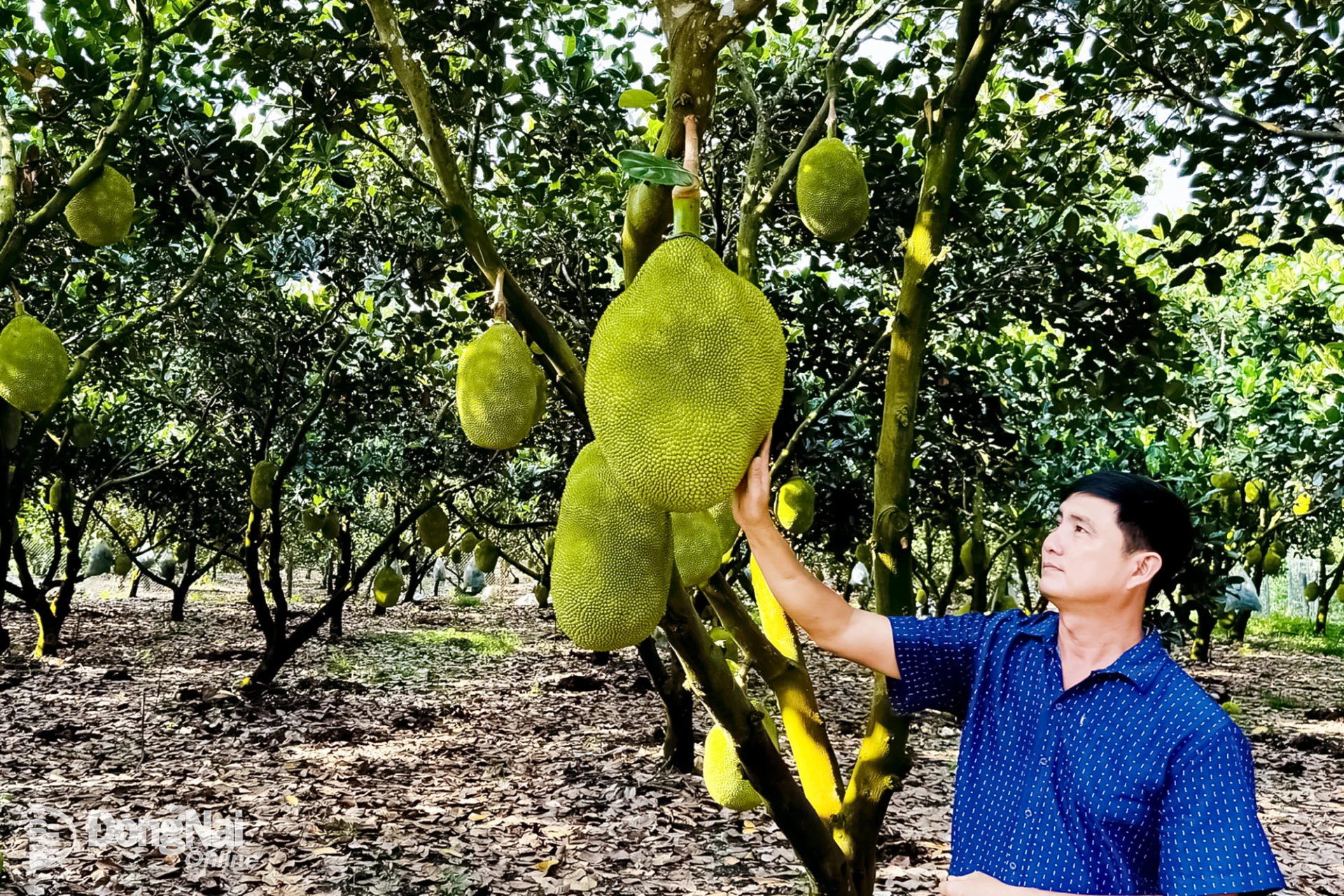 |
| A farmer in Xuan Bac commune grows jackfruit using organic farming methods, bringing high economic returns. |
This is a noteworthy achievement, as most of the communes had met the new-style rural standards earlier than initially planned. This was partly because 10 communes in Dong Nai were upgraded to wards as part of the city’s urbanization process. Several of the 10 communes were among the six initially targeted for the new-style rural recognition in 2026 and had essentially met the required criteria this year. As a result, the city reviewed its plans and selected six other communes for new-style rural recognition: Phu Vinh, Dinh Quan, Thong Nhat, Cam My, Xuan Dinh and Xuan Bac.
Reaching the finish line early
A major challenge for the city’s first communes meeting new-style rural criteria in 2026 is that the national new-style rural criteria for 2026-2030 divide communes into three groups—Group 1, Group 2 and Group 3—and introduce many new indicators, while setting higher requirements for some indicators than in the 2021-2025 period. In particular, Dong Nai City’s 2026-2030 set of commune-level new-style rural criteria includes a number of demanding indicators whose requirements are higher than those under the national framework.
The new-style rural criteria for 2026-2030 include requirements for digital infrastructure and renewable energy, while raising standards for environmental protection, income and other areas. For example, the criteria for rural transport infrastructure require roads to provide adequate connectivity and undergo annual maintenance. One hundred percent of commune-level roads must meet planning standards, while at least 50% of commune roads must be lined with trees. Village and hamlet roads must be hardened. Dong Nai’s multidimensional poverty standard is higher than the national standard. The city also sets higher targets than the national new-style rural criteria for the proportion of rural households with access to clean water that meets technical standards and the proportion using clean water from centralized water supply systems. Rural areas must feature safe, clean and attractive landscapes and green spaces, while models for restoring landscapes and improving the quality of surface water in ponds, lakes and canals must cover 70-75% of the area, depending on the commune group. Each commune must also have an AI-powered camera system for security surveillance covering the entire commune.
The six communes targeted for new-style rural recognition in 2026 have focused on planning concentrated production areas linked to export markets and attracting investment in agricultural produce pre-processing, preservation and processing. The One Commune One Product (OCOP) program has also been effectively implemented, leveraging local specialties and key agricultural products. At the same time, the communes have promoted digital transformation and the application of science and technology to develop the rural economy, laying the groundwork for modern rural development.
In addition, local authorities have faced difficulties in compiling documentation to demonstrate compliance with the new-style rural criteria in 2026, as ministries and relevant agencies have been slow to issue guidelines on assessing and implementing the criteria. The indicator measuring average per capita income growth has yet to be fully documented because authorities are awaiting the methodology for the 2026 rural income survey.
Focusing on quality
The communes nearing the new-style rural recognition are working to complete the required criteria and indicators under the new rural framework. The new phase of the new-style rural program represents a qualitative shift, with localities focusing on digital transformation, developing a green economy and building more livable rural areas, ultimately aiming to continuously improve the material and spiritual well-being of rural residents.
Having realized that traditional farming practices involving excessive use of fertilizers and chemicals can harm the environment and human health, Nguyen Chinh Chien, a farmer in Xuan Bac commune, has switched to organic farming in recent years. After a challenging trial period, his family’s orchards of tissue-cultured bananas, jackfruit and guava are now producing high yields of high-quality fruit.
Nguyen Chinh Chien said the high yields and good-quality fruit from his organic orchards had shown that switching to safer farming practices was the right decision. He said farmers had been encouraged to make the transition because local authorities had paid close attention to the sector and introduced a number of programs to support and promote organic farming, while strengthening production-to-market linkages. In particular, local authorities have attracted businesses to establish value chains linking production with consumption. By joining these chains, farmers receive partial support for agricultural inputs from businesses and have access to technical staff who provide close guidance on cultivation and crop-care techniques. Farmers also receive assistance in participating in trade promotion and agricultural product promotion programs, giving them greater opportunities to sign purchase contracts for their produce.
Vice Chairman of the Phu Vinh commune People’s Committee Vu Manh Duong said the commune’s most notable achievement in its new-style rural development efforts had been its focus on economic development, particularly agricultural production linked to value chains and stable markets for key local products. The commune has capitalized on its geographical advantages, including Ba Giot Waterfall, Bat Cave and Phu Tan 2 Hydropower Plant, while also developing attractive fruit orchards featuring a diverse range of high-quality produce to promote ecotourism and community-based tourism. The commune has therefore also paid close attention to developing safe, clean and attractive landscapes and green spaces. Public outreach and mobilization efforts, particularly through the role of respected members of ethnic minority communities in the hamlets, have helped build consensus and encourage active participation among residents.
By B. Nguyen – Translated by M.Nguyet, Thu Ha



Thông tin bạn đọc
Đóng Lưu thông tin