
The tax sector is entering a peak period of support for household businesses and individual business operators (collectively referred to as household businesses) with revenues of more than VND1 billion and up to VND50 billion in filing their tax returns for the third quarter of 2026.
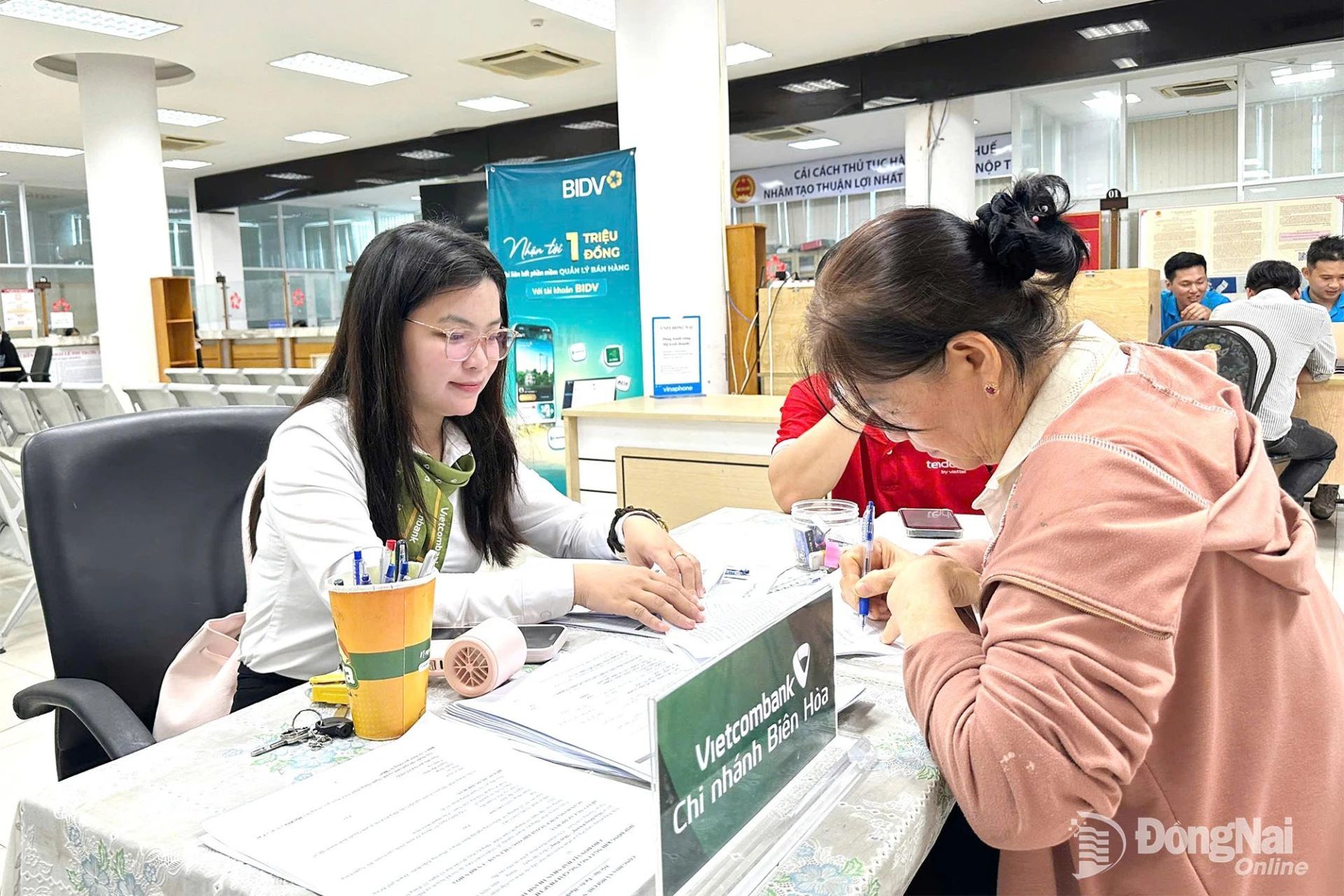 |
| Banks assist taxpayers in opening accounts at Tax Office No. 3. Photo: Ngoc Lien |
Under current regulations, household businesses with revenues of more than VND1 billion and up to VND50 billion are required to file value-added tax (VAT) and personal income tax (PIT) returns for the third quarter of 2026 no later than November 2, 2026, under Government Decree No. 252/2026/ND-CP.
Identifying household businesses required to file tax returns
Tax offices across the city are stepping up communication and providing guidance to household businesses under their management on tax filing requirements. Those with annual revenues of more than VND1 billion and up to VND50 billion that are subject to quarterly tax filing must submit their third-quarter 2026 tax returns by the prescribed deadline.
This is the second tax filing period for household businesses under the new regulations introduced in 2026, following the Government’s issuance of Decree No. 141/2026/ND-CP, which amends and supplements a number of provisions of Decree No. 68/2026/ND-CP on tax policies for household businesses and individual business operators and Decree No. 320/2025/ND-CP detailing the implementation of the Law on Corporate Income Tax (hereinafter referred to as Decree No. 141).
Under the regulations, if a household business initially estimates its annual revenue at below VND1 billion but its revenue in the third quarter of 2026 exceeds VND1 billion, it must switch to quarterly tax filing and payment from the third quarter of 2026.
For VAT, household businesses must file their third-quarter tax returns no later than November 2, 2026. For PIT, if a household business opts to pay PIT based on revenue, it must file its third-quarter PIT return together with its VAT return. If it opts to pay PIT based on taxable income (revenue minus expenses), it must file a provisional PIT return together with its VAT return and make a final PIT settlement at the end of the year, no later than March 31 of the following year.
Huynh Thien Duy Phuong, Head of the Budgetary, Professional, Legal and Tax Affairs Division of the Dong Nai Tax Department (DoT), said that to help household businesses promptly understand and apply new tax policies, the tax sector has stepped up communication and provided guidance to taxpayers on fulfilling their tax obligations within the prescribed deadlines. In addition, the tax sector has been reviewing and classifying taxpayers to improve management efficiency, ensure accurate and adequate tax collection, and prevent losses to local budget revenue from household businesses. Through intensive communication and guidance campaigns, household businesses have become more aware of their tax obligations and improved their compliance with tax filing and payment regulations.
How to file third-quarter 2026 tax returns
Household businesses are required to file their third-quarter tax returns online through the Public Service Portal or the eTax Mobile application. Those facing special circumstances, including elderly people, people with disabilities, social protection beneficiaries, residents of areas with exceptionally difficult socio-economic conditions, or people affected by other force majeure events that prevent them from conducting electronic transactions, may submit their tax dossiers directly or by post to a commune-level Public Administration Service Center.
Supporting household businesses
According to the DoT, nearly 178,000 household businesses are currently under its management. Seven out of the city’s 10 tax offices manage at least 10,000 household businesses each.
Tax Sub-department No. 3, for example, manages more than 60,000 household businesses across 13 central wards of Dong Nai, including Tran Bien, Tan Trieu, Bien Hoa and Tam Hiep. Tax Office No. 5 manages over 23,000 household businesses in Long Thanh, Nhon Trach and Dai Phuoc. Tax Offices Nos. 6, 2 and 10 each manage more than 15,000 household businesses in areas including Dong Xoai, Binh Phuoc, Trang Bom, Binh Loc and Long Khanh.
 |
| Taxpayers complete tax-related procedures at Tax Sub-department No. 3. |
Given the large number of household businesses under its management, the tax sector has stepped up communication and taxpayer support to help them fulfill their tax obligations. Efforts to update taxpayer information, classify taxpayers and strengthen tax administration have produced positive results, contributing to greater transparency and more effective tax management.
To further strengthen tax administration for household businesses, Nguyen Toan Thang, Head of the DoT, said the department has instructed local tax offices to continue effectively managing this group. Particular attention will be paid to reviewing taxpayers and preventing revenue leakage from household businesses in the final months of the year. The tax sector will also continue stepping up guidance to help household businesses use the eTax Mobile application proficiently to conveniently carry out all tax registration, filing, payment and refund procedures electronically. Efforts will focus on increasing revenue collection from high-revenue household businesses, high-risk business sectors, household businesses experiencing revenue fluctuations, and cases showing signs of tax declarations that do not closely reflect actual revenue.
In addition, the DoT has asked tax offices to step up communication, support and guidance to help household businesses comply with tax laws, thereby contributing to sustainable growth and broadening the revenue base. The tax sector will also continue working with service and solution providers and banks to implement electronic invoicing solutions for household businesses. The goal is to ensure that all businesses subject to the relevant regulations use e-invoices generated from cash registers, thereby improving transparency in revenue reporting.
According to the DoT, state budget revenue from household businesses exceeded VND651 billion in the first eight months of 2026, equal to the amount collected in the same period last year and equivalent to 72% of the assigned target.
By N. Lien – Translated by M.Nguyet, Minho





Thông tin bạn đọc
Đóng Lưu thông tin