
Industrial symbiosis and the circular economy are key to Dong Nai City’s transition to green growth, more efficient resource use and stronger investment competitiveness.
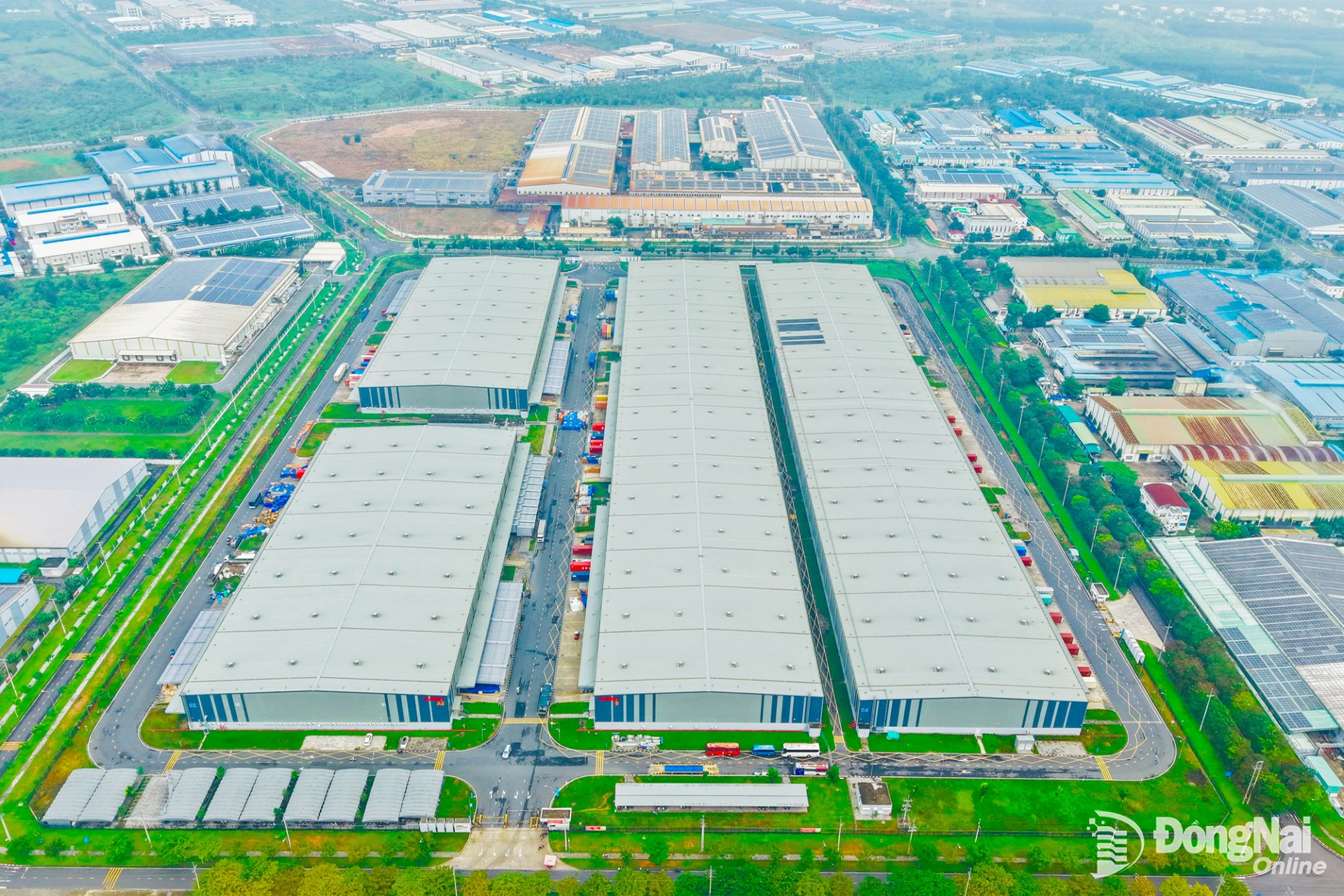 |
| Giang Dien Industrial Park (IP) in An Vien Commune. Photo: Cong Nghia |
To encourage businesses to share resources and reuse by-products, Dong Nai needs effective policies to help transform existing industrial parks into eco-industrial parks.
A practical imperative
Climate change, the global drive towards net-zero emissions by 2050 and increasingly stringent environmental standards are accelerating the shift to sustainable production. Unlike the linear model of extracting resources, manufacturing goods, consuming them and discarding waste, the circular economy seeks to maximise resource efficiency, promote recycling and reuse, and cut greenhouse gas emissions. Major export markets, including the European Union (EU) and the United States, are imposing increasingly stringent requirements on carbon emissions and environmental, social and governance (ESG) performance, prompting businesses to upgrade their technologies.
As one of Viet Nam’s major industrial centres, Dong Nai is well-positioned to adopt the circular economy model. It is also regarded as the country’s "cradle of industry". Many factories have been operating for more than half a century, underscoring the need to modernise machinery and production technologies.
Despite these advantages, no industrial park in Dong Nai has yet been certified as an eco-industrial park. Pham Viet Phuong, deputy head in charge of the Dong Nai Industrial Parks and Economic Zones Authority (DNIEZA), said businesses had yet to establish effective systems for sharing and reusing energy, water and by-products. Resource efficiency remained limited, while greenhouse gas emissions were not managed consistently. High upfront investment costs and a lack of targeted support policies had also discouraged businesses from making the transition.
Under the 2021–2030 plan, Dong Nai is expected to have 89 IPs covering nearly 43,300 hectares. Of these, 44 are operational, spanning nearly 15,200 hectares. The figures underscore the need for a clearer legal framework and stronger incentives to accelerate the transition to eco-industrial production.
Politburo Resolution No. 16-NQ/TW, dated July 21, 2026, on building and developing Dong Nai City through 2035, with a vision to 2065, calls for a modern, smart and ecological industrial park system. Industrial symbiosis and the circular economy are among the city’s three strategic breakthroughs, with a focus on linking production chains to enable the reuse of by-products, energy and treated wastewater. By 2035, most industrial parks are expected to meet eco-industrial standards, while new parks are to incorporate these standards from the planning stage.
The city’s industrial transition is also aligned with Dong Nai’s Carbon Emissions Reduction Scheme to 2030, with a vision to 2050, approved in 2024. Measures include converting conventional industrial parks into eco-industrial parks, expanding rooftop solar and biomass energy, adopting energy-efficient technologies and improving waste recycling and reuse.
Under the industrial symbiosis model, one company’s by-products can serve as raw materials for another. Businesses can also reuse treated wastewater, waste heat and other recoverable energy, reducing treatment costs and conserving resources. Beyond individual business initiatives, the model requires coordinated planning, suitable infrastructure and effective cooperation among relevant departments and agencies.
Removing policy bottlenecks
Dong Nai is drafting a resolution to promote industrial symbiosis and develop eco-industrial parks during 2026–2035, with a vision to 2050. The proposed resolution would provide a legal basis for stronger business links, circular production, the conversion of existing IPs and improved investment competitiveness.
Under the proposed framework, businesses would participate in industrial symbiosis voluntarily and on the basis of cooperation and mutual benefit. Measures under consideration include lower land rental fees, access to green credit and financing, faster processing of certain administrative procedures, and corporate income tax exemptions or reductions where legally permitted. The proposed incentives are intended to encourage technological upgrades, improve energy efficiency and expand circular production networks.
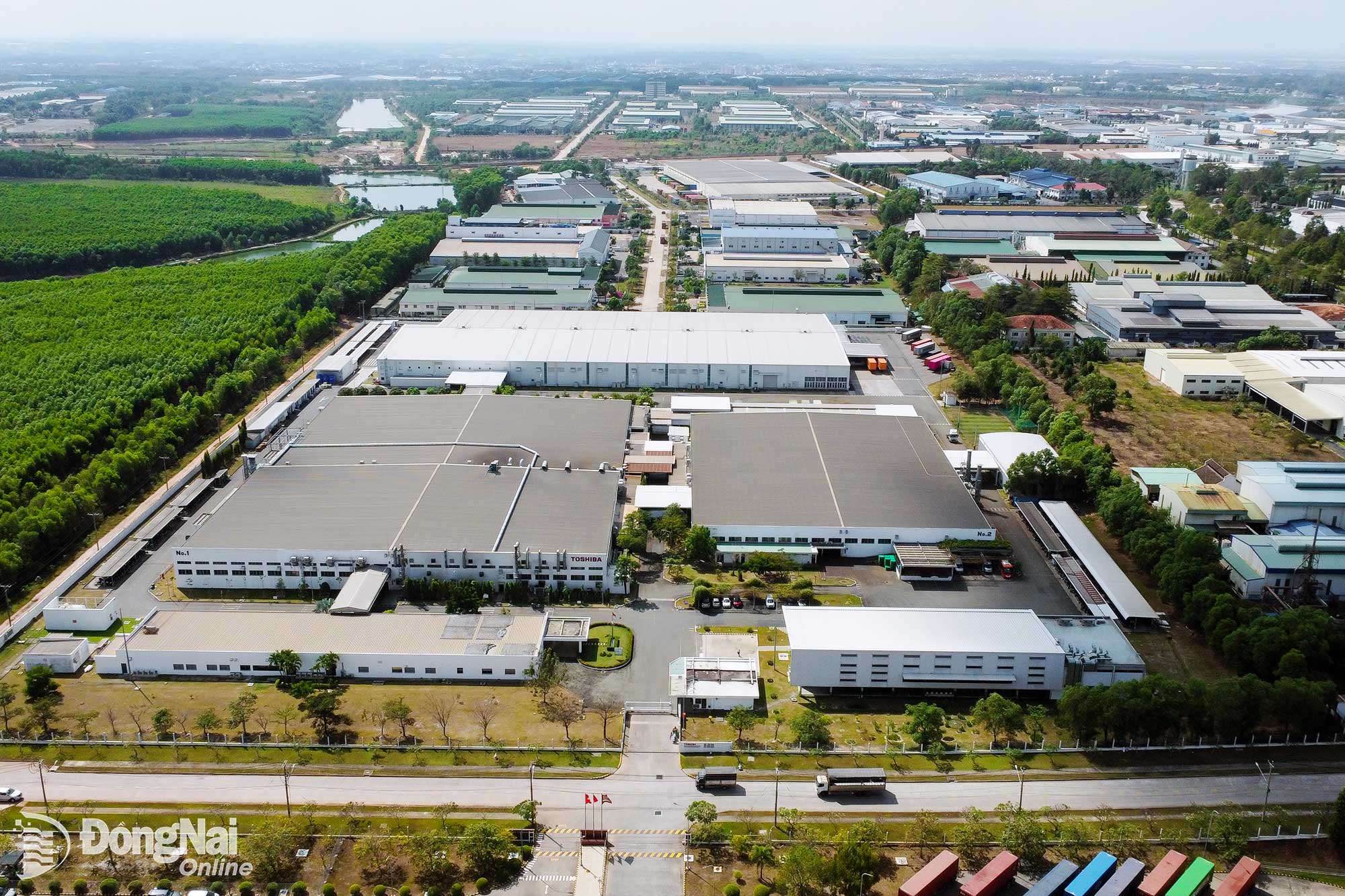 |
| Amata IP is working towards becoming Dong Nai’s first eco-industrial park. Photo: Hoang Loc |
The city has also proposed that ministries and central agencies clarify which bodies are responsible for receiving and processing applications and certifying eco-industrial parks and eco-enterprises. Clear and consistent guidance on assessment criteria, inter-agency coordination and eligibility for incentives would give businesses greater certainty when making long-term investment decisions.
The DNIEZA recently met with industrial park infrastructure developers and operators, in coordination with the Department of Industry and Trade and commune- and ward-level People’s Committees. Discussions covered cleaner production, industrial symbiosis, the circular economy, energy audits, greenhouse gas inventories and renewable electricity development in line with regulations. Authorities asked infrastructure developers to identify secondary investors that could participate in industrial symbiosis and circular production, and to report implementation difficulties and policy obstacles to the relevant agencies for resolution.
Dong Nai has also urged the Ministry of Finance (MoF) and other relevant ministries and agencies to promptly submit a report to the Government proposing a replacement for Decree No. 35/2022/ND-CP. The proposed replacement is intended to address difficulties in managing IPs and economic zones and facilitate the development of eco-industrial parks.
Another challenge is the use of treated wastewater that meets environmental protection requirements for watering plants. The Ministry of Agriculture and Environment has yet to issue technical regulations, technical guidelines or specific rules governing this practice, making it difficult for businesses to implement water recycling solutions. The timely issuance of guidelines would provide a legal basis for industrial parks, industrial clusters and businesses to reuse water appropriately, reduce reliance on new water supplies and minimise the waste of resources.
The central government and Dong Nai have set a target for eco-industrial parks, including converted and newly established facilities, to account for around 10% of the city’s industrial parks by 2030. Meeting this target will require stronger policy support, investment in infrastructure and closer cooperation among businesses and authorities.
To ensure the proposed resolution delivers practical benefits to industrial park infrastructure developers and secondary investors once approved by the City People’s Council, the relevant agencies need to review existing policies and ask the MoF to incorporate Dong Nai’s special development mechanisms and incentives into the relevant regulatory framework. This would help align the measures and ensure they can be implemented consistently.
Lawyer Tran Dai Nghia, Director of FIIVN LEGAL LLC in Ho Chi Minh City, said industrial symbiosis was not only an environmental solution but also a more efficient way to organise production, cut costs, raise productivity and make better use of resources. With effective policies, shared infrastructure and stronger cooperation among businesses, Dong Nai could accelerate the conversion of existing industrial parks and strengthen its position as a green, smart and sustainable industrial centre.
By H.Loc, T.Trung – Translated by M.Nguyet, Minho


Thông tin bạn đọc
Đóng Lưu thông tin