
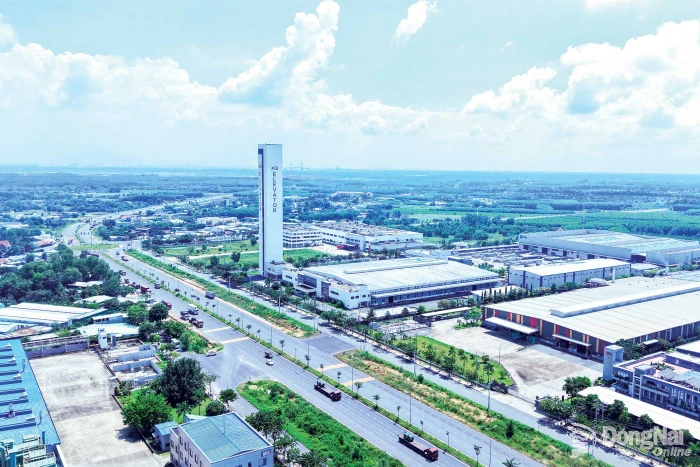
Dong Nai has planned 89 industrial parks covering nearly 43,400 hectares, alongside one border-gate economic zone. Of these, 44 industrial parks are currently operational, attracting nearly 3,000 projects by domestic and foreign businesses. Companies operating in these industrial parks contribute more than USD1 billion annually in direct state budget revenue. They also play a significant role in the country’s exports.
For years, Dong Nai has ranked among Vietnam’s leading localities in economic development, with industry making a major contribution. Industry and construction now account for 55.31% of the city’s economic structure, providing an important foundation for its target of achieving 11% economic growth.
However, meeting this target will require the industry to generate greater added value. Key challenges include removing transport bottlenecks, improving the quality of investment attraction and strengthening linkages between businesses.
For Dong Nai, transport infrastructure is not merely about facilitating travel; it is a decisive factor in industrial development. The expressway network, national highways, ring roads and Long Thanh International Airport give the city a major advantage in regional connectivity, freight transport and investment attraction. These advantages, however, can only be fully realized when transport routes are seamlessly integrated, ensuring smooth connections from industrial parks to seaports, airports and major economic centers.
Delays in connecting transport infrastructure drive up logistics costs, extend delivery times and directly undermine business competitiveness. Alongside accelerating major infrastructure projects, the city therefore needs to prioritize roads linking industrial parks with expressways, Long Thanh Airport and the seaport network. Transport infrastructure investment must stay ahead of demand to facilitate production and the movement of goods, preventing industrial development from outpacing the capacity of supporting infrastructure.
Better transport links to industrial parks will help Dong Nai attract more domestic and foreign investment in manufacturing. However, in this new phase of development, the city needs to be more selective, prioritizing high-tech projects that deliver greater economic value. Businesses in industrial parks should also develop mutually beneficial partnerships and integrate into global supply chains to support sustainable growth.
Achieving these goals requires industrial parks to have well-integrated technical infrastructure, cleared land ready for development and streamlined investment procedures. Businesses need a favorable, stable investment environment, with the city and local authorities addressing challenges and obstacles promptly. If these expectations are met, Dong Nai will be better positioned to attract more large-scale, high-quality investment projects both this year and in the years ahead.
Dong Nai has set a state budget revenue target of VND150 trillion for 2026, placing further demands on industry to maintain its role as the economy’s main growth engine. However, growth must go hand in hand with efficient use of land, capital and labor. Projects that are slow to get off the ground, infrastructure investments that fail to deliver their intended benefits, and industrial parks with inadequate connectivity all represent missed growth opportunities.
Dong Nai has a strong industrial base and occupies a strategic position in southern Vietnam’s transport network. The challenge is to translate these advantages into tangible economic gains. The city should prioritize three key areas: ensuring seamless transport connectivity to reduce costs and shorten delivery times; selectively attracting investment to increase industry value; and developing supporting industries to raise local content and strengthen competitiveness. Effective implementation of these priorities would enable the industry to make a greater contribution to Dong Nai’s economic growth.
By Khanh Minh – Translated by Mai Nga, Minho


Thông tin bạn đọc
Đóng Lưu thông tin