
Honored as an Outstanding Vietnamese Farmer during the 40 years of “Doi moi” (Renewal), Nguyen Viet Vi, Director of Phuoc Thien Agricultural Trade and Service Cooperative and Director of MITVEGAN Food Joint Stock Company in Tan Quan Commune, Dong Nai City, shared his experience in farming in the digital era with Dong Nai Newspaper and Radio, Television.
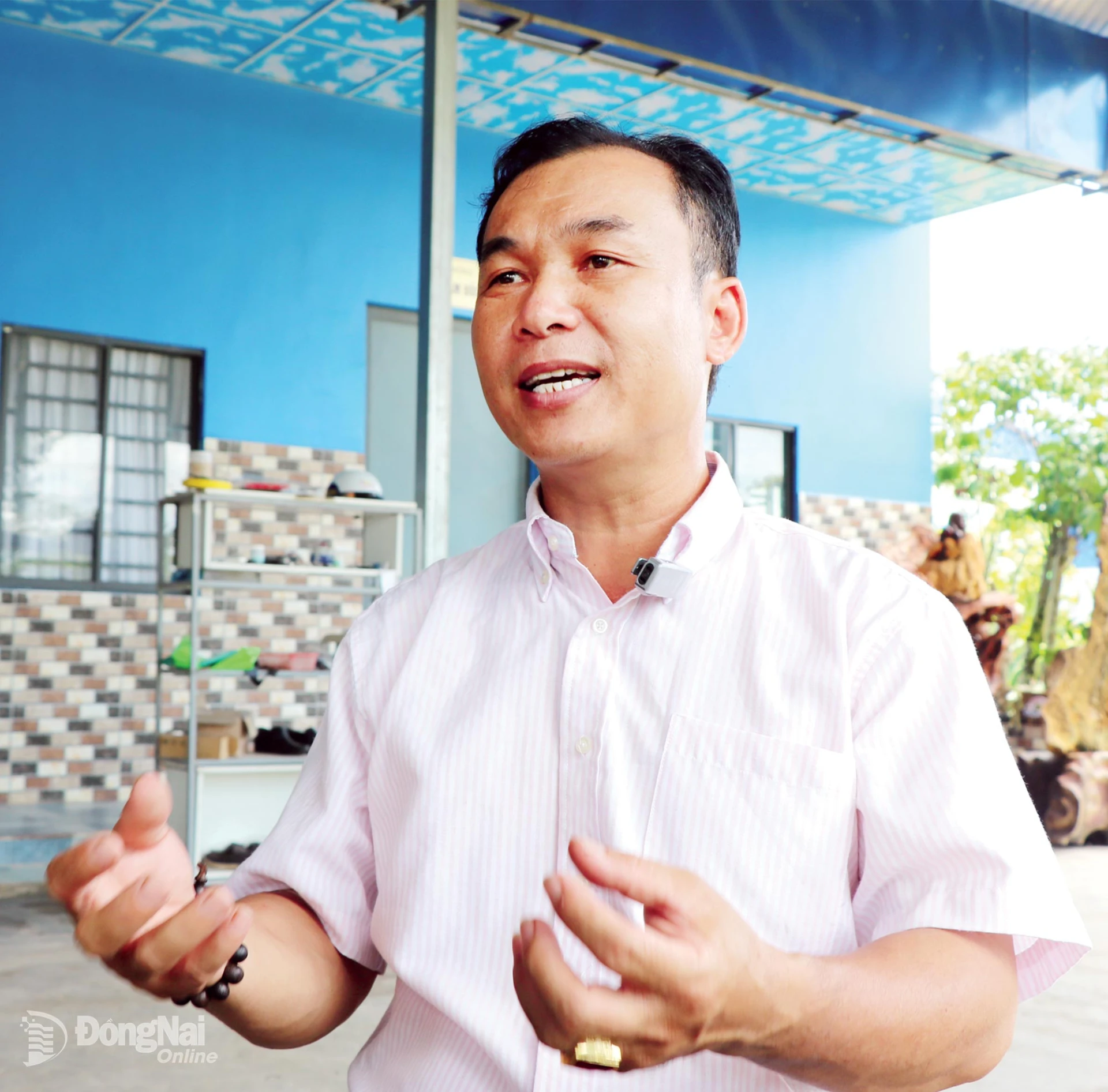 |
| Nguyen Viet Vi. |
After more than 20 years of experiencing bumper harvests followed by falling prices, switching crops, and even cutting down plantations, he chose to link farmers together, standardize growing areas, bring technology into orchards and develop deeper processing to take Vietnamese agricultural products to larger markets.
Farmers must learn to sell their products
• You have just been honored as an Outstanding Vietnamese Farmer during the 40 years of Renewal. How do you feel about the recognition?
- The title is also an opportunity to look back on the journey I have taken. I have worked in agriculture for more than 20 years and have been through all kinds of experiences. At one point, I grew guavas and then gave them up; I planted jackfruit and later had to consider switching to another crop. There were times when we produced a great deal, but prices fell, and we did not know how to cope.
After going through those experiences, I realized that simply following the approach of “plant more of whatever is fetching a good price this year” is not sustainable.
• How did those failures change you the most?
- In the past, I thought farming was all about growing healthy crops and achieving high yields. But the longer I worked in agriculture, the more I realized that growing crops well was only half the story.
We need sufficiently large production areas, stronger linkages, and the participation of businesses, scientists, the State and financial resources. Most importantly, agricultural products cannot simply be grown and then sold fresh.
I often tell fellow farmers something very simple: We must not only be good at growing crops; we must also be good at selling them.
• Was that way of thinking what led you to build a value-chain linkage?
- At first, every farmer followed a different approach. One applied fertilizer one way, another cared for crops differently. The products were inconsistent. Harvesting was also not concentrated, and if it was spread out for too long, it affected orders.
The hardest part was not persuading farmers to join the chain, but getting everyone to change the way they worked. We had to sit down together, standardize production processes, establish traceability, digitize orchards and revise our linkage contracts. We also had to negotiate with buyers for relatively stable prices so farmers could feel secure.
The cooperative now has 20 official members and is linked with 75 farmers. The linked production area covers about 1,500 hectares, mainly for jackfruit and guava, with an annual fruit output of around 2,000 tons. But the most important thing is not the 1,500 hectares or 2,000 tons. It is that everyone follows the same practices, maintains the same standards and targets the same market.
• You have also experimented with quite a few new crop varieties. Have you ever worried about falling into the trap of oversupply?
- Of course. Farming without considering that risk would be very dangerous.
That is why I never think that when a product is fetching a good price, we should simply plant more of it. Every year, we reassess the market and see what consumers need. I also do not allow myself to stop at a single product. I call it “term-based thinking”: within about five years, we must develop at least one or two new products.
When a product proves successful, we document the experience in a production process and then transfer it to other farmers. What we have learned to do must also be something others can learn and replicate.
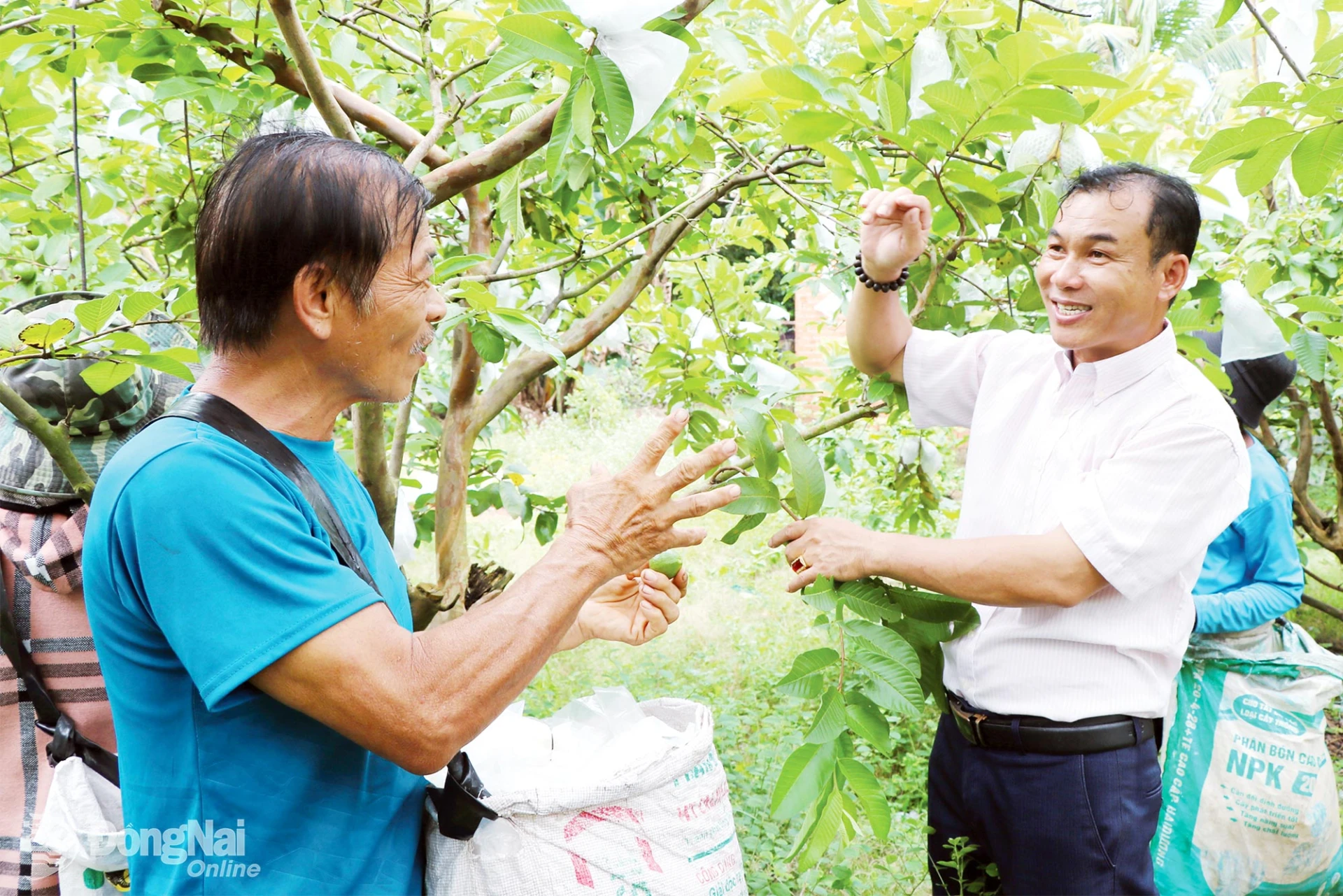 |
| Nguyen Viet Vi (right) instructs workers on caring for guava trees and protecting the fruit from pests and diseases. |
Vietnamese agricultural products need to go further
• Recently, you have talked a lot about young jackfruit, by-products and deep processing. Why have you chosen this direction?
- Because if we only sell fresh fruit, the value we create remains very limited. Take young jackfruit, for example. In the past, many people viewed it simply as a by-product, yet if we apply technology and process it into plant-based food, it becomes an entirely different product.
What I like about this approach is that we can make use of what we already have, reduce waste and create additional value for farmers. I think the future of agriculture will not be measured by how many tons we produce, but by how much value can be generated from one ton of agricultural products.
• How are you bringing technology into your orchards?
— Some of our jackfruit orchards have been equipped with electronic chips to monitor the trees and trace product origins. The data is uploaded to the management software. Wherever I am, I can open my phone and check how the trees are developing, what stage they are at and whether they need watering, fertilizing or other treatment. Artificial intelligence (AI) also supports us in many areas. We use ChatGPT to search for knowledge, create content, help find customers, provide customer support and operate our website.
In the past, these tasks required dedicated staff or took a great deal of time. Now, technology helps us reduce costs considerably, yet machinery is not the most difficult issue. The hardest part is still changing the way people work. Farmers have relied on experience for many years. Now, asking them to record data, manage operations through software and use AI requires step-by-step guidance. However, I see that farmers are becoming increasingly enthusiastic about new technologies.
• How do you want farmers to change their position in this value chain?
- I want farmers to stop thinking of themselves as people who simply grow crops and wait for someone to come and buy them. I often join farmers in visiting other production models, attending seminars and learning about markets. We have to improve our knowledge. If a small household has the necessary conditions, it can join with others to establish a cooperative. A stronger cooperative can then develop into a business. Within the cooperative, there should be a business serving as a pillar for marketing and selling products. That is how we can gain the opportunity to control part of the value chain instead of always remaining at the production end.
The same goes for the cycle of bumper harvests and falling prices. We cannot simply ask “Who is to blame?” every time prices fall. Farmers also need to plan ahead: Which market are we producing for? When should we sell? Should we sell raw products or further-processed products? Take jackfruit, for example. If we understand the needs of each market, know when the product is in demand, and organize production accordingly, the outcome will be very different.
Nguyen Viet Vi said the title of Outstanding Vietnamese Farmer during the 40 years of Renewal is recognition of what he has accomplished, yet there is still much work ahead. For him, innovation in agriculture is not simply about changing crops once; it is about changing the way we think about the value of agricultural products and the position of farmers.
• What are you planning to do next?
- I still have many things I want to do. I want our agriculture to go further, but it must advance through technology, processing and markets. In Dong Nai, I hope we can develop a concentrated jackfruit production area, along with a processing plant and satellite facilities, so that jackfruit can be sold not only as fresh fruit but also as a range of processed products.
I also hope the State will introduce better policies on capital, land, infrastructure, science and technology, and taxation so that concentrated production areas have the conditions to develop. I often picture it this way: Vietnamese agricultural products must become the “beautiful girls” of the global market. We have to show that beauty through quality, technology, processing and the stories behind our products.
By Vuong The – Translated by Mai Nga, Minho
Thông tin bạn đọc
Đóng Lưu thông tin