
Regional connectivity has become an objective and indispensable requirement for development in the current period. Politburo Resolution No. 27-NQ/TW, dated August 28, 2026, on regional development and the organization of national development space in the new period (Resolution No. 27), calls for reorganizing national development space based on the functions, advantages and linkages among localities.
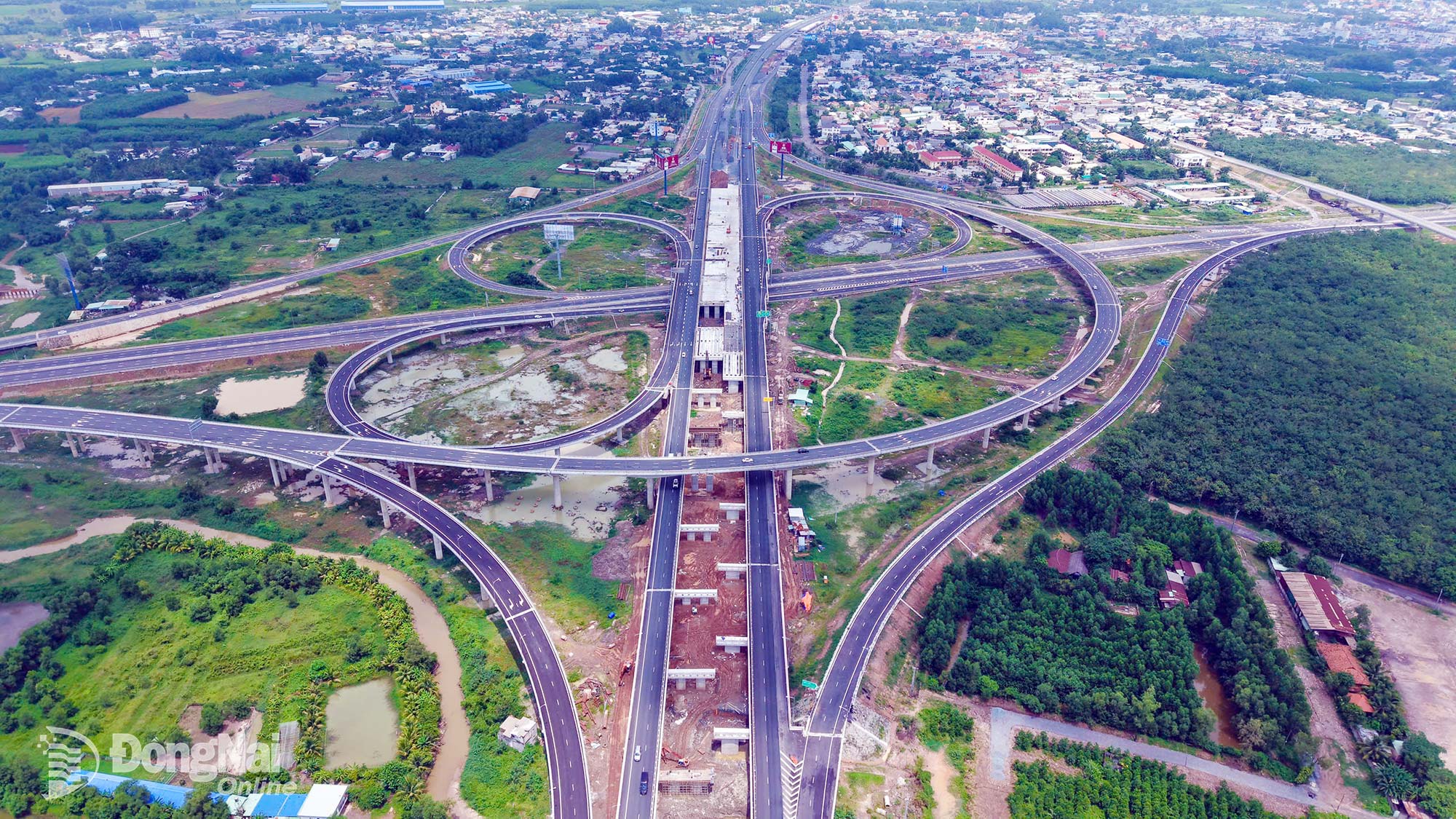 |
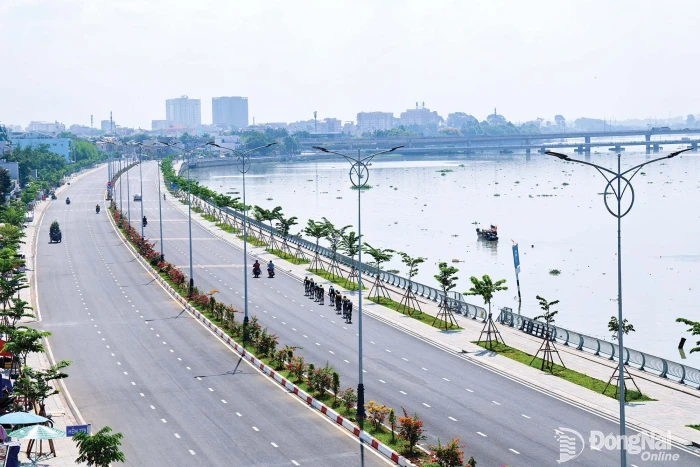
| Transport connectivity is a key link in the Southern economic corridor connecting Dong Nai City and Ho Chi Minh City. Photo: V.N. |
Under the new spatial structure of the Southern region, the Moc Bai (Tay Ninh) - Ho Chi Minh City - Bien Hoa (Dong Nai) - Vung Tau (Ho Chi Minh City) corridor has been identified as one of the priority economic corridors. For Dong Nai, this provides a basis for redefining its role in the region's production, logistics, urban development and trade networks.
Connecting to create shared value
Resolution No. 27 points out several shortcomings after more than three years of implementing regional development resolutions. Infrastructure remains a bottleneck, while economic corridors and industry clusters have developed slowly. Linkages among localities have yet to generate results commensurate with their potential.
A new feature of Resolution No. 27 is its approach to development space based on functions and connectivity, rather than being confined by administrative boundaries. Growth poles, economic corridors, urban chains and economic centers must be connected through infrastructure and value chains. For interregional projects, the resolution calls for localities to jointly participate in decision-making and investment, share responsibility and benefit from the results.
Among the priority economic corridors, Resolution No. 27 identifies the Moc Bai - Ho Chi Minh City - Bien Hoa - Vung Tau corridor as more than simply a transport axis running through several localities. Its broader goal is to create a space linking border gates, urban areas, production centers, seaports and logistics hubs.
Previously, the Prime Minister's Decision No. 615/QD-TTg, dated April 4, 2026, approving adjustments to the Southeastern region's master plan for 2021–2030, with a vision to 2050, also identified the Moc Bai - Ho Chi Minh City - Bien Hoa - Vung Tau corridor as one of the region's key development corridors.
Pham Quang Nhat, Director of the Ho Chi Minh City Trade and Investment Promotion Center, said that under Resolution No. 27, development space must be based on functions, advantages and connectivity rather than being divided by administrative boundaries. This provides a foundation for reshaping connections among Ho Chi Minh City, the Southeastern region and the Mekong Delta. Ho Chi Minh City brings together markets, capital, technology, high-quality services and international networks; the Southeastern region provides industrial, manufacturing and logistics scale; while the Mekong Delta serves as a foundation for agriculture, fisheries, processing, the marine economy, energy and climate change adaptation. "Connecting these areas into value chains will increase the value of all three development spaces," Nhat said.
Leveraging infrastructure advantages
The business community has high expectations for stronger regional connectivity. At a conference on investment connection and development cooperation between Ho Chi Minh City and provinces and cities in the Southeastern region and Mekong Delta on September 17, Dinh Hong Ky, Chairman of the Ho Chi Minh City Green Business Association, said Ho Chi Minh City and localities in the Southeastern region and Mekong Delta need to build a unified connectivity space. This would allow businesses to identify opportunities on a regional scale rather than within individual localities. Ultimately, the goal is to enable businesses to genuinely invest, produce and conduct business within an integrated economic space.
Dong Nai enjoys a strategic location as it is situated between Ho Chi Minh City and the Cai Mep - Thi Vai seaport area, while also connecting with the Central Highlands and other Southern provinces. In particular, the simultaneous development of Long Thanh International Airport, Phuoc An Port, and the network of expressways and ring roads is significantly reshaping the locality’s transport role.
In logistics, Dong Nai is planning logistics centers south and northeast of Long Thanh Airport, a cargo transshipment center and the Phuoc An Logistics Center. Phuoc An Port has been identified as a key hub in the locality's seaport-airport logistics corridor.
These conditions indicate that Dong Nai can perform multiple functions within the Southern economic corridor. However, the key issue is not how many transport projects or logistics centers the locality has, but how these facilities are connected and which economic space they are intended to serve.
In particular, developing projects and works that directly connect Dong Nai City with Ho Chi Minh City is crucial to leveraging the advantages of both localities. According to Member of Dong Nai City Party Committee, Director of the Dong Nai City Department of Construction Nguyen Anh Tuan, transport connectivity between Ho Chi Minh City and Dong Nai in the coming period should not be viewed solely as a means of easing congestion or increasing travel capacity between the two localities. "The broader goal is to create an interconnected economic and urban space," Tuan said. Ho Chi Minh City will continue to serve as an economic, financial, services and innovation center, while Dong Nai will promote its role as a complementary growth pole based on industry, urban development, services and logistics, and particularly as the region's international aviation gateway with Long Thanh International Airport.
Resolution No. 27 identifies three economic corridors as priorities for development: The North-South corridor based on the eastern North-South transport axis; Lao Cai - Hanoi - Hai Phong - Quang Ninh; and Moc Bai - Ho Chi Minh City - Bien Hoa - Vung Tau.
By Vuong The - Translated by Mai Nga, Thu Ha

Thông tin bạn đọc
Đóng Lưu thông tin