
With more than 1 million hectares of agricultural land, Dong Nai has developed large-scale commodity agriculture but is now facing the need to generate greater value. The sector is therefore shifting toward market-driven production and value chains, with businesses, cooperatives and farmers working together from raw material production to processing and export. Science and technology, and compliance with standards, are providing the foundation for improving the competitiveness of farm produce.
Part 1: From the fields to major markets
In recent years, Dong Nai farmers have established production linkages and applied science and technology to develop high-yield, high-quality farming areas that are integrated into agricultural export value chains. The city is home to large-scale production areas for livestock and crops, with several products ranking among the country’s leading commodities in terms of scale, output and quality, including pigs, chickens, pepper, cashew, cocoa, durian and bananas.
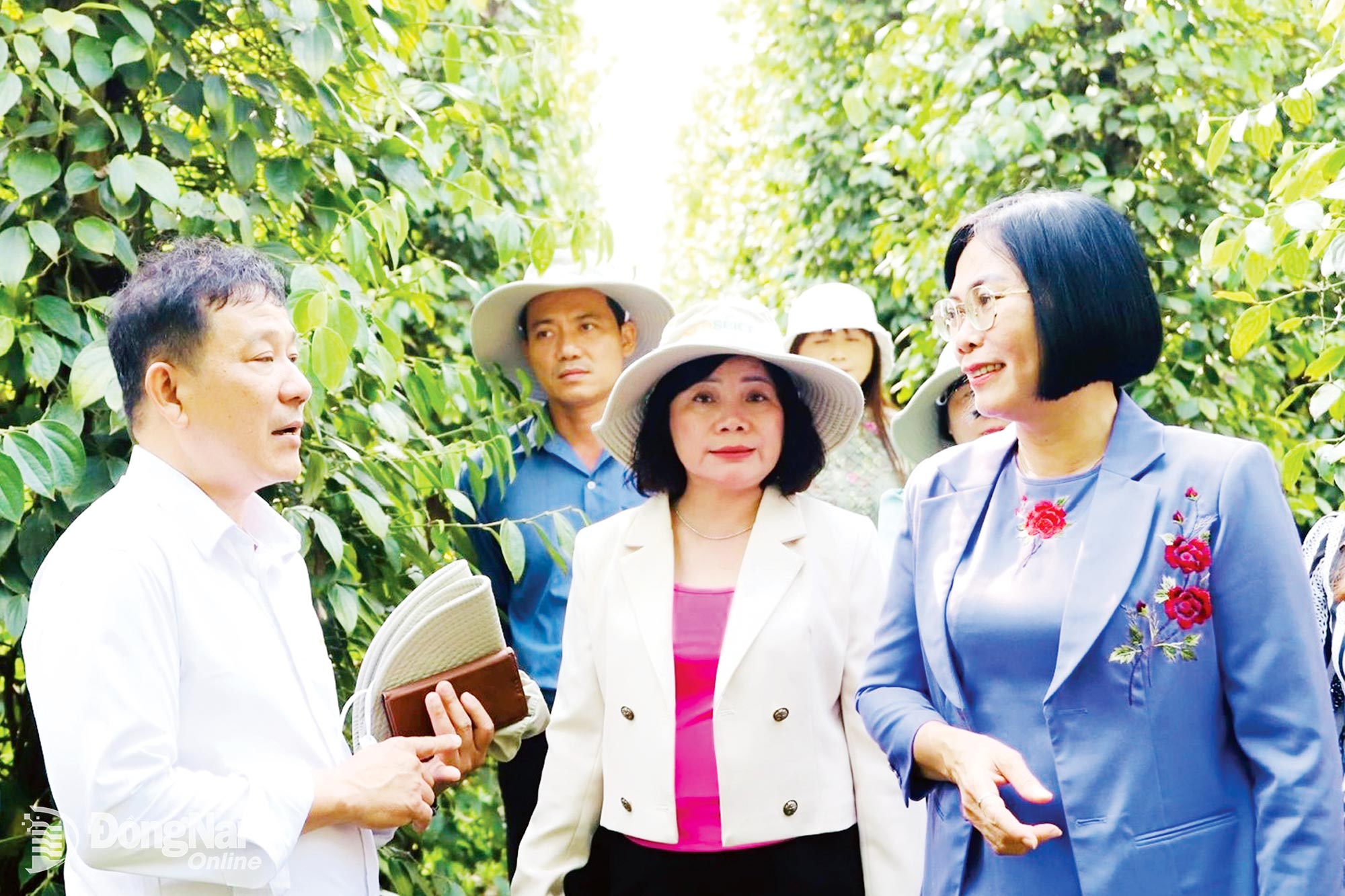 |
| Nguyen Thi Hoang, Vice Chairwoman of the City People’s Committee (right), visits an organic pepper-growing area for export in Nghia Trung Commune. Photo: Binh Nguyen |
Dong Nai’s agricultural products are now exported to more than 100 countries and territories, generating nearly US$8 billion in annual export revenue.
Shifting toward agricultural economy
Dong Nai moved early to leverage its industrial development advantages and spearhead agricultural modernization through mechanization and high technology, developing large-scale commodity production linked to global markets. The city’s farmers have proven dynamic, innovative and responsive in shifting from an agricultural production mindset to an agricultural economy, with the focus moving from output to efficiency, added value and market demand.
Le Van Quyet, Director of Long Thanh Phat High-Tech Agricultural Cooperative in Long Thanh Ward, was among the outstanding farmers honored as an “Outstanding Vietnamese farmer in 40 years of Doi Moi” in 2026. He is a pioneer in applying high technology to large-scale industrial white broiler farming. Modern automated technology is used throughout the production process, enabling farmers to monitor detailed data on flock numbers, weight gain and mortality rates, control feed consumption, receive automatic vaccination reminders and monitor barn conditions through software systems.
He also founded Long Thanh Phat High-Tech Agricultural Cooperative to bring together members who are farm owners, suppliers of breeding stock, animal feed producers and processors, creating a value chain spanning production, processing and export.
Quyet said that building sustainable production linkages and developing long-term production plans based on market demand had helped cooperative members overcome concerns about market outlets. Even when oversupply causes industrial chicken prices to fall sharply, members of the value chain remain confident in investing because processors and exporters are committed to purchasing their products at favorable prices. This, he said, helps address one of the key challenges facing the livestock sector as international integration deepens.
Also honored as an “Outstanding Vietnamese farmer in 40 years of Doi Moi” in 2026, Nguyen Viet Vi, Director of Phuoc Thien Trade and Service Cooperative in Hung Phuoc Commune, has achieved notable success in crop production, developing high-value specialty products such as red-fleshed jackfruit, Xtieng milk guava, bamboo shoots and purple bananas. He is a pioneer in digital transformation, applying digital technologies across the entire production chain, from cultivation, irrigation and moisture monitoring to obtaining growing-area codes, harvesting, deep processing and e-commerce sales.
Vi said the cooperative’s processed jackfruit products, including green jackfruit spring rolls, jackfruit dumplings, young jackfruit sausages, young jackfruit pate and braised young jackfruit, are well received in the market. These products not only command stable prices but also generate high added value. Many of the cooperative’s jackfruit products have been rated three or four stars under the OCOP (One Commune One Product) program, enhancing their brand value and market presence.
From raw material areas to exports
Following the merger, Dong Nai has retained its position as the country’s “livestock capital,” with large-scale pig and poultry production. The city currently has about 3.94 million pigs, with around 90% raised on farms using modern industrial production technologies. Its chicken population stands at approximately 32.6 million, with about 89% raised in farms operating closed production chains.
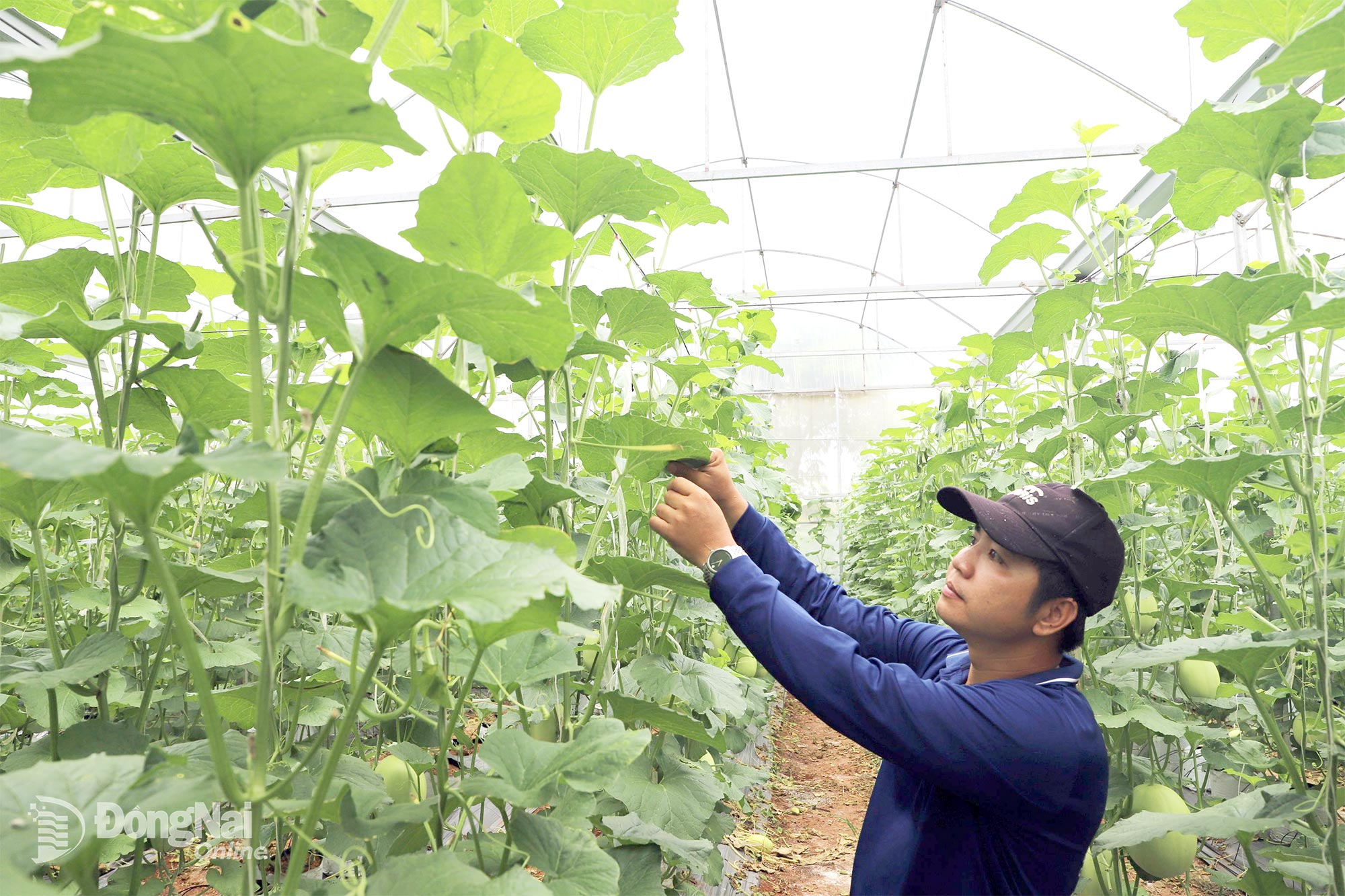 |
| Farmers in Long Khanh Ward apply high technology to grow melons in greenhouses, generating high incomes. |
With more than 513,000 hectares under perennial industrial crops and nearly 102,000 hectares of fruit trees, Dong Nai is also a major production hub for several key industrial and fruit crops with strong export potential. Rubber accounts for more than 285,000 hectares, while cashew covers nearly 175,000 hectares, durian 23,000 hectares and bananas 21,000 hectares. These key crops have been organized into concentrated production zones and specialized growing areas, with a focus on products that have strong export potential, high added value and are well-suited to local natural conditions. To date, more than 300 concentrated production areas have been established across the city.
Lieu A Kieu, Director of Kelly Swangle International Co., Ltd. in Ho Chi Minh City, said Dong Nai is a major banana-growing hub and was among the first localities to develop specialized areas for tissue-culture bananas for export, giving local farmers extensive experience in growing the crop. The company plans to expand banana cultivation by hundreds of hectares in the city, using export-growing area codes to secure supplies for rapidly expanding export markets. Kieu hopes the city will introduce more targeted policies to develop agricultural infrastructure, particularly by planning specialized, export-oriented growing areas and supporting investment in facilities for the preliminary processing and packing of fresh agricultural products, including fruit, at the source. Such measures would create more favorable conditions for businesses to make long-term investments, she said.
Sharing his views on the opportunities and challenges facing Dong Nai’s farm produce as it seeks to strengthen its position in international markets, Vu Thai Son, Chairman of the Dong Nai Cashew Association, emphasized that Vietnam’s cashew industry surpassed the US$5 billion export mark for the first time in 2025. This breakthrough has helped cashew exports set new records, making cashew a billion-dollar export industry and cementing Vietnam’s position as the world’s leading cashew exporter. Dong Nai is not only Vietnam’s “cashew capital” but also one of the world’s major cashew production and processing centers. Dong Nai accounts for 85% of Vietnam’s cashew output and an estimated 65–70% of global cashew export volume, thanks in large part to strong investment in processing and export activities, including a large number of deep-processing facilities. These advantages provide a solid foundation for the city to develop the cashew sector sustainably and build a stronger national and international brand for its cashew products, Son said.
With the goal of developing safe, specialized agricultural production areas that meet export-market standards, local authorities across the city have introduced various policies to encourage the expansion of clean farming models. To date, nearly 4,300 hectares of crops across the city have received VietGAP certification, while 11 organic farming areas covering nearly 19,400 hectares have been planned. Dong Nai currently has 203 export-growing-area codes covering nearly 29,000 hectares, along with 82 packing facilities that have been granted codes to serve export markets, including China, the United States, Europe, Australia and New Zealand.
By B.Nguyen, K.Minh – Translated by M.Nguyet, Minho


Thông tin bạn đọc
Đóng Lưu thông tin