
Dong Nai is accelerating the implementation of Politburo Resolution No. 10-NQ/TW, issued on June 8, 2026, on the development of the foreign-invested sector. The resolution emphasises the development of modern, integrated infrastructure and new growth zones to seize opportunities arising from the global restructuring of supply chains while attracting high-quality foreign direct investment (FDI).
To gain further insight into the city's strategic vision, Dong Nai Newspaper and Radio, Television spoke with Nguyen Kim Long, Member of the City Party Committee (CPC)’s Standing Board and Permanent Vice Chairman of the Dong Nai People's Committee.
 |
| Deputy Secretary of the CPC Vo Tan Duc (right) and Permanent Vice Chairman of the Dong Nai People's Committee Nguyen Kim Long (left) present investment registration certificates to FDI enterprises in early 2026. Photo by Ngoc Lien. |
A new turning point in FDI attraction
*Dong Nai has long been one of Vietnam's leading destinations for foreign investors. In your view, how will Resolution No. 10 shape the city's FDI attraction strategy in the coming years?
 |
| Member of the CPC’s Standing Board and Permanent Vice Chairman of the Dong Nai People's Committee Nguyen Kim Long |
-Resolution No. 10 marks a fundamental shift in the country's investment strategy, moving from attracting FDI based on quantity to prioritising quality, efficiency, innovation, technology transfer and sustainable development. It represents both an important strategic direction from the Politburo and a direct requirement for an industrial powerhouse like Dong Nai.
For Dong Nai, the resolution serves as a key driver of a new development strategy. The city’s goal is not only to attract more FDI projects but also to foster a modern development ecosystem in which infrastructure, logistics, technology and a highly skilled workforce form the foundation for Dong Nai to become a major growth pole for both the region and the country.
Dong Nai's modern multimodal transport network, centred on Long Thanh International Airport, together with its abundant industrial land bank, provides the city with a new competitive advantage.
These strengths will enable Dong Nai to develop internationally competitive growth zones capable of attracting high-quality FDI.
*How is Dong Nai translating the objectives of Resolution No. 10 into concrete actions?
-Dong Nai is currently home to investors from 51 countries and territories, with more than 2,200 valid FDI projects worth over US$45 billion in registered capital. In the first six months of 2026 alone, the city attracted nearly US$1.5 billion in FDI, demonstrating continued investor confidence, particularly in manufacturing, supporting industries and logistics.
 |
| Permanent Vice Chairman of the Dong Nai People's Committee Nguyen Kim Long (centre) receives a delegation from the French Consulate General in Ho Chi Minh City during a working visit to Dong Nai. |
Dong Nai is affirming its position as one of Vietnam's leading industrial centres. A total of 89 industrial parks have been planned across the city. Of these, 44 are already operational, covering more than 15,000 hectares, while the remaining 45 industrial parks, with a combined area of over 28,000 hectares, are planned for development during the 2021–2030 period. This long-term planning demonstrates Dong Nai's commitment to becoming one of the country's key growth poles while translating the objectives of Resolution No. 10 into reality.
Enhancing competitiveness
*As you have just mentioned, Resolution No. 10 represents a new milestone in Vietnam's FDI strategy. Given Dong Nai's long history of attracting foreign investment, how does the city leadership assess Dong Nai's current position?
-This is an issue that the city's leadership is paying close attention to. While Dong Nai has achieved remarkable success in attracting FDI over the years, we recognise the need for a fundamental shift towards a new generation of FDI projects that deliver higher technological content, stronger innovation capacity and greater added value.
In reality, many FDI projects developed in recent years focused on processing and assembly, were labour-intensive and required extensive land use. Their contribution in terms of value added to the local economy has remained relatively modest. Research and development, innovation, technology transfer and linkages with domestic enterprises have also been limited.
In addition, several industrial parks developed in earlier stages were located primarily in areas with favourable terrain and transport conditions, such as riverside locations and sites adjacent to residential areas. These parks now need to be reorganised to align with modern urban development. Meanwhile, next-generation technology projects require stringent standards for stable power supplies, advanced digital infrastructure, green emission standards, environmental management systems and high-quality housing for experts - requirements that older infrastructure was not designed to meet.
Furthermore, industrial park development in some periods was not closely aligned with the city's long-term industrial strategy. Most parks were planned as multi-sector zones, whereas leading global corporations increasingly seek specialised industrial ecosystems with integrated supply chains.
*Based on these assessments, what are Dong Nai leadership's strategic priorities for attracting next-generation FDI under Resolution No. 10?
Dong Nai's guiding principle is that industrial park development must be integrated into the city's overall spatial planning. Industrial parks should support the development of strategic growth zones, while FDI should serve as a catalyst for innovation and economic competitiveness. Accordingly, the city is focusing on three strategic breakthroughs.
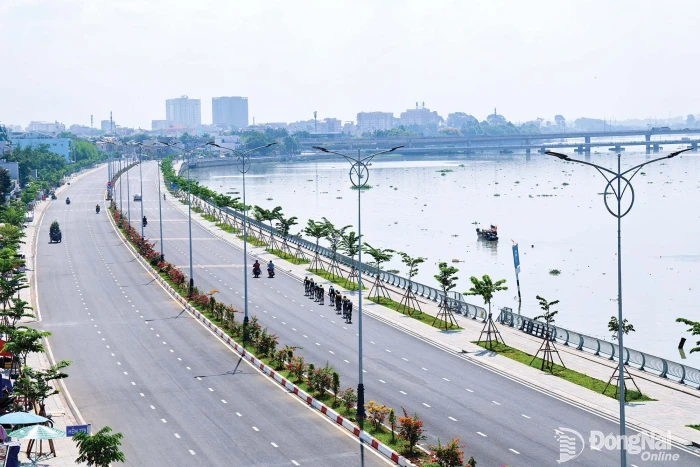
First, we will reorganise the city's development space by establishing new growth zones capable of attracting high-value investment chains. Rather than pursuing fragmented development, Dong Nai will establish highly connected growth zones. The city’s Southern area will become an international gateway and a hub for high-tech industries, logistics and modern urban development, centred on Long Thanh International Airport, the seaport system, strategic transport corridors and the Bien Hoa–Long Thanh–Nhon Trach riverside corridor. Meanwhile, the Northern area is envisioned as a new development hub for industry, high-tech agriculture, energy and the ecological economy. The complementary development of these two areas will create greater room for growth and strengthen Dong Nai's ability to attract strategic FDI over the long term.
Second, the city will restructure its industrial park system to meet the standards of future industries while ensuring synchronised development with the city's overall infrastructure. Industrial park planning must be forward-looking and move in the right direction. Decisions on location, scale, infrastructure standards and industrial orientation will be based on the requirements of global supply chains and strategic sectors that Dong Nai aims to prioritise, including semiconductors, electronics, artificial intelligence, data centres, biotechnology, advanced materials, supporting industries and modern logistics.
"Dong Nai is accelerating the transformation of existing industrial parks while developing new ones as smart, eco-industrial parks with low- emissions and integrated infrastructure. A modern industrial park should be more than a manufacturing base. It should serve as part of a regional development ecosystem, seamlessly connected to international airports, seaports, logistics centres, innovation hubs and smart urban areas.”
Permanent Vice Chairman of the Dong Nai People's Committee Nguyen Kim Long.
Third, the city is shifting its mindset from simply handling administrative procedures to proactively supporting investors throughout the entire investment process. Rather than waiting for investors to come, Dong Nai is preparing favourable conditions in advance by making full use of new central government mechanisms to create an open, business-friendly investment environment. The city will work alongside investors from infrastructure preparation and workforce development through project implementation, ensuring that every strategic FDI project has the best possible conditions for success.
By N. Lien – Translated by M.Nguyet, Thu Ha


Thông tin bạn đọc
Đóng Lưu thông tin