
Since ancient times, the emergence of civilizations has been closely associated with the basins of major rivers. Typical examples include Mesopotamia, linked to the Tigris and Euphrates rivers; Egypt, linked to the Nile River; India, linked to the Ganges River; and the Yellow River civilization, linked to the Yellow River. This is understandable because water is the foundation of life. The alluvium deposited by rivers supports agricultural development, while rivers and their tributaries also provide convenient routes for trade.
From this brief overview, it is clear that Dong Nai City possesses exceptionally valuable natural resources in its river system, including the Be River, the Dong Nai River, the La Nga River, the Mang River, the Ray River, and their tributaries. How to maximize the value of these rivers and lakes for local socio-economic and cultural development is a question that the leadership of Dong Nai City has been addressing.
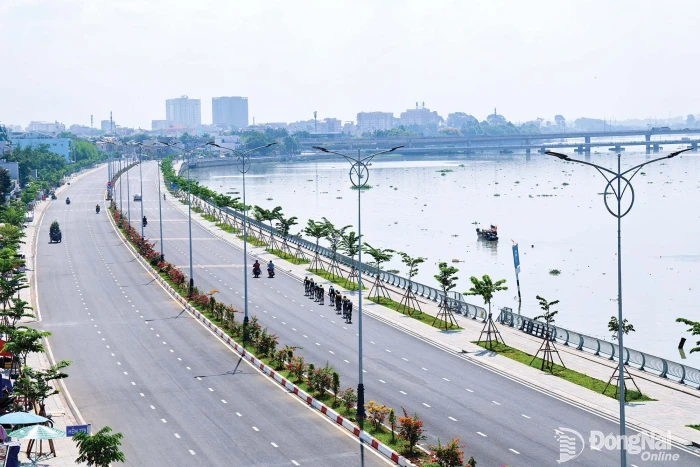
Dong Nai City has identified its river system and natural ecosystem as a strategic landscape axis for shaping the city's distinctive urban identity. Under this orientation, the Dong Nai River serves as the central element of the city's development into a green, ecological, and smart riverside urban area.
In tourism development, the city plans to establish river tours linking historical sites and scenic attractions along river routes, while promoting tourism associated with Tri An Lake, the Thac Mo Hydropower Reservoir, and other destinations.
In the field of transportation, Dong Nai City is studying plans to develop an inland waterway transport system connecting the northern part of the city to the Dong Nai River. This will play an important role in logistics development and facilitate the city's economic growth.
Every river carries within it layers of historical and cultural sediment accumulated by generations of communities living throughout its basin. Over nearly 330 years of formation and development, the Dong Nai region has witnessed riverside communities reclaiming land, establishing settlements and markets, and developing trading ports, with Cu Lao Pho as a prime example. Therefore, efforts to promote the value of these rivers should go beyond harnessing their potential for transportation, hydropower, irrigation, and tourism to support economic development. They should also aim to establish a system of cultural values associated with the riverine environment.
To achieve this objective, the development process must pay close attention to preserving and promoting the tangible and intangible cultural values found along the rivers, including communal houses, pagodas, temples, traditional craft villages, festivals, customary practices, and collective memory. Only then can each river and river landing serve not merely as a natural resource for development but, in the long term, also contribute to enriching local identity and creating cultural heritage for future generations.
By Hai Yen – Translated by Minh Hong, Minho


Thông tin bạn đọc
Đóng Lưu thông tin