
In recent years, many of the markets importing Vietnamese agricultural products have introduced additional technical barriers, particularly the European Union (EU), a major destination for Vietnamese agricultural exports. These markets are imposing increasingly stringent requirements on phytosanitary controls and pesticide and chemical residue levels in agricultural products.
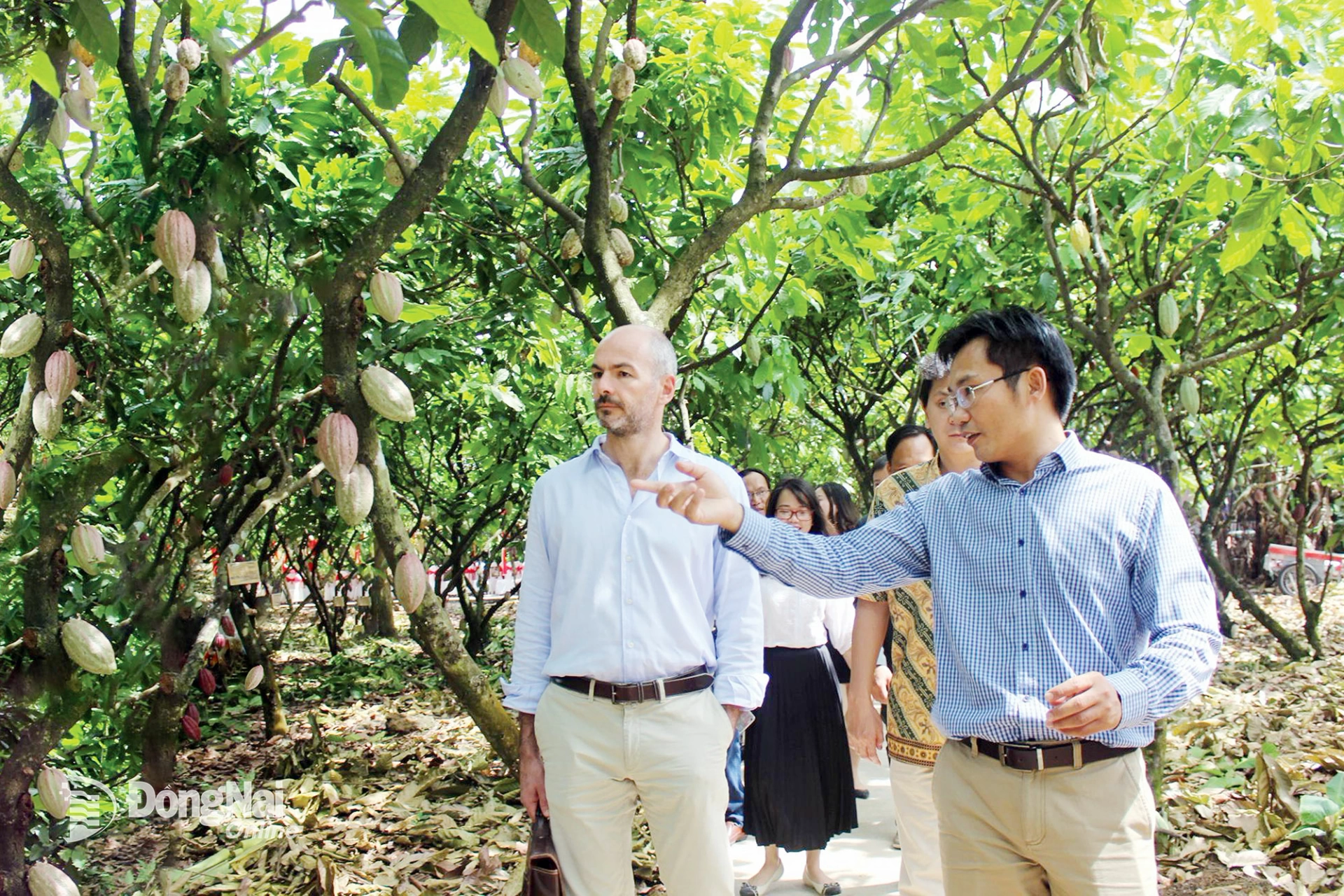 |
| Foreign customers visit a cocoa-growing area in Phu Hoa Commune. Photo: Binh Nguyen. |
If agricultural exporters fail to keep up with new regulations in overseas markets, they risk losing competitiveness in key markets that still offer significant potential.
Tighter phytosanitary requirements
In recent years, the EU and many other markets have continued to tighten sanitary and phytosanitary measures. These include lowering maximum residue limits for pesticides, adding new regulated pests, and creating additional requirements for Vietnamese agricultural exports.
Dr. Ngo Xuan Nam, Deputy Director of Vietnam SPS Office under the Ministry of Agriculture and Environment, said the EU continues to lower maximum residue limits for pesticides across a wide range of imported agricultural products. Specifically, the bloc is drafting regulations to tighten maximum residue limits for pesticide active substances, with many of the limits expected to be reduced significantly. The new regulations are expected to be announced in the first quarter of 2027 and take effect six months later. This will serve as a transition period, allowing exporting countries to proactively adjust their production practices to comply with the new requirements. At the same time, differences are beginning to emerge within the EU. Previously, sanitary and phytosanitary measures were applied uniformly across all 27 member states, but some countries have recently introduced their own requirements that are stricter than the EU-wide standards.
According to Dr. Ngo Xuan Nam, if businesses and farmers fail to keep abreast of relevant EU regulations promptly, Vietnam could face warnings and increased inspections. In cases of violations, shipments could be returned or destroyed, while compliance costs would rise. In addition, the EU's regulatory approach is no longer limited to border inspections but is shifting toward risk management across the entire production chain. If businesses maintain effective control over pesticide residues, the EU may review and reduce inspection frequencies within six months. Conversely, inspection frequencies could be increased if violations are detected.
Previously, seven Vietnamese products were subject to EU controls. Thanks to management improvements, the EU has reduced the list to four plant products currently subject to enhanced import controls: durian, dragon fruit, okra, and chili peppers. Durian is inspected at a rate of 20%, while dragon fruit is inspected at a rate of 30%.
The EU will also apply new anti-deforestation requirements. Accordingly, major Vietnamese export sectors, including rubber, timber, coffee, cocoa, and livestock, will be required to provide geolocation data proving that production has not contributed to deforestation, along with documentation demonstrating that production is legal.
A major market for Dong Nai
The EU is one of Dong Nai's important trading partners. The city's major agricultural, forestry, and fishery exports to the bloc include timber and wood products, coffee, cocoa, cashews, pepper, vegetables, fruit, and confectionery. These products continue to have significant potential in the EU market.
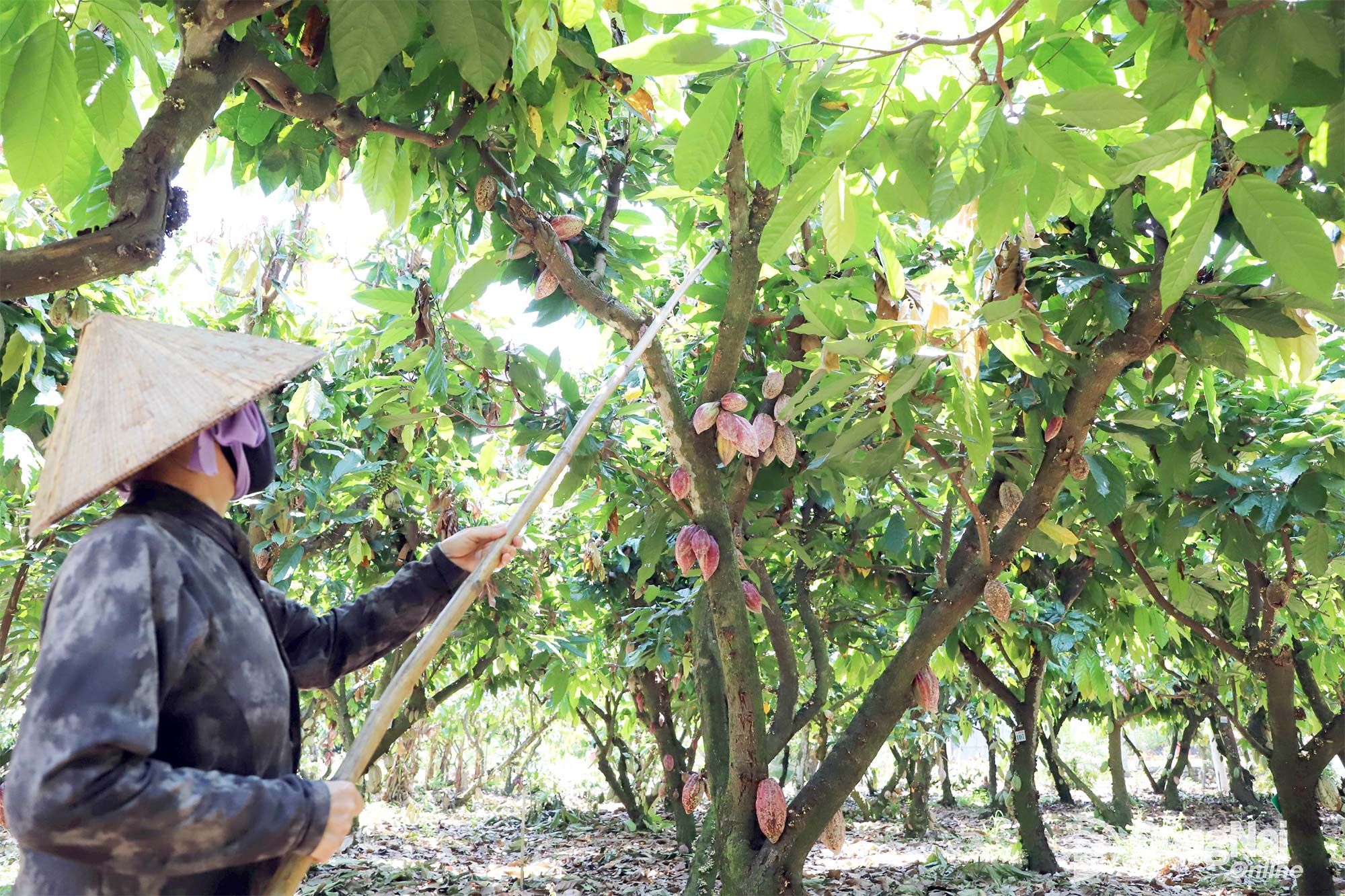 |
| Cocoa products have strong export potential in the EU market. In the photo: A cocoa-growing area in Phu Hoa Commune. |
Vu Thai Son, Chairman of the Dong Nai Cashew Association, said that despite global trade uncertainties in 2025, Vietnam's cashew industry surpassed the USD5 billion mark in exports for the first time. This breakthrough helped the cashew sector set successive export records, turning it into a billion-dollar industry with shipments to more than 100 countries and territories worldwide. Demand for green and clean cashew products is rising rapidly, particularly in demanding markets that require farmers to adopt cleaner production processes. To expand exports to these markets, processing companies also need to invest in green factories.
According to Vu Thai Son, Dong Nai is not only Vietnam's "cashew capital" but also one of the world's major centers for cashew production and processing. Dong Nai City needs to introduce stronger policies to support deep processing and enhance the sector's competitiveness in export markets.
From another perspective, Jos van Gulick, General Director of Nedspice Processing Vietnam Limited, a Dutch-invested company, said the company has invested in two modern processing plants in Ho Chi Minh City and Dong Tam Commune, Dong Nai City. The company has established links with around 10,000 pepper farmers with the goal of building sustainable production chains that meet export-market standards. One of the challenges facing pepper production is the declining proportion of output that meets the quality standards of demanding markets, due to fragmented farming, intercropping, and cross-contamination between crops.
Jos van Gulick said Dong Nai is a major raw-material sourcing area for the company. Going forward, the company will continue to maintain and expand its sustainable pepper supply-chain development program in Dong Nai City. Nedspice is also studying Dong Nai as a potential location for an integrated spice-processing complex geared toward exports and meeting food-safety standards. The facility would be designed to generate long-term economic value for the region. The aim is to increase Dong Nai's export value by exporting deep-processed agricultural products while generating revenue for the city through employment and partnerships with Nedspice's local suppliers.
Agricultural processing and export businesses in Dong Nai City are closely monitoring investment incentive policies. In particular, they hope to gain access to support programs for developing supply chains from raw-material production areas through to deep processing.
By Binh Nguyen – Translated by Mai Nga, Minho


Thông tin bạn đọc
Đóng Lưu thông tin