
With its advantages in ecological landscapes, transport infrastructure and appropriately zoned land, Dong Nai City is rolling out the red carpet to attract investment in elderly care facilities.
The city aims to develop well-planned, modern elderly care facilities that integrate healthcare and wellness services and approach regional standards, meeting the growing needs of an ageing population.
Nine promising investment projects
Member of the Standing Board of the City Party Committee, Vice Chairman of the Dong Nai City People's Committee Le Truong Son said the city has proactively reviewed its planning and identified nine potential sites to attract investment in non-public elderly care facilities of various scales.
 |
| The introduced land location and the elderly care facility model in Nha Bich Commune. |
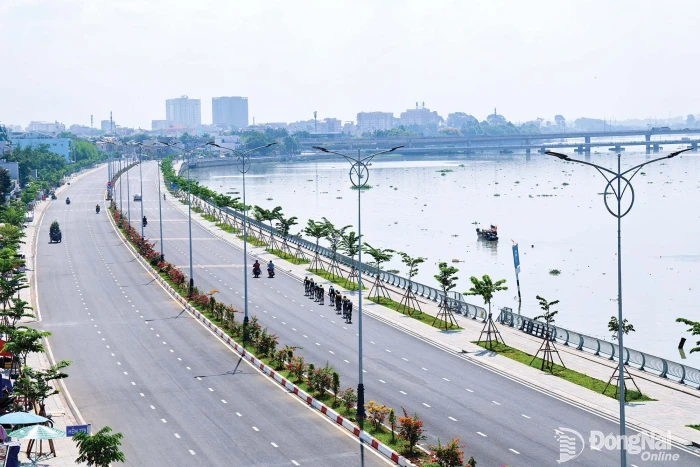
According to Vice Chairman of the Long Hung Ward People's Committee Huynh Dang Minh Khoa, one of the proposed locations is situated within a 130-hectare riverside urban area along the Buong River. The project is envisioned as a next-generation nursing home model integrating medical care, rehabilitation services, accommodation, wellness parks and community spaces to provide comprehensive care for senior citizens.
Meanwhile, Phuoc Long Ward has proposed two locations covering approximately 22 hectares and 21 hectares respectively. Vice Chairman of the Ward People's Committee Nguyen Trung Thanh said the first site is located at the foot of Ba Ra Mountain, featuring natural streams and scenic surroundings suitable for developing an eco-retirement village, a premium nursing center and a rehabilitation complex. The second site, adjacent to the Be River scenic corridor, is planned as an elderly care facility combined with an ecological park as well as cultural and sporting facilities for the elderly.
In Nha Bich Commune, local authorities are inviting investment in a proposed 31-hectare project combining an elderly care center, healthcare and wellness services. Located along Phuoc Hoa Lake, the site is planned as a healthcare and wellness destination linked with eco-tourism development.
In addition, Bau Ham, Dong Tam, Dong Xoai, Binh Phuoc, Ta Lai and Phu Ly communes and wards also have available land suitable for medium- and large-scale elderly care projects. These sites share common advantages, including attractive natural landscapes, convenient transport connections and well-planned land reserves.
Investment incentives for elderly care projects
According to leaders of the Dong Nai City People's Committee, investors developing elderly care facilities in Dong Nai will enjoy a range of preferential policies.
Under the Law on Value-Added Tax, services for elderly care—including healthcare, nutrition, physiotherapy, rehabilitation, and cultural, sporting and recreational activities for senior citizens—are exempt from value-added tax.
Regarding corporate income tax, socialized healthcare projects that satisfy criteria set by the Prime Minister are eligible for a preferential tax rate of 10 per cent from the first year of revenue generation. They may also qualify for additional tax exemptions and reductions under current regulations.
Customs duty incentives are another major attraction for investors. Under existing regulations, elderly care projects are classified as specially incentivized investment sectors and are exempt from import duties on fixed assets used for project implementation.
The categories of goods eligible for duty exemption include medical and healthcare equipment, specialized hospital beds, ambulances and shuttle vehicles for elderly residents, construction materials not yet produced domestically, and specialized interior equipment for retirement facilities. Certain specialized medical supplies, equipment and materials are also exempt from import duties for five years from the commencement of operations.
Alongside these incentives, Dong Nai is implementing a series of administrative reforms to create a more investor-friendly business environment. Deputy Director of the Department of Health Pham Thi Mai Huong said that since June 2026, the city has abolished several complicated administrative procedures in the social welfare sector, including those related to establishment registration, operating licenses and dissolution of facilities. The management approach has shifted from pre-licensing approval to post-operation inspection, significantly reducing both preparation time and investment costs.
"Under the new mechanism, investors are only required to submit an operational notification to the Department of Health. The authority will then inspect operating conditions within 15 working days and accompany enterprises in completing any missing requirements, if necessary," Mai Huong said.
In the construction sector, the 2025 Law on Construction and Decree No. 217/2026/ND-CP further simplify administrative procedures, strengthen decentralization and promote digital transformation. Large-scale elderly care projects, once appraised and approved in accordance with regulations, may no longer be required to obtain construction permits before groundbreaking, significantly shortening project implementation timelines.
Supporting investors throughout project implementation
Member of the Standing Board of the City Party Committee, Vice Chairman of the Dong Nai City People's Committee Le Truong Son emphasized that, amid rapid population ageing and rising demand for healthcare services, developing nursing homes and elderly care facilities is not only an important social welfare task but also presents significant opportunities for economic growth.
According to the city leader, Dong Nai possesses considerable advantages for developing this sector thanks to its strategic location adjacent to Ho Chi Minh City, large population, rapid urbanization and the emergence of modern urban areas associated with Long Thanh International Airport. However, the current elderly care system has yet to meet growing demand or fully realize the city's development potential. The city will therefore continue refining its development strategy while closely aligning with the Central Government's policies on elderly care to formulate appropriate mechanisms and policies to attract business investment.
Member of the Standing Board of the City Party Committee, Vice Chairman of the Dong Nai City People's Committee Le Truong Son has instructed the People’s Committees of communes and wards to actively coordinate with investors during project surveys, while working closely with the Department of Health to promptly resolve any obstacles arising at the grassroots to prevent delays in project implementation.
He also directed relevant departments to continue reviewing additional land reserves of at least three to five hectares to invite investment in elderly care facilities, ensuring consistency with the city's long-term urban planning. At the same time, Dong Nai will study the effective reuse of surplus public office buildings, giving priority to small- and medium-sized elderly care facilities.
The Department of Health has been assigned as the lead agency to coordinate with the Department of Finance and other relevant agencies in providing investors with specific guidance on policies, procedures, the use of surplus public buildings and connections with localities requiring elderly care projects. For integrated retirement, healthcare and tourism developments, the Department of Health will continue coordinating with relevant agencies to assist investors in completing legal procedures and accelerating project implementation.
By Hanh Dung - Translated by Mai Nga, Thu Ha


Thông tin bạn đọc
Đóng Lưu thông tin