
After nearly four decades of reform, Dong Nai has emerged as one of Vietnam’s leading economic and industrial centers, attracting investment on a national scale. Strategic infrastructure systems of both national and international significance have been systematically developed, creating strong momentum for local growth as well as for the business community.
As of April 30, 2026, Dong Nai was officially recognized as Vietnam’s seventh city and a Grade-I urban center. Its new status, expanded stature and strengthened resources are expected to converge into a foundation for economic breakthroughs driven by green and sustainable development.
Affirming its role as a key economic growth pole
In step with the country’s broader reforms, Dong Nai’s economy has undergone a remarkable transformation, evolving from a predominantly agricultural province into a dynamic manufacturing and service hub in Southeastern Vietnam.
 |
| From a single factory at the outset, Chang Shin Vietnam Co., Ltd. now operates three factories with nearly 40,000 employees. Photo: Vuong The |
Benefiting from its strategic geographic location and effective investment attraction policies, Dong Nai quickly developed a large-scale industrial park system, drawing strong inflows of both domestic and foreign capital. The province’s economy has steadily evolved toward advanced industrial development, with industry and construction emerging as the main drivers and accounting for a large share of GRDP.
Three decades ago, many major corporations chose Dong Nai as the site for establishing their manufacturing facilities. Chang Shin Vietnam Co., Ltd. invested in Dong Nai in 1995. Starting with 5,000 workers and daily production of nearly 10,000 pairs of shoes, the company has since expanded to almost 40,000 employees, rolling out more than 120,000 pairs of shoes to market daily.
According to Kim Si Jung, General Director of Chang Shin Vietnam, the company consistently prioritizes employee welfare in addition to its strong production focus. Recreational activities and programs aimed at improving workers’ overall well-being are organized regularly, helping strengthen ties between employees and the company.
To date, Dong Nai is home to 58 industrial parks covering more than 14,600 hectares. These parks have attracted over 2,200 foreign direct investment projects from 51 countries and territories, with total registered capital exceeding 43 billion USD. Many of the world’s leading corporations have chosen Dong Nai for long-term industrial investment and continue to expand their commitments to scale up operations. Industry remains the backbone of Dong Nai’s socio-economic development while contributing significantly to national growth.
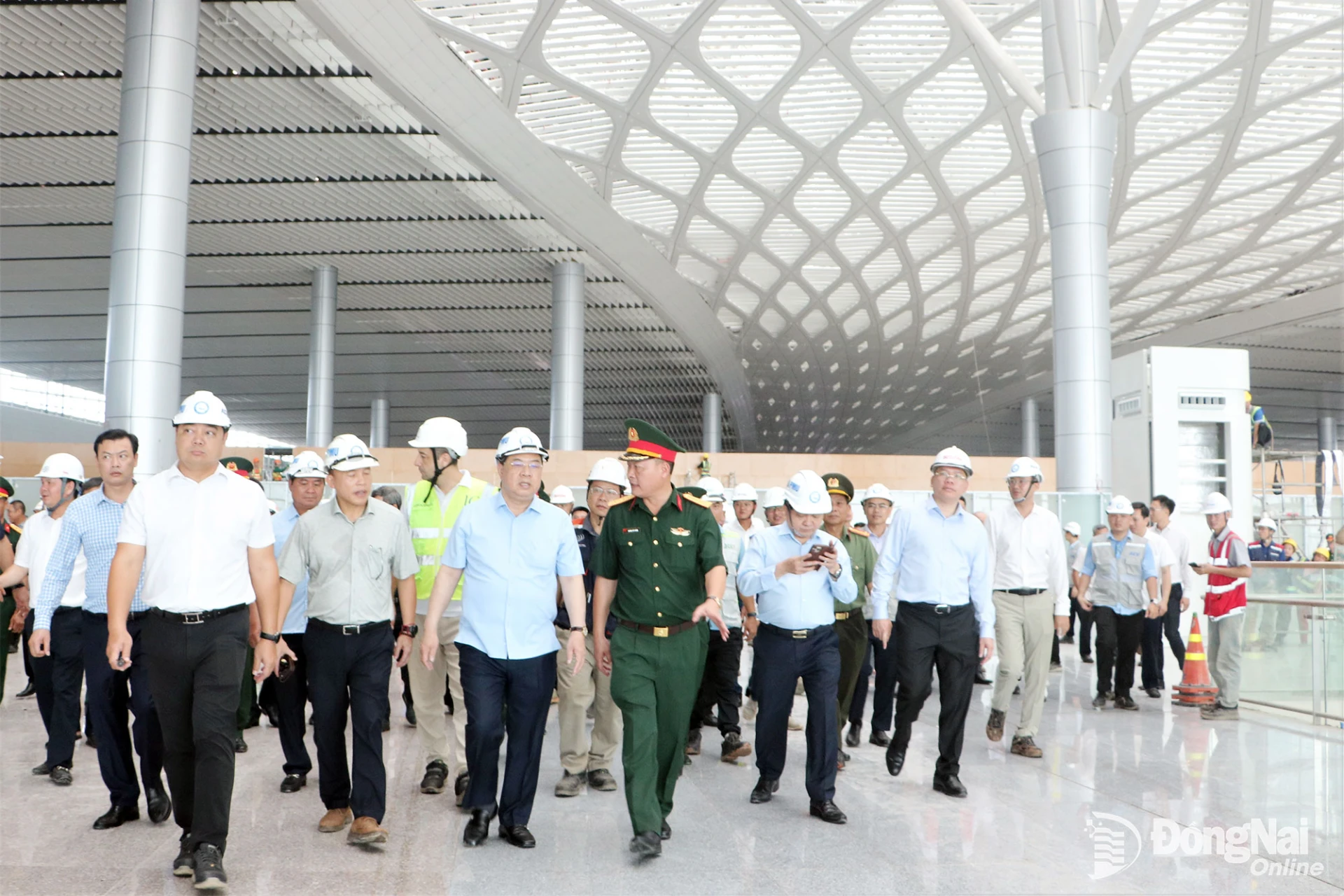
Experts say Dong Nai’s elevation to city status aligns with a wave of strategic infrastructure development, including the near-completion of Long Thanh International Airport, new expressways, seaport facilities and large-scale industrial parks. Coupled with plans for a free trade zone, these developments are expected to power long-term, sustainable growth.
Beyond industry, agriculture remains another key pillar, with Dong Nai standing as a national leader in pig farming and one of Vietnam’s leading producers of rubber and cashew. Meanwhile, comprehensive socio-economic infrastructure, particularly in transportation and logistics, has strengthened regional connectivity and enhanced investment inflows.
Key projects such as Long Thanh International Airport are expected to provide a major boost, positioning Dong Nai as a strategic logistics and trade hub in the region.
Nguyen Van Ut, Deputy Secretary of the City Party Committee and Chairman of the City People’s Committee, said Dong Nai is among Vietnam’s leading economies and is emerging as a nationally significant economic center with far-reaching influence across southern Vietnam. This provides strong opportunities for both domestic and international businesses to deepen partnerships and scale up operations.
New status, new strategy for Dong Nai’s economy
In recent years, Dong Nai has sustained strong and steady economic growth, remaining among the country’s leading economic performers. The city’s economy continues to expand, while its processing and manufacturing sectors have grown significantly to become key drivers of development.
The service sector has become more dynamic and diverse, evolving alongside urban expansion and the rise of modern trade. Meanwhile, economic restructuring has improved the quality of growth, reinforced the investment environment, and sharpened Dong Nai’s competitive advantage.
With a population of nearly 4.5 million, Dong Nai’s GRDP in 2025 reached more than 677.9 trillion VND, contributing around 5% of national GDP and ranking fourth nationwide. Budget revenue exceeded 100 trillion VND, while per capita GRDP surpassed 150 million VND.
Dong Nai stands among the country’s most industrialized localities, with industry, construction, trade and services accounting for over 81% of its economic structure. It also serves as an integrated development space with deep regional connectivity, supported by a synchronized transport infrastructure system linking waterways, roads, railways and air routes.
Dong Nai’s objective in the coming years is to sustain high growth based on long-term sustainability. For many years, selective investment attraction and green development have remained top priorities. This focus becomes even more critical as Dong Nai advances as a city, where green economic development is considered essential to match its scale and align with global trends.
By 2050, green and circular economy models are envisioned as the core pillars enabling Dong Nai City to achieve its net-zero target. To realize these ambitions, the locality is actively advancing in line with national strategies, viewing them as drivers of sustainable growth, competitiveness and international integration.
In the industrial sector, Dong Nai is upgrading existing industrial parks while developing new ones under ecological, green and circular standards.
Bien Hoa Industrial Zone, established in the 1960s as the precursor to Bien Hoa 1 Industrial Park, is considered the cradle of Vietnam’s industrial development. Having fulfilled its historic mission, the site is now being repurposed into a major urban, commercial and service center for Dong Nai and the wider region.
According to Pham Viet Phuong, Acting Deputy Head of Dong Nai Economic and Industrial Zones Authority, the development of green and modern industrial parks has become a guiding principle in enhancing investment attraction, completing infrastructure and strengthening competitiveness.
Green development is reflected not only in the orientation of industrial parks and the attraction of major foreign direct investment (FDI) projects, but also in the selective screening of projects and the green transition of domestic enterprises.
By 2030, Dong Nai aims to become a modern, ecological center for processing and manufacturing industries, generating development momentum for the region and the country.
Nguyen Kim Long, Member of the City Party Standing Committee, Standing Vice Chairman of Dong Nai City People’s Committee, affirmed that once large-scale infrastructure projects are put into integrated operation, Dong Nai will possess exceptional conditions to become a regional hub for connectivity, transshipment and coordination of major supply chains. Meanwhile, the city is fostering a broad and deep production ecosystem, consolidating strong internal economic capacity and laying the groundwork for a higher-level development model.
By V. The – Translated by M.Nguyet, Thu Ha


Thông tin bạn đọc
Đóng Lưu thông tin