
During the 2026-2030 period, Dong Nai aims to complete approximately 424,200 commercial housing units and more than 60,300 social housing units. This scale requires substantial investment resources, while also posing the need to remove obstacles related to land funds, procedures and capital.
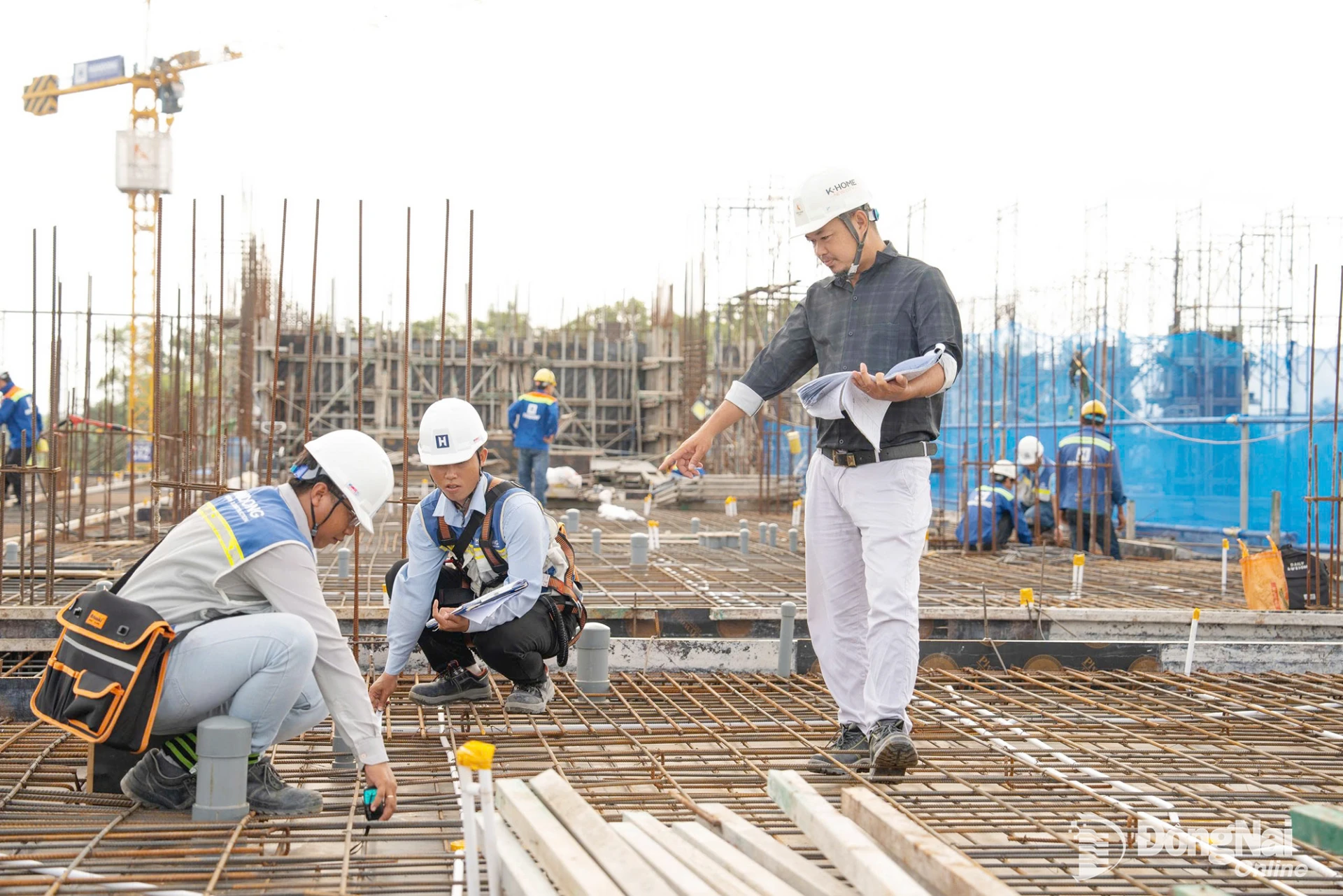 |
| Construction of a housing project for low-income people in Nhon Trach Ward. |
The draft amended Housing Law, with orientations toward simplifying investment procedures, improving incentive mechanisms and diversifying housing types, is expected to help remove obstacles, facilitate the implementation of these targets and expand housing opportunities for residents.
Housing must meet actual needs
Dong Nai is one of the country's major industrial centers. However, the development of social infrastructure in general and housing in particular has not kept pace with the development of the economy and urban areas. This is an issue the city has recognized and is working to address. According to figures from the Department of Construction, Dong Nai's total demand for social housing is estimated at around 150,000-160,000 units, with approximately 70% of the demand coming from workers and laborers in industrial parks and clusters.
This reality requires a diverse housing supply that is suitable for the affordability of different population groups. Among them, reasonably priced rental housing located close to workplaces is an essential immediate need. In June 2026, the city commenced construction of Phase 1 of the Long Binh Rental Social Housing Project, comprising 1,000 apartments ranging from 30-70 square meters, funded by the city budget. The project is located near Amata, Bien Hoa II, Ho Nai, Loteco and Agtex Long Binh industrial parks, creating favorable conditions for workers to access housing.
According to Decision No. 1422/QD-UBND dated April 9, 2026, issued by the provincial People's Committee, now the city People's Committee, during the 2026-2030 period, Dong Nai aims to complete approximately 424,200 commercial housing units and at least 60,364 social housing units. The average residential floor area per capita is targeted at 33 square meters. The total capital demand for housing development during this period is estimated at approximately VND627.5 trillion.
In addition, the city proposed and received the Government's approval to adjust the structure of its social housing targets for 2026-2030, allocating 3,500 units for rental, an increase of 500 units compared with the previous plan. This shows that the city has taken residents' rental housing needs into account, rather than focusing solely on developing housing for sale.
The draft amended Housing Law is currently under consideration by the National Assembly, aiming to simplify administrative procedures, address shortcomings in housing development and improve the investment environment. Several proposed amendments and supplements have attracted the attention of many National Assembly deputies, particularly those concerning investment forms, project conditions, incentive policies, rental prices, and the management and operation of rental housing.
If completed in a feasible direction, the new regulations could provide an additional legal basis for attracting businesses to invest in long-term rental housing, providing an additional option for people who cannot yet afford to buy homes. However, the effectiveness of these policies will also depend on the attractiveness of incentives related to land, taxes and credit, as well as mechanisms for controlling rental prices.
Nguyen Phi Long, General Director of Khang Nam Real Estate and Construction Environment Group Joint Stock Company (Ho Chi Minh City), said that his company is investing in a housing project for low-income people comprising nearly 1,000 apartments in Trang Bom Ward. The project is expected to reach the topping-out stage by the end of this year, with homes scheduled to be handed over to buyers in 2027. In response to the impacts of the amended Housing Law and policies introduced by the central and municipal authorities, the company is studying and considering investing in another project in Dong Nai.
For social housing, an urgent requirement is to shorten project preparation time and remove difficulties related to land funds, capital and procedures for verifying eligible beneficiaries. At a discussion session on October 22 as part of the second session of the 16th National Assembly, National Assembly Chairman Tran Thanh Man said that bottlenecks in the development of social housing and rental housing need to be removed, while stalled projects need to be addressed to unlock resources.
Another issue of concern to National Assembly deputies is the gap between housing prices and incomes. When apartments remain beyond workers' affordability, increasing supply alone is not enough. Therefore, policies need to help businesses reduce investment costs and develop products with suitable selling and rental prices. Simplifying procedures for purchasing and renting social housing must also go hand in hand with strict control over eligible beneficiaries to prevent speculation and abuse of housing policies.
Turning opportunities into results
In early October 2026, at the first meeting of the Central Steering Committee on Housing Policies and the Real Estate Market, Politburo member and Permanent Deputy Prime Minister Pham Gia Tuc, Head of the Central Steering Committee, said that although institutional obstacles are gradually being removed through amendments to draft laws, housing prices remain beyond the affordability of the vast majority of residents and workers, including cadres, civil servants and the armed forces.
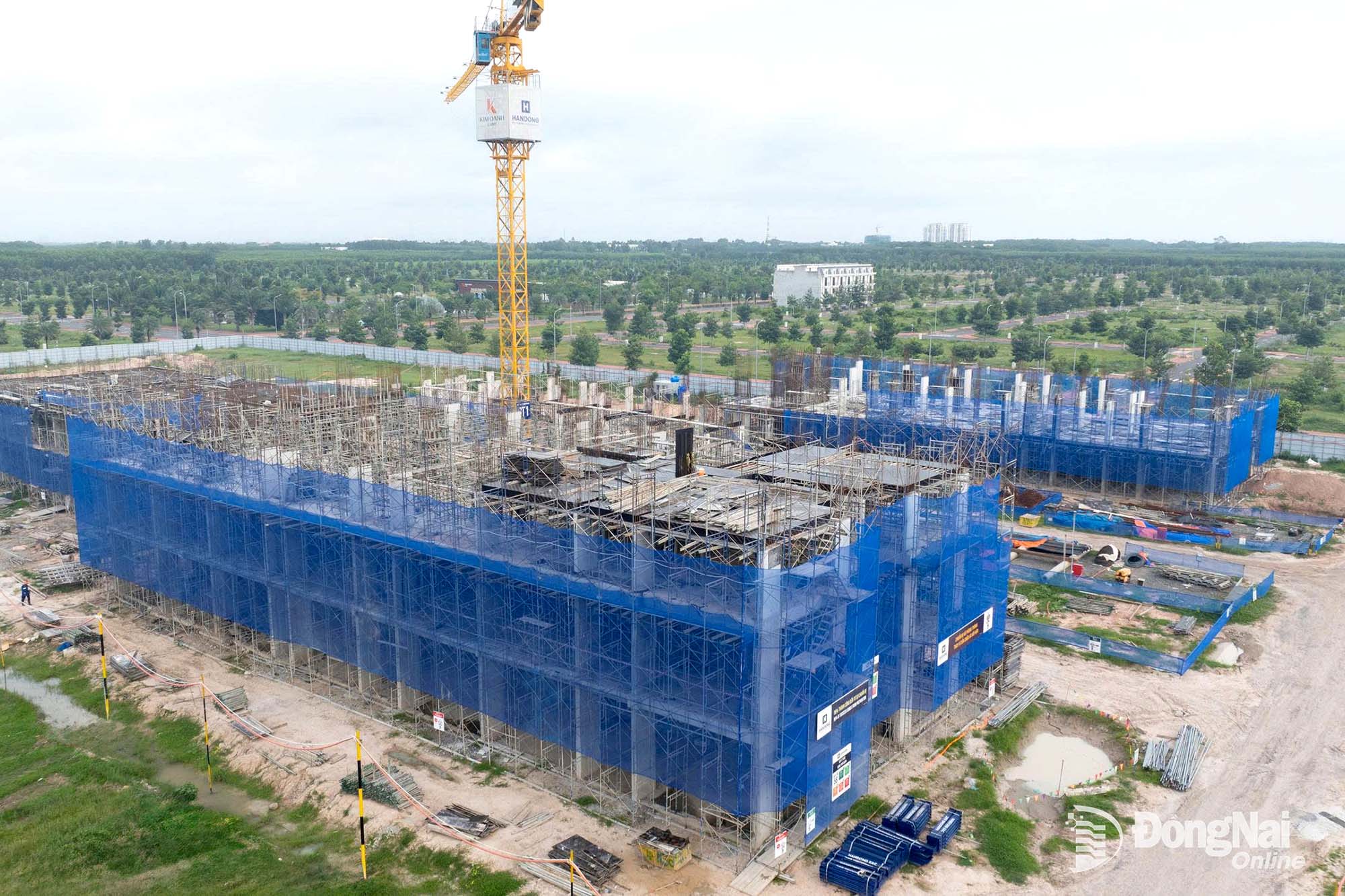 |
| A low-income housing project under construction in Nhon Trach Ward. |
Permanent Deputy Prime Minister Pham Gia Tuc said the Government is promoting amendments to regulations on land, housing and real estate business to remove obstacles and facilitate the implementation of new projects. The Government has also asked ministries, sectors and localities to propose solutions to difficulties and ensure housing security for residents.
For Dong Nai, completing the legal framework will provide a basis for continuing to remove existing obstacles. However, the final results must be reflected in the number of homes actually built and delivered to residents.
According to Nguyen Kim Long, Member of the Standing Committee of the City Party Committee and Permanent Vice Chairman of the Dong Nai City People's Committee, Dong Nai has reduced and simplified procedures, applied a "green channel" mechanism and prioritized the processing of housing projects for low-income people. The city is also monitoring project progress and requiring accelerated implementation of projects that have already commenced; while reviewing housing demand in areas with large concentrations of workers such as Long Binh, Nhon Trach and Long Thanh to develop rental housing.
In housing development planning, the city prioritizes projects associated with workplaces, transportation and social infrastructure. Projects need to include supporting facilities such as schools, healthcare facilities and public spaces to meet residents' long-term housing needs.
The draft amended Housing Law is still under consideration and being finalized by the National Assembly. For Dong Nai, the important task is to promptly prepare land funds, commence projects and establish appropriate mechanisms to attract businesses to develop social housing and long-term rental housing, meeting the actual needs of residents.
By Hoang Loc - Translated by Diec Quyen, Thu Ha




Thông tin bạn đọc
Đóng Lưu thông tin