
Dong Nai has more than one million hectares of agricultural land, accounting for over 83% of its total land area. This gives the city a significant advantage in developing large-scale commodity-based agriculture, with key products including rubber, bananas, cashew nuts, rambutan, pigs and chickens. Several local specialities, including Tan Trieu pomelos, Long Khanh rambutan and Binh Phuoc cashew nuts, are already well known. However, expanding their market recognition, increasing their value and maintaining a firm position in the market remain challenges that require comprehensive solutions.
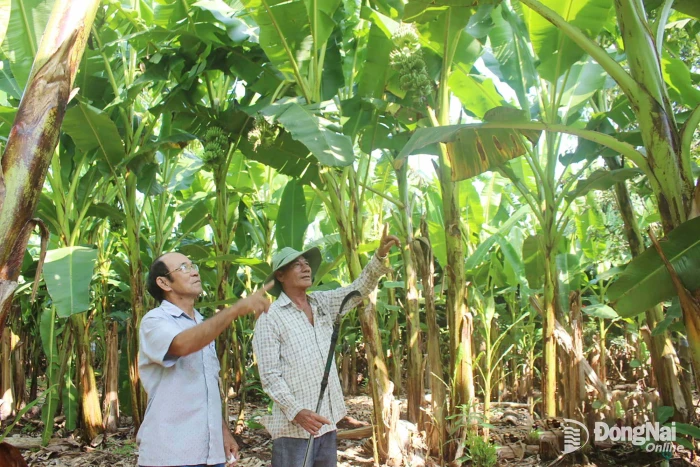 |
Building strong agricultural brands starts with farmers adopting a more market-oriented approach to production, applying scientific and technological advances, complying with food safety standards and obtaining growing area codes. Local authorities, meanwhile, need to promote local specialities, facilitate business connections and expand market access. Brand development must also go hand in hand with planning raw material zones, organising production, strengthening processing capacity and developing distribution channels.
Strong agricultural brands depend on consistent product quality and sustainable value chains. To achieve this, local authorities need to assess the strengths of each production area and identify key products suited to the scale of production and market demand. Farmers and cooperatives should receive support in following safe production procedures, ensuring product traceability and maintaining consistent quality. It is also essential to control quality, meet market requirements and protect the reputation of agricultural products by establishing growing-area and packing-facility codes and obtaining safe-production certifications.
Dong Nai is also seeking to promote the role of businesses as key drivers of agricultural value chains, from supplying inputs and transferring technology to procuring, processing and distributing farm produce. Under Plan No. 249/KH-UBND, issued by the City People's Committee on September 8, 2026, the city aims to develop 90 production and consumption linkages for agricultural products under State support policies by 2030, along with 150 more initiated by stakeholders and implemented through contractual arrangements. For these linkages to be sustainable, contracts must clearly define the responsibilities and benefits of farmers, cooperatives and businesses involved.
As digital transformation advances, Dong Nai needs to step up the promotion of agricultural products on digital platforms, strengthen links with e-commerce channels, trade fairs and retail networks, and protect trademarks and geographical indications to prevent false claims about product origin. Relevant agencies should regularly provide information on standards and market demand forecasts, and organise trade promotion activities to help producers plan production proactively, reduce the risk of oversupply and minimise the risk of products failing to meet quality requirements. Businesses, cooperatives and farmers must be directly responsible for building the reputation of their products.
Agricultural branding is a long-term process. Products must earn market recognition through consistent quality, reliable supply and lasting credibility. Only when raw material zones are systematically developed, value chains operate effectively, branded products gain wider market acceptance and stable markets are secured can Dong Nai turn its agricultural strengths into greater economic value, enhance competitiveness and generate sustainable incomes for producers.
By B.Mai – Translated by M.Nguyet, Minho

Thông tin bạn đọc
Đóng Lưu thông tin