
After years of waiting, the Ben Luc - Long Thanh Expressway officially opened along its entire route in early October 2026, creating a new direct transport corridor between the Mekong Delta and the Southeast region.
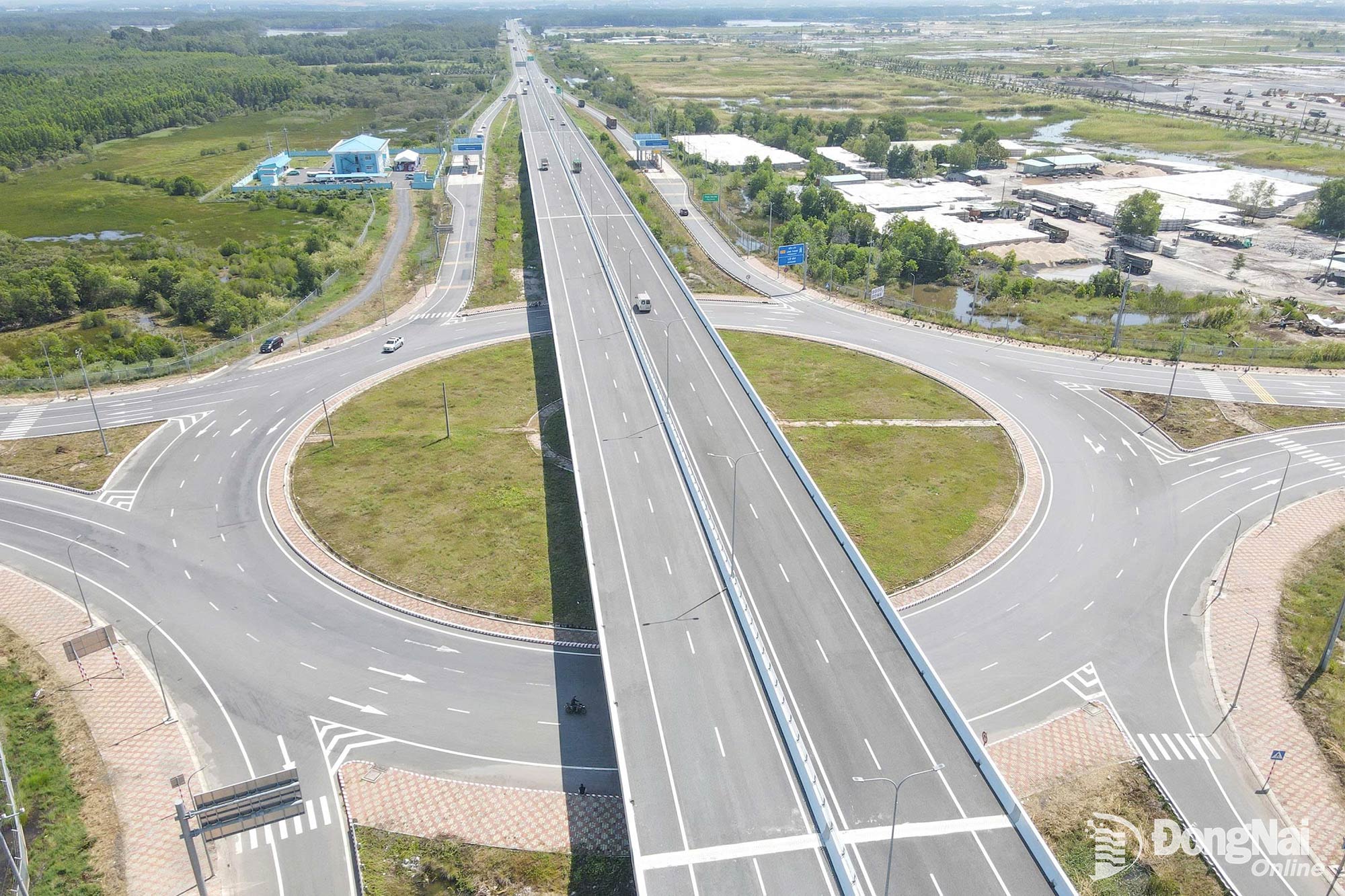 |
| The Ben Luc - Long Thanh Expressway section running through Dong Nai City. Photo: C.T.V. |
Residents are delighted that they can now travel directly from the Mekong Delta provinces to the Long Thanh area and National Highway 51 without having to detour through multiple congested roads in Ho Chi Minh City as before. Travel times are shorter, traffic pressure is reduced, and freight transport to Long Thanh Airport and eastern seaports is more convenient.
An additional interregional transport corridor
Access ramps to the Ben Luc - Long Thanh Expressway section running through Dong Nai have officially opened, allowing vehicles to travel along the entire route. Twelve years after construction began, the nearly 58-kilometer expressway has been connected end to end, forming a continuous transport artery between the western and southeastern parts of southern Vietnam.
The Ben Luc - Long Thanh Expressway passes through Tay Ninh, Ho Chi Minh City and Dong Nai City, with nearly 29 kilometers running through Dong Nai. The expressway has four motor vehicle lanes and two emergency stopping lanes.
The project was launched in 2014, but implementation encountered numerous difficulties involving procedures, funding and investment mechanisms, leading to prolonged delays. Its completion and opening along the entire route are therefore expected by residents, transport businesses and local authorities across the region to unlock the full potential of an interregional transport project that has been awaited for years.
The most notable benefit of the full-route opening is that vehicles traveling from the Mekong Delta can now reach the National Highway 51 area in Dong Nai directly, without passing through multiple urban roads in Ho Chi Minh City as before.
According to drivers, trips from the Mekong Delta to Dong Nai previously involved several roads, including Nguyen Van Linh Street, National Highway 1, Vo Van Kiet Street, Mai Chi Tho Street, Phu My Bridge and Vo Chi Cong Street, before connecting to the Ho Chi Minh City - Long Thanh - Dau Giay Expressway and exiting onto National Highway 51. When traffic volumes increased, congestion often occurred, extending travel times.
With the Ben Luc - Long Thanh Expressway now open, interregional traffic has an additional option to bypass urban areas. The route is expected to cut travel time from the Mekong Delta to Dong Nai by more than one hour, while creating another freight corridor for transporting goods and agricultural products to eastern seaports, including the Cai Mep - Thi Vai Port Complex.
For Dong Nai, the expressway is important for connectivity with the Long Thanh area and Long Thanh Airport, while also helping ease traffic pressure on the Ho Chi Minh City - Long Thanh - Dau Giay Expressway.
New development opportunities
Immediately after the Ben Luc - Long Thanh Expressway opened along its entire route, the news attracted considerable attention from readers. On social media forums, many readers expressed their excitement and optimism to Dong Nai Newspaper and Radio, Television. Many said the most immediate benefit was that residents and drivers now had another option for traveling between the Mekong Delta and Dong Nai, rather than passing through congested roads in Ho Chi Minh City.
Tran Bao Anh, a resident of Long Thanh Ward, shared that her husband's family lives in former Long An Province. Traveling to visit them will now be much more convenient, as the family no longer needs to go through central Ho Chi Minh City and deal with traffic congestion. Shorter travel times also mean savings on fuel and travel expenses.
On social media forums, many users welcomed the new direct connection from the Mekong Delta through Long Thanh and Dong Nai to the Cai Mep - Thi Vai Port area, saying it would create an additional freight corridor that avoids densely populated urban areas. Shorter transport times would also give businesses more opportunities to reduce logistics costs.
“Saving about an hour of travel time per vehicle may not seem significant on its own. But when millions of vehicle trips save time, the cumulative benefit becomes a substantial resource for society as a whole”, Facebook user Tran Quoc shared.
Looking beyond the reduction in travel time between destinations, Vo Quoc Bao, a resident of Tran Bien Ward, said that as the Mekong Delta becomes connected with Ho Chi Minh City, Long Thanh, Dong Nai and the eastern seaport network, and as ring roads are completed, transport routes outside urban centers will play an increasingly important role. This will create better conditions for reorganizing the movement of people, goods and economic activities toward stronger regional integration.
Nguyen Thanh Tu, a resident of Ho Chi Minh City, said: “Having another direct connection between the Southeast and Southwest regions will help reduce pressure on National Highways 1 and 51 and several roads running through central Ho Chi Minh City, while also distributing traffic more evenly with the Ho Chi Minh City - Long Thanh - Dau Giay Expressway”.
For residents, the immediate joy may be simple: a more convenient journey with fewer detours through congested roads. But when goods are transported faster, vehicles spend less time waiting and traffic is distributed more evenly across the road network, these benefits can spread much further, becoming a driving force for socio-economic development throughout southern Vietnam.
By Kim Lieu - Translated by Diec Quyen, Thu Ha




Thông tin bạn đọc
Đóng Lưu thông tin