
New development space is opening up for Dong Nai amid steady economic growth. In the first eight months of 2026, the industrial production index rose by more than 12.6% compared with the same period in 2025, foreign direct investment reached nearly 1.9 billion USD, and domestic investment totaled nearly 861 trillion VND, equivalent to nearly 540% of the 2026 annual target. These figures indicate that Dong Nai has a significant foundation for entering a new phase of development.
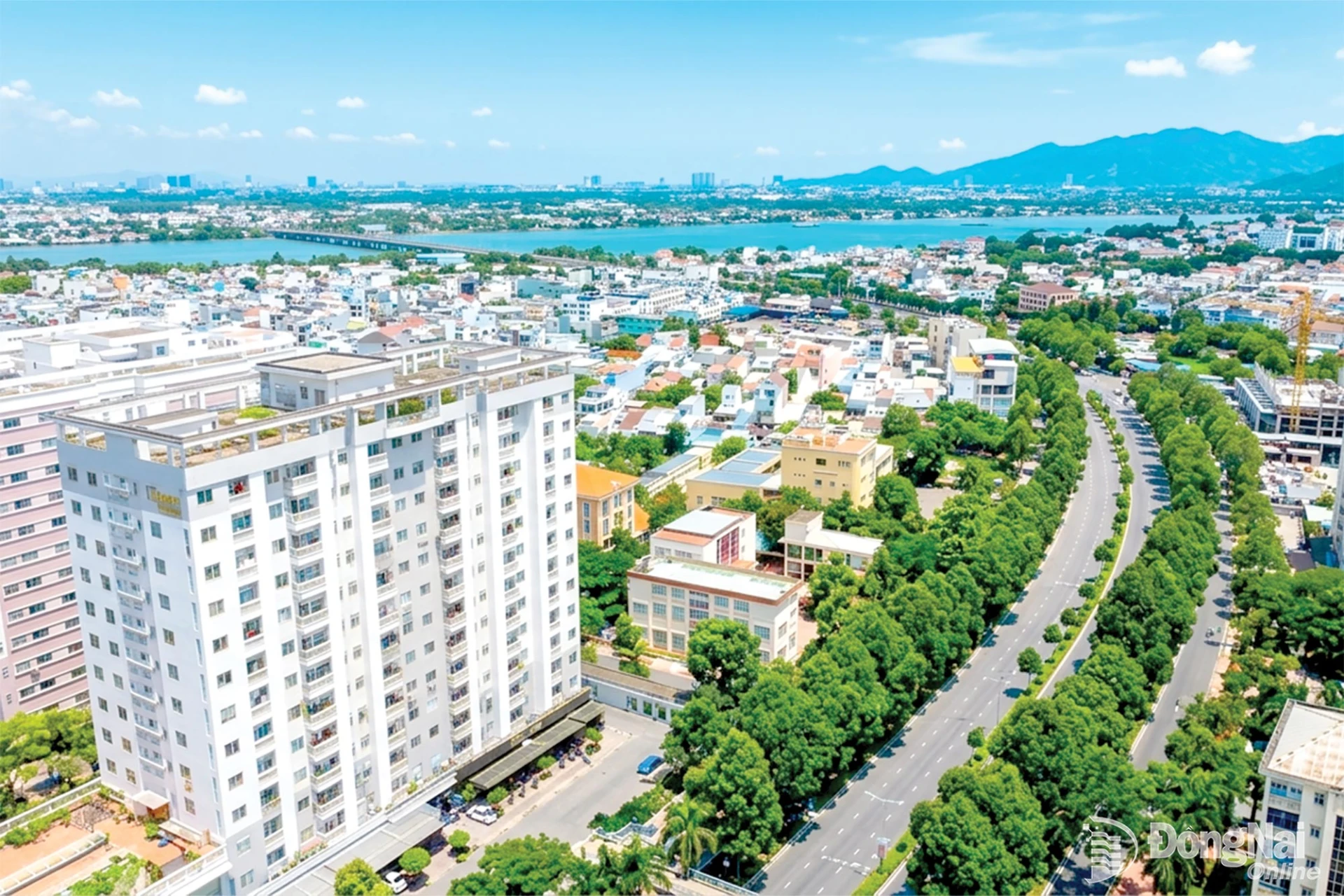 |
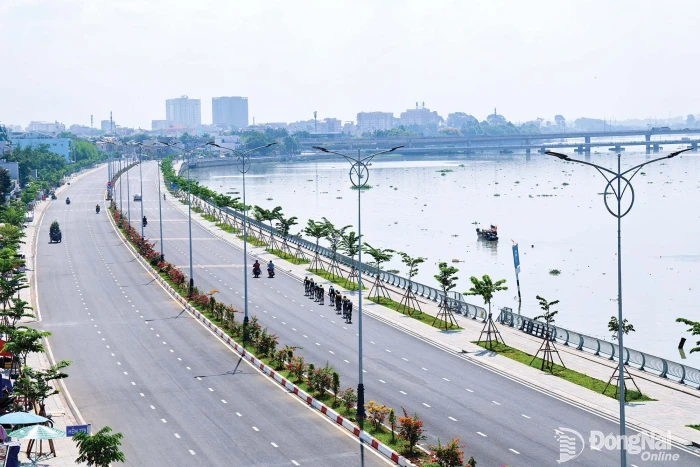
| A corner of the urban area in Tran Bien Ward, Dong Nai City. Photo: Hoang Loc |
Against this backdrop, the Law on Urban Development, passed by the National Assembly on August 24, 2026, with new orientations on decentralization, delegation of authority, resource mobilization, spatial organization, and urban governance, is expected to create further room for the city to more effectively leverage its advantages.
Shaping development
One of the notable points of the Law on Urban Development is the strong shift from a management mindset to one of enabling development, while promoting decentralization and delegation of authority in association with implementation capacity, power control, and accountability. The principle of “localities decide, localities act, and localities take responsibility,” if appropriately operationalized, will enable localities to take greater initiative in selecting models, organizing resources, and resolving their development issues. More importantly, an urban area must be organized as an integrated socioeconomic development space. Within that space, planning, transport, industry, commerce, services, housing, education, healthcare, culture, and the environment cannot operate in isolation but must form a unified whole.
For Dong Nai, this requirement is particularly significant. The city has a large population, a strong industrial base, an extensive system of industrial parks, a vital connectivity position in the Southeast region, and a strategic infrastructure system that is increasingly being completed. In particular, Long Thanh International Airport is emerging as a growth pole of national and international stature. However, advantages remain merely potential if they are not transformed into development capacity. A major airport does not automatically create a major urban center, nor does a modern transport system automatically create an economy with high added value. What is essential is to reorganize the development space so that advantages can reinforce and connect with one another and generate spillover effects. Thus, planning is not merely about determining where to build or which industries to develop. More profoundly, it is about answering the question: What kind of city does Dong Nai want to become, and what will the residents gain from that development process?
Unlocking resources
No city can develop rapidly without resources. However, development resources today extend beyond the state budget. They also include land, corporate capital, social resources, knowledge, science and technology, data, and the quality of human resources. The critical issue is how to connect these resources to create combined strength.
The Law on Urban Development will give Dong Nai greater room to take the initiative in mobilizing and utilizing resources. However, decentralization and delegation of authority must be accompanied by very high requirements for discipline, transparency, and efficiency. Land must be exploited in accordance with planning, aligned with development goals, and used to create higher value. Public investment must focus on projects capable of driving development, strengthening connectivity, and generating spillover effects, rather than dispersing resources. At the same time, it is necessary to create an environment attractive enough for the private sector to participate more deeply in urban development, housing, logistics, commerce, services, infrastructure, and new economic sectors. The ultimate goal is not to have as many projects as possible but to create a development ecosystem with high productivity, strong competitiveness, and the capacity to generate sustainable added value.
Dong Nai is bringing together many conditions that not every urban area possesses: a new position, a large economic scale, developed industry, strategic infrastructure, Long Thanh International Airport, and an increasingly open institutional framework. What Dong Nai needs is a new approach: Each new mechanism must be accompanied by a specific action program. Each advantage must be linked to a development space. Each major project must clearly define its objectives, timeline, and responsibilities. Each policy decision must be directed toward a measurable outcome in terms of economic efficiency, urban quality, and public satisfaction.
A modern urban area cannot be governed with old thinking, old processes, and old methods. Stronger decentralization means greater local responsibility. The more authority a locality is given to make decisions, the more it must demonstrate its capacity for implementation, risk control, and accountability. Therefore, Dong Nai needs to continue the strong shift from management to development governance; from responding to incidents to proactively creating development; and from management based largely on paperwork to governance based on data. Digital transformation must become a practical tool for governance, helping local authorities monitor urban issues in real time, forecast trends, and make decisions more quickly and accurately. Data must become a development resource, rather than merely a byproduct of the process of digitizing administrative procedures.
This also places greater demands on the contingent of officials. The new mechanisms require officials with a development mindset who dare to think, dare to act, and dare to take responsibility for the common good. If decentralization is pursued but officials are unwilling to make decisions or take action, the authority delegated to them can hardly be translated into a driving force for development. Therefore, alongside expanding development space, it is necessary to strengthen governance capacity. This is essential for the new mechanisms under the Law on Urban Development to be effectively put into practice.
By Dr. Vu Thi Nghia – Translated by Minh Hong, Thu Ha

Thông tin bạn đọc
Đóng Lưu thông tin