
Thirty-two schools in eight border communes of Dong Nai City have been providing lunches for students since the 2026-2027 school year under Government Decree No. 339/2025/ND-CP dated December 25, 2025, which sets out policies to support lunches for primary and lower secondary school students in land border communes (referred to as Decree 339). The policy helps provide students with better learning and living conditions while giving parents peace of mind.
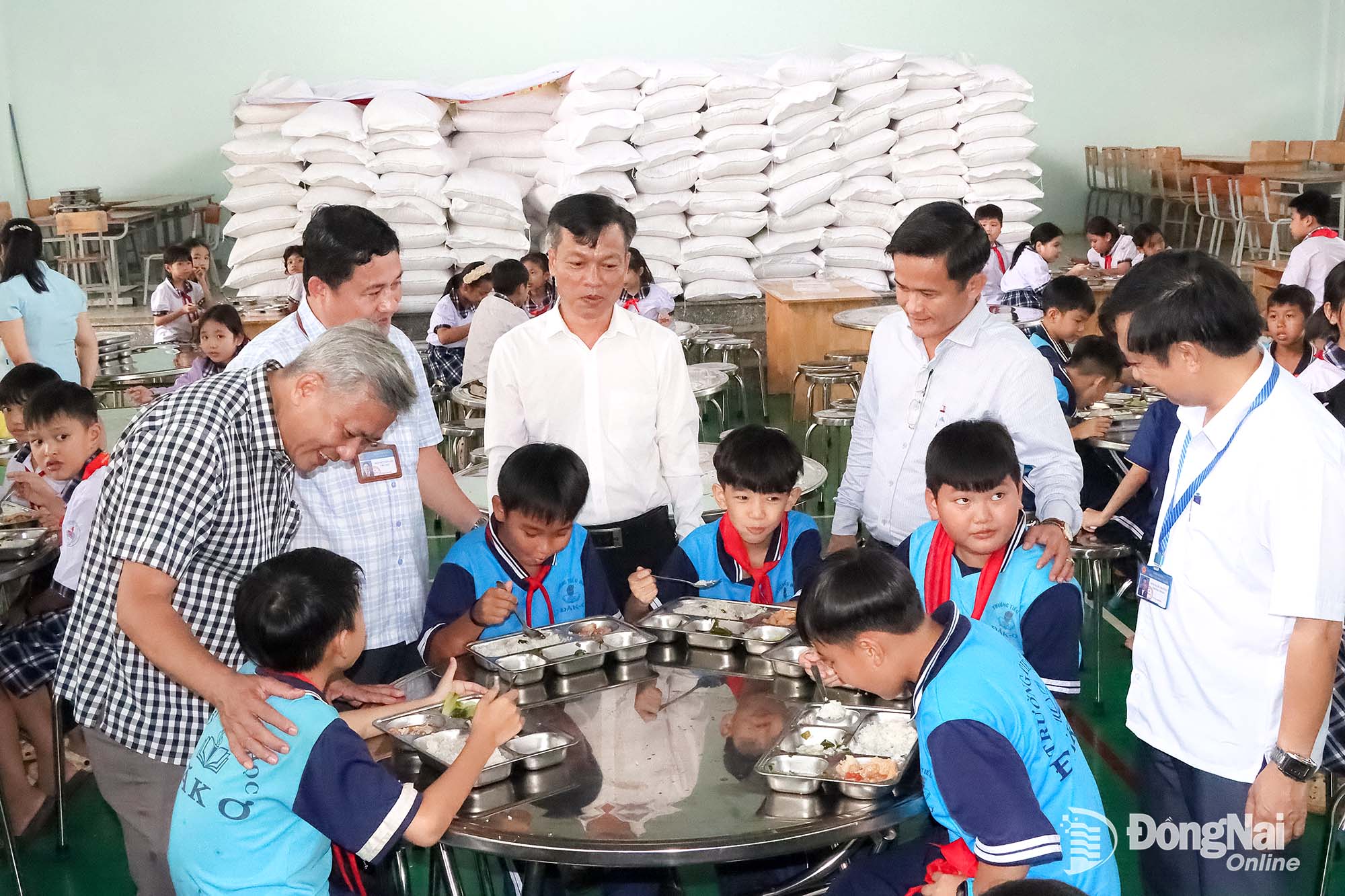 |
| Leaders of Dak O Commune personally inspect students' meals at the main campus of Dinh Bo Linh Primary School. |
In Dak O Commune, although facilities are not yet fully equipped to meet demand, local authorities and schools have proactively and flexibly allocated resources to ensure that students can benefit from the policy from the very first days of the new school year.
Lunches that warm students' hearts
Tran Thi Bich's family in Dak Lien Village, Dak O Commune, has two children attending Dinh Bo Linh Primary School and Dak O Secondary School. Since the schools began providing lunches, she has felt relieved of much of the burden of caring for her children.
"Every day, my family has to work in the fields, so I have to come back around 10 a.m. to pick up my children. After lunch, I have to drive them back to school. It disrupts my work and costs the family extra time and money. Now that the children eat lunch at school, the family saves on costs and doesn't have to rush back and forth in the middle of the day. The children receive a nutritious meal, and we, the parents, are thrilled," said Bich.
Dak O Commune has a population of over 19,000 people, with 22 ethnic groups living together, accounting for 41% of the total population. The implementation of Decree 339 has played a significant role in reducing hardships for students' families, especially those from poor or near-poor households or those who live far from school. The policy is also expected to reduce school dropout rates and enhance the quality of education in the border commune.
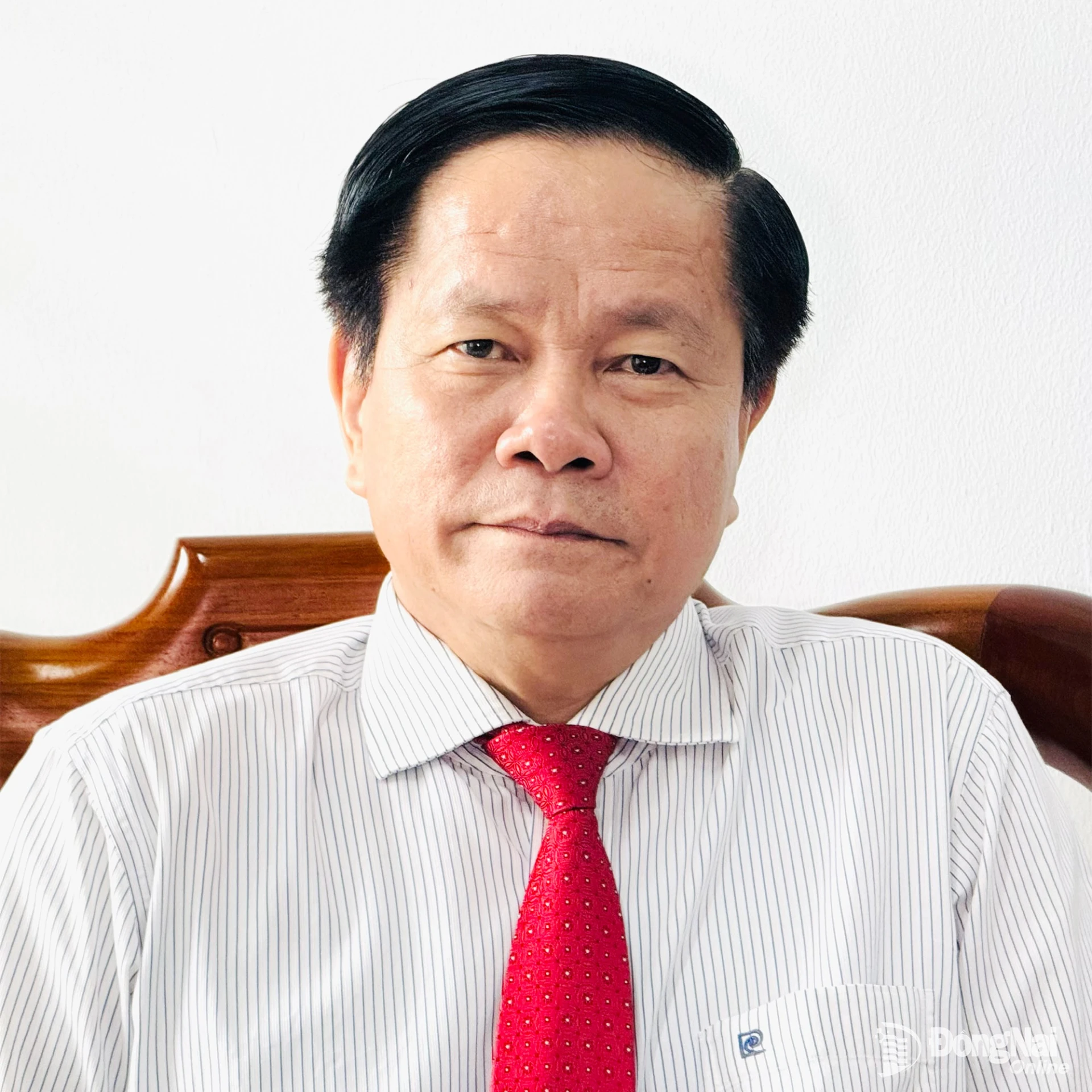
Nguyen Tan Luc, Chairman of the Dak O Commune People's Committee
Cao Thi Toan, General Manager of the Ho Chi Minh Young Pioneer Organization at Dinh Bo Linh Primary School in Dak O Commune, said, "Organizing lunches adds to the teachers' workload, as they must stay at school to supervise and care for the students. However, seeing the children eating well and enjoying the cheerful atmosphere at school makes my colleagues and me happy." According to Toan, some students are still spoon-fed by their parents at home, but when eating with friends at school, many become self-reliant and enthusiastic and compete to finish their meals.
Efforts to ensure students benefit from the policy
At Dinh Bo Linh Primary School, the large number of students means that organizing lunches places considerable demands on facilities and human resources. The school has one main campus, one branch campus, and two satellite campuses, with nearly 1,500 students. Ethnic minority students account for more than 30% of the student population. To date, more than 1,200 students have registered for school lunches.
Nguyen Thanh Hung, Principal of Dinh Bo Linh Primary School, said, "The school has to flexibly utilize classrooms, the library storage area, and the multi-purpose hall to organize lunches for students in two shifts. The Commune People's Committee has also provided additional funding for the school to repair the kitchen and build a prefabricated structure for cooking. For now, the school has hired 14 kitchen staff members and one person to transport meals to the two satellite campuses."
At Dak O Secondary School, demand for student lunches has also increased rapidly since the implementation of Decree 339. Vu Thi Huyen, the school's principal, said, "Previously, only about 260 students at the school were registered for lunch. After the implementation of Decree 339, the number of registered students rose to 800, accounting for nearly 70% of the total student body."
To meet demand, Dak O Secondary School has advanced funds to purchase essential items such as trays, bowls, plates, and cooking utensils and has also hired kitchen staff. However, the current canteen can accommodate only about 250 students. Arrangements are being made for the remaining students to eat in their classrooms. "The school mobilizes all available staff and teachers who have free periods to help distribute portions in the kitchen during peak hours and then deliver them to the students. Everyone shares the responsibility so that the children can benefit from this humane policy," said Huyen.
Truong Dinh Primary and Secondary School in Dak O Commune has 26 classes with a total of 638 students. The school began providing lunches for students at the beginning of the school year. To date, 601 students have registered for lunches in accordance with regulations. Each eligible student receives a subsidy of 450,000 VND for meals and 8 kg of rice per month, for a maximum of nine months during the school year.
Dak O Commune People's Committee Chairman Nguyen Tan Luc said, "Despite many remaining difficulties, 100% of schools in the commune have organized lunches for students in accordance with Decree 339. Currently, the demand for school lunches is increasing, but many schools are struggling to keep up with the necessary facilities and human resources. Therefore, schools must be flexible in their arrangements to maintain meals for students."
"The commune has directed schools to continue widely publicizing the policy among parents and to fully assess students' meal needs. Based on this, the commune will compile the proposals and petition the City People's Committee to provide additional funding for equipment purchases and investment in appropriate facilities to help students receive the full benefits of the policy," said Dak O Commune People's Committee Chairman Nguyen Tan Luc.
By Quang Minh – Translated by Minh Hong, Minho
Thông tin bạn đọc
Đóng Lưu thông tin