
Dong Nai, once marked by the footsteps of Marquis Nguyen Huu Canh during his southward expansion mission, has since undergone nearly 330 years of formation and development. Throughout this historical journey, Dong Nai people have consistently upheld a patriotic tradition, demonstrating resilience in overcoming challenges while nurturing the aspiration to rise alongside the nation.
 |
| Huynh Thi Hang, Deputy Secretary of the Provincial Party Committee and Chairwoman of the Vietnam Fatherland Front Committee of Dong Nai province (currently serving as Deputy Secretary of the City Party Committee and Chairwoman of the Vietnam Fatherland Front Committee of Dong Nai City) presents flowers to encourage young recruits enlisting in the 2026 military induction. Photo: Nguyet Ha |
Today, Dong Nai holds strategic importance in shaping a dynamic, prosperous, and culturally rich Southeastern region. The locality has consistently viewed socio-economic development as inseparable from the preservation and promotion of its cultural, historical, and human values, with the goal of building a civilized, prosperous, comprehensive, and sustainable city.
Dong Nai – a resilient land
Dong Nai proudly stands as a land deeply rooted in revolutionary tradition. Renowned landmarks and historic sites such as War Zone D, Ba Ra Prison, the Special National Relic Site of the Command Headquarters for the Liberation Army of South Vietnam (Ta Thiet Military Base), Tan Hiep Prison, the Liaison House in Loc Ninh, and the Nhon Trach Tunnels serve as “red addresses” where generations visit to hear stories of patriotism, solidarity, and wartime ingenuity demonstrated by armed forces and people during the resistance periods against foreign invaders. These sacred sites continue to inspire younger generations to uphold traditions of patriotism, loyalty, and readiness to contribute to the cause of building and defending the Fatherland today.
War Zone D, long regarded as the “resistance capital” of the Liberation Army of South Vietnam, has become an indomitable symbol of the military and people of the South throughout the nation’s two prolonged resistance wars. Eight decades after the establishment of War Zone D, although the country is now at peace and increasingly prosperous, the spirit of patriotism, steadfastness, and unwavering faith in the Party remains undiminished.
Though not a revolutionary base itself during the resistance wars, Ba Ra Prison stands as a historical testament to the courage of patriotic fighters who were captured, imprisoned, and tortured by enemy forces. Situated amid rugged mountains and dense forests, it once served as a site of detention for patriots, including female General Nguyen Thi Dinh. Today, it has become another vital “red address” for educating officials, Party members, and the public about patriotic and revolutionary traditions.
Alongside these historical relics, Dong Nai was also the site of numerous battles and uprisings during the resistance wars. The 1956 uprising and prison break at Tan Hiep Prison by hundreds of patriotic political prisoners became a landmark victory in the resistance war against the United States (US) for national salvation. The Phuoc Long Victory on January 6, 1975, through the famed Route 14 – Phuoc Long Campaign, paved the way for subsequent campaigns across the South. Likewise, the historic Battle of Xuan Loc (April 19–21, 1975) shattered the final “steel door” defensive line of the US-backed Saigon puppet regime, opening the path for the historic Ho Chi Minh Campaign and ultimately leading to national reunification.
Nguyen Minh Hieu, a young intellectual from Tan Trieu ward who actively participates in social activities through his workplace’s trade union, shared that each year he joins multiple “back-to-the-roots” journeys to Dong Nai’s historical sites, including War Zone D, Tan Hiep Prison, and more recently, northern Dong Nai sites such as Ta Thiet Military Base and the Liaison House. Each trip provides his company union members with deeper lessons in solidarity and patriotism while helping them better understand their responsibilities to society and to today’s nation-building mission.
“These red addresses have long been my favorite destinations because every visit helps me more deeply appreciate the immense sacrifices our forefathers made for national independence. Thanks to them, we are able to study, contribute, and live happily today,” Hieu said.
The heroic spirit of the Eastern region continues to shine
Nearly 330 years ago, Marquis Nguyen Huu Canh, under the command of the Nguyen Lords, journeyed southward to administer and expand the region. During that expedition, he established Gia Dinh Prefecture and founded Tran Bien Garrison (Dong Nai) and Phien Tran Garrison (Saigon), thereby laying the first administrative foundations on this land. After nearly 330 years of development, Dong Nai remains proud to be a place where cultural and historical values converge.
Through the long process of defending and building the nation, and fueled by the heroic spirit of the Eastern region, Dong Nai has produced generations of heroes and national talents. Today, inheriting the pioneering, resilient, and deeply patriotic spirit of earlier generations, Dong Nai is entering a transformative historical moment - possessing the full combination of “favorable timing, advantageous geography, and human harmony” to become a dynamic, passionate city and a major growth pole of the national economy.
 |
| Ta Thiet Military Base – a renowned red address for back-to-the-roots tourism in Dong Nai. |
Ka’ Thi Ngoc Huong (Ka’ Huong), a member of the Ma ethnic community from Ta Lai Village (Ta Lai commune, buffer zone of Cat Tien National Park), recently received recognition and a certificate of merit from the Ministry of Culture, Sports and Tourism for her outstanding contributions to preserving and promoting ethnic cultural heritage. She said that as a young person growing up in Dong Nai, she is increasingly aware of the responsibility of the younger generation not only in economic development but also in preserving core cultural values.
With this spirit, Ka’ Huong, currently working as a freelance tour guide in Ta Lai Village and Cat Tien National Park, also manages a traditional Ma gong performance troupe, supports market access for brocade products made by Ma women, teaches English free of charge to local children, and participates in preserving Ma folk songs and traditional musical instruments. Ka’ Huong affirmed: “I will continue striving even more in preserving and maintaining the cultural identity of my people, thereby contributing to the broader preservation and development of Dong Nai City’s shared values in the future.”
Nguyen Nho Kien, Director of Meerkat Travel Co., Ltd. in Dinh Quan commune, expressed his expectation: “Dong Nai is undergoing a powerful transformation. I hope that, with what Dong Nai currently possesses and has already achieved, once it officially becomes a city, it will continue to build on its strengths while also addressing its shortcomings – particularly by establishing appropriate mechanisms to support citizens and businesses in seizing opportunities, developing the economy, and contributing to the creation of a more prosperous, beautiful, and happier Dong Nai homeland.”
Not resting on its achievements, and with the special attention of Party and State leaders, Dong Nai is prepared to further promote solidarity and embrace the responsibility of building a civilized, modern city – one determined to develop on the basis of its two greatest resources: land and people. Dong Nai is prepared to develop in a timely manner and in line with the tasks assigned by the Central Government.
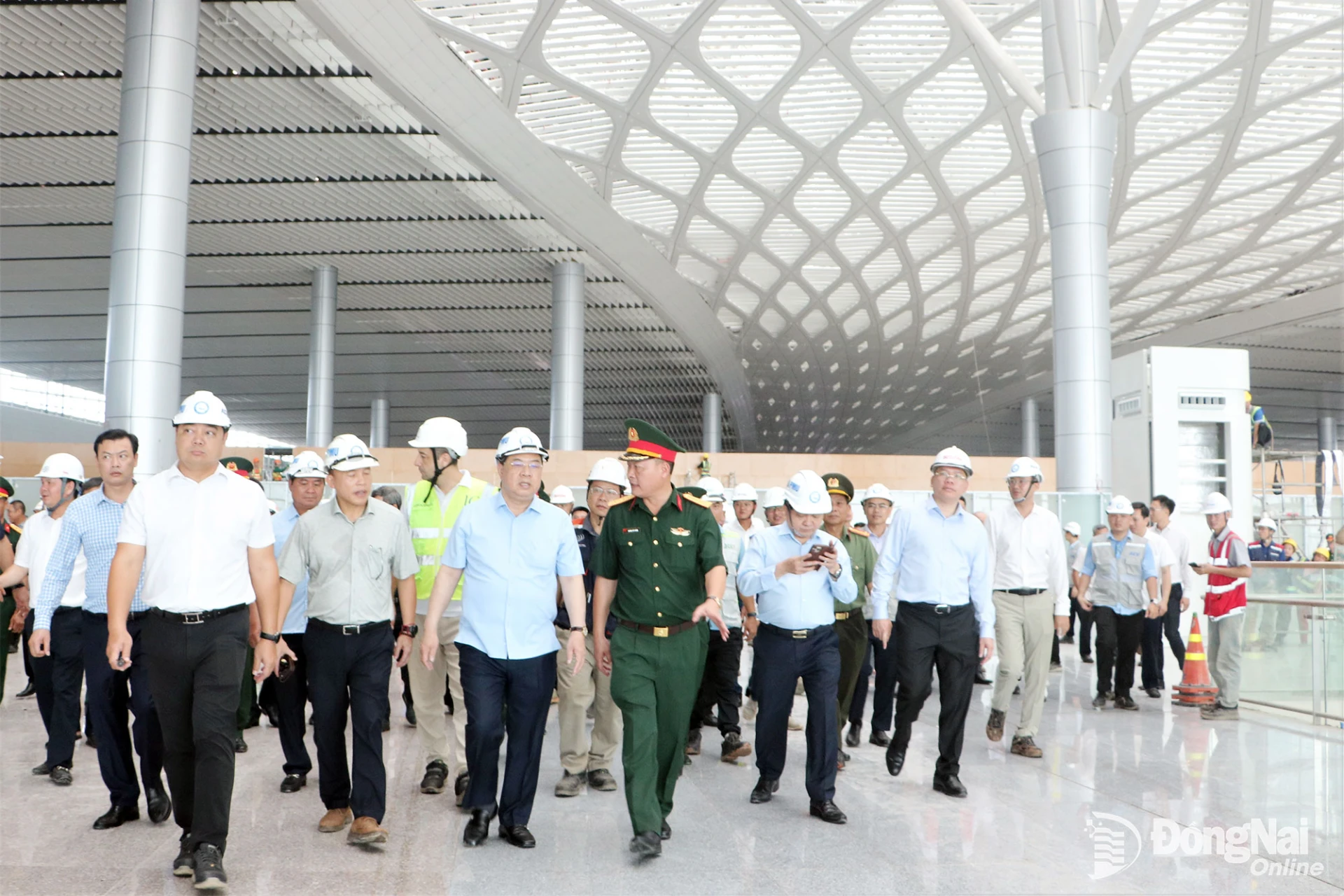
With the strategic advantage of Long Thanh International Airport, Dong Nai is poised not only to help project the image and intellect of the Vietnamese people to the world, but also to bring new advances and cutting-edge science and technology to Vietnam. In doing so, Dong Nai will continue to serve as a “miniature Vietnam,” attracting an increasing number of people from across the country to come and settle, work, and contribute to its future.
By Ngoc Lien – Translated by Minh Hong, Thu Ha


Thông tin bạn đọc
Đóng Lưu thông tin