
The 51st anniversary of the Liberation of the South and National Reunification (April 30, 1975–2026) is further etched in history by a new milestone: Dong Nai has officially been elevated to city status. This is not only a political event of particular significance, but also a historic developmental milestone affirming a profound transformation in the locality’s position, stature, and aspiration to rise.
 |
| Vo Tan Duc, Deputy Secretary of the Provincial Party Committee (now Deputy Secretary of the City Party Committee) and Nguyen Kim Long, Member of the Provincial Party Standing Committee, Standing Vice Chairman of the Provincial People’s Committee (now Member of the City Party Standing Committee, Standing Vice Chairman of the City People’s Committee, present the investment certificate for the Sembcorp Integrated Hub Dong Nai 1 project. Photo: Ngoc Lien |
From wartime stronghold to leading growth pole
Dong Nai stands as a prime example of the powerful transformation of a land once marked by immense sacrifice and loss. From the historic War Zone D – where the “arduous yet heroic Eastern region” was etched in history – Dong Nai has today risen to become one of the country’s leading industrial centers, a key growth pole with extensive influence across the Southeast region and the national economy as a whole.
With 86 industrial parks planned, of which 43 are currently operational, Dong Nai has strongly attracted both domestic and foreign investment flows. According to 2025 statistical data, the Dong Nai’s GRDP surpassed 677.9 trillion VND, ranking among the country’s leading localities; its per capita GRDP reached nearly 153 million VND; and economic growth stood at 9.63%, exceeding the target assigned by the Government. Notably, Dong Nai is also among the nation’s major contributors to the State budget. In 2025, despite being assigned a target of 70 trillion VND, the province collected nearly 103 trillion VND. It also ranked among the localities making substantial contributions to national GDP growth, accounting for approximately 5.49%.
With a population approaching 4.5 million – ranking among the country’s most populous provinces and cities – Dong Nai possesses a large and dynamic labor market, while also serving as an important endogenous resource for developing a knowledge-based economy in the new era. These statistics not only illustrate the scale of growth, but more importantly, also highlight a reality: Dong Nai has fully met the conditions necessary to serve as a key national growth pole.
New development space – opportunities, momentum, and challenges
The Central Government’s decision to elevate Dong Nai to city status represents a strategic move, reflecting a long-term vision in organizing national development space. Beyond a mere administrative upgrade, this marks a repositioning of Dong Nai’s strategic role – from a rapidly developing locality into a locomotive responsible for driving, regulating, and generating spillover development.
Speaking at the 1st session of the 16th National Assembly on April 20, Vu Hong Van, Member of the Party Central Committee, Secretary of the Provincial Party Committee, and Head of the Dong Nai National Assembly Delegation (now Member of the Party Central Committee, Secretary of the City Party Committee and Head of the Dong Nai City National Assembly Delegation), emphasized that this was a strategic decision of the Central Government, while affirming Dong Nai’s future role as a growth pole responsible for substantial contributions to the state budget.
Becoming a city, Dong Nai will enter an entirely new development space. First and foremost is institutional space. With its new status, Dong Nai will be better positioned to access and implement specific, more flexible governance and development mechanisms. This is a decisive factor in the context of increasingly fierce competition among both localities and nations in investment attraction. A dynamic, transparent, and effective institutional model will serve as a decisive “soft lever” for breakthrough growth.
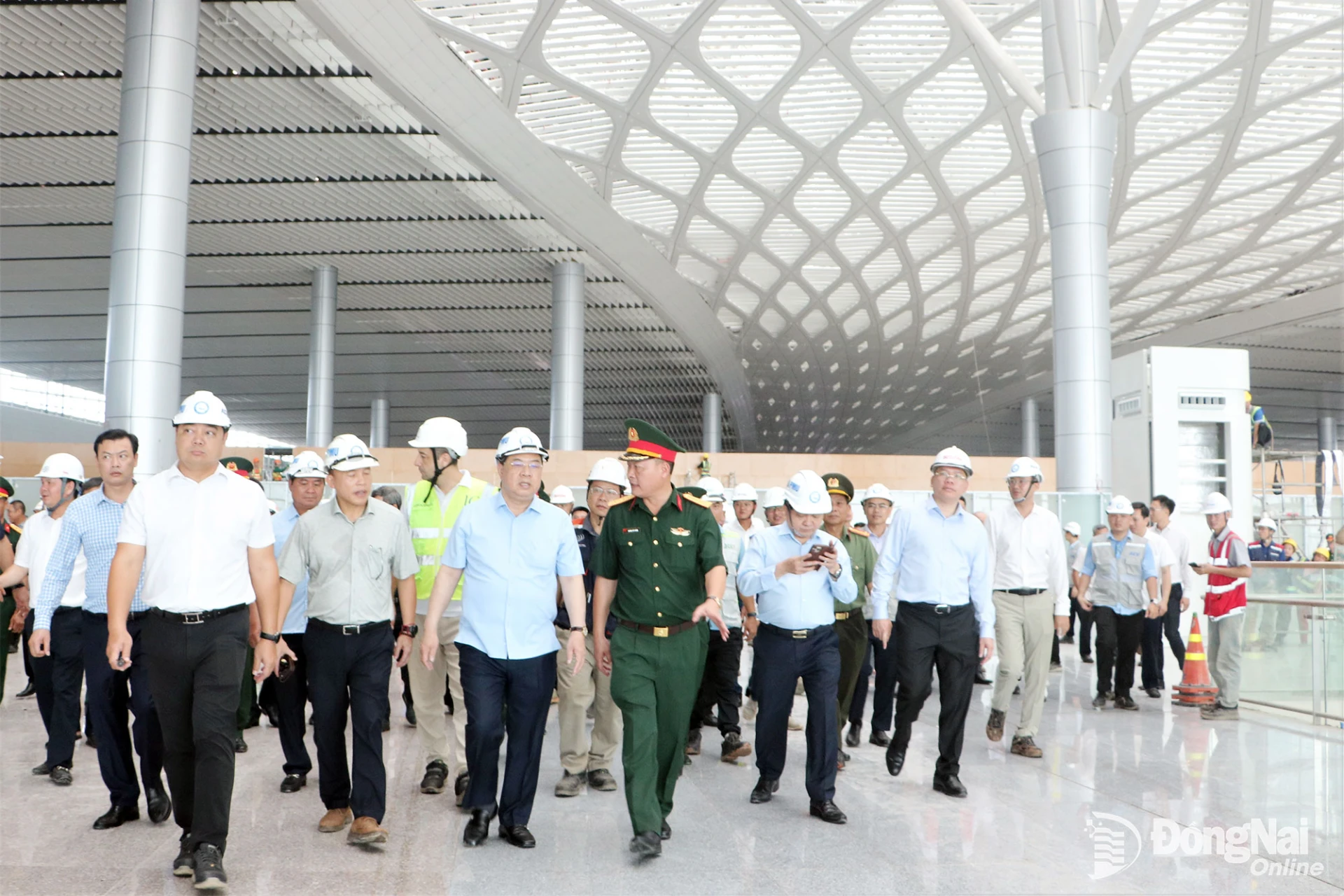
In economic terms, with a GRDP approaching 700 trillion VND and sustained high growth, Dong Nai possesses sufficient foundation to transition from processing-based industry to high-tech industry, and from broad-based investment attraction to selective, deeper investment. Particularly with the development of Long Thanh International Airport, Dong Nai has the opportunity to emerge as an international logistics and services hub directly connected to global value chains.
Regarding urban and social space, becoming a city is not merely about expanding urban scale – it is fundamentally about improving quality of life for residents through synchronized transport systems, green living environments, modern public services, and high-quality education and healthcare. These factors will determine the long-term attractiveness and sustainability of the urban model. At a deeper level, this presents Dong Nai with the opportunity to build a truly “livable city,” where economic development advances alongside social progress and equity.
Yet, alongside these opportunities come substantial challenges. Foremost among them is the pressure of urban governance. With its large population and rapid urbanization, Dong Nai will face increasingly complex issues – including traffic congestion, overloaded infrastructure, environmental degradation, and widening social inequality – unless it adopts a governance model that is modern, transparent, and highly effective.
Equally pressing is the challenge of growth quality. As traditional advantages such as low-cost labor and abundant land gradually narrow, Dong Nai must shift toward a development model rooted in productivity, innovation, and technology. This demands major investments in education, high-quality human capital, and a robust innovation ecosystem.
At the same time, Dong Nai must also confront the challenge of balanced development: harmonizing industrialization with environmental protection, economic expansion with social security, and urbanization with the preservation of cultural identity. These are not easy questions to answer. If not addressed effectively, such tensions could become obstacles to sustainable growth.
For this reason, the requirement for Dong Nai in the coming era is not merely to grow faster, but to grow better – meaning growth defined by quality, depth, resilience, and sustainability. This aligns directly with the Party’s overarching strategic vision for national development in the new era: placing quality, efficiency, and sustainability at the forefront.
Dong Nai’s aspiration in the new era
From a resilient war zone once engulfed in bombs and the smoke of war, Dong Nai City today stands before a historic opportunity to rise into a national urban center. That aspiration is reflected not only in growth statistics, but in a long-term vision: By 2030, it is expected to become a leading growth pole; and by 2045, to make worthy contributions to Vietnam’s goal of becoming a developed, high-income nation.
Ultimately, this aspiration is not that of a single locality; it is part of the broader national aspiration to build a powerful, prosperous Vietnam capable of standing shoulder to shoulder with the world’s great powers. Along that journey, localities such as Dong Nai, given their position, potential, and responsibility, will play especially critical roles. As Vu Hong Van, Member of the Party Central Committee, Secretary of the City Party Committee, and Head of the Dong Nai City National Assembly Delegation, once affirmed Dong Nai would be among the leading group shouldering the mission of national development. That statement is more than a political commitment; it is a call to action for the entire political system and the people of Dong Nai.
Throughout history, every major milestone has opened up a new chapter of opportunity. For Dong Nai, April 30, 2026 is not merely an administrative marker; it is the starting point of a new journey – a journey of rising higher, and affirming its leadership in development. Dong Nai today continues to write its history not only through growth statistics, but also through the quality of life of its people, the competitiveness of its economy, and its increasingly significant contributions to national development. That, ultimately, is the true meaning of “rising to city status”: not in title alone, but in developmental stature and national responsibility.
By Dr. Vu Thi Nghia – Translated by Minh Hong, Thu Ha


Thông tin bạn đọc
Đóng Lưu thông tin