
The tourism industry is facing major opportunities as well as significant challenges. Globally, competition among destinations is becoming increasingly intense, with many countries proactively developing long-term strategies, restructuring markets and products, investing resources, and adopting greener, smarter and more sustainable approaches to tourism promotion.
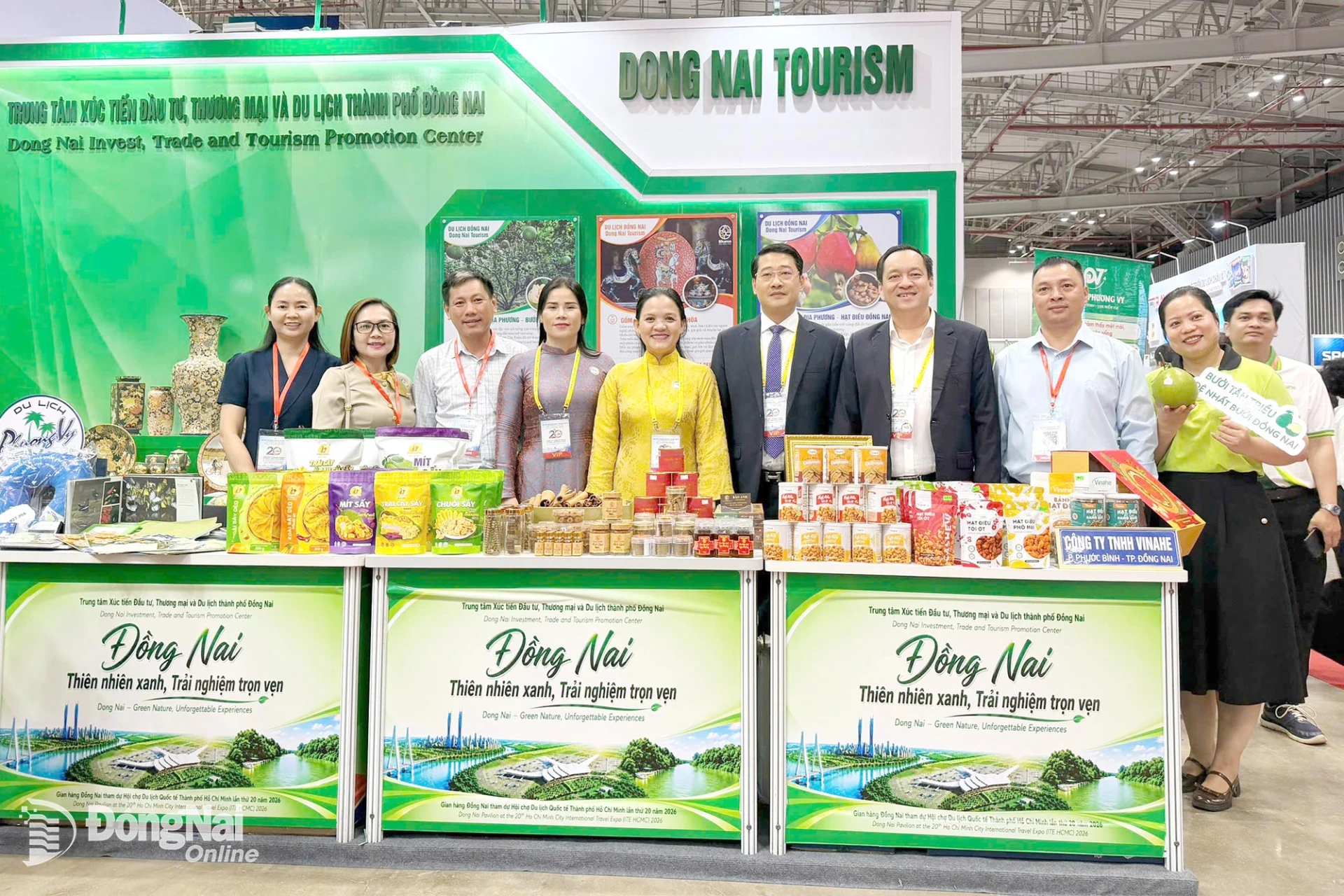 |
| The Dong Nai tourism promotion booth, organized by the Dong Nai City Investment, Trade and Tourism Promotion Center, at the Ho Chi Minh City International Travel Expo 2026. |
The Party and State have also set out fundamental and breakthrough development orientations for the tourism industry.
A spearhead economic sector
Politburo Resolution No. 26-NQ/TW, dated August 22, 2026, identifies tourism as a spearhead economic sector and a new growth driver for the country. It calls for a shift from quantity-driven development toward quality and higher added value, while building an integrated, intersectoral and interregional economic ecosystem based on science and technology, innovation and digital transformation.
Meanwhile, Resolution No. 80-NQ/TW, dated January 7, 2026, on the development of Vietnamese culture, provides a foundation for promoting culture as a creative resource, thereby helping enhance the competitiveness of Vietnamese tourism products. The policy of restructuring administrative units is also opening up broader spaces for regional connectivity, while requiring the consolidation of tourism promotion organizations, the integration of data, and the appropriate repositioning of destination images.
These developments require tourism promotion and marketing to adopt new thinking and approaches, shifting from exploiting existing resources to creating value and leveraging culture, people, experiences and creativity as competitive advantages. This, in turn, can enhance the value of visitor experiences and meet tourists’ increasingly diverse needs.
Speaking at the opening of the 2026 National Tourism Promotion Conference, themed “Innovation – Synergy – Breakthrough,” held in Quang Ninh City on September 24, Nguyen Trung Khanh, Director General of the Vietnam National Authority of Tourism, said that holding two conferences on the same day reflected a new, integrated approach linking travel businesses with tourism promotion.
According to the director general, while travel businesses serve as a bridge connecting tourism products with customers, tourism promotion and marketing help expand markets, build recognition, position destinations and stimulate travel demand. Therefore, it is necessary to establish close links among market research, promotion and marketing, tourism products, travel businesses, airlines, destinations and tourists, thereby creating a unified and effective value chain, he said.
Building tourism product chains
Tran Thi Thu Trang, Deputy Director in charge of the city’s Investment, Trade and Tourism Promotion Center, said the center has made efforts to implement tourism promotion programs both within and outside the city while strengthening connections with local travel businesses. Through these promotional activities, the center has created opportunities for travel businesses and destinations to exchange information and establish connections, contributing to the formation of tourism product value chains.
In the coming period, when Long Thanh International Airport begins commercial operations, the Dong Nai City Investment, Trade and Tourism Promotion Center will conduct surveys, establish connections and develop tourism products linked to the airport, shopping centers, resorts and tourist attractions across the city. The aim is to effectively develop tourism tours and increase the value generated by local tourism, she said.
According to Tran Thi Thu Trang, to improve the effectiveness of tourism promotion, the center will continue accelerating digital transformation and focus on proposing solutions to build a shared market database system that connects data among central agencies, local authorities and businesses. It will also step up the application of artificial intelligence (AI) and Big Data in market analysis and forecasting, while developing a set of indicators to evaluate the effectiveness of tourism promotion based on substantive results.
Deputy Minister of Culture, Sports and Tourism Ho An Phong:
For tourism promotion and marketing, it is necessary to clearly identify target markets, visitor segments and appropriate products. Promotional activities must be closely linked to businesses, air routes, tours and the actual service capacity of destinations. Tourism promotion should go beyond organizing events and create connections that help develop products, expand markets, generate visitor flows, and increase revenue and value for the tourism sector. At the same time, greater efforts are needed to mobilize resources from society and promote the proactive role of businesses, rather than relying solely on state resources.
The deputy minister emphasized the need to strengthen linkages among localities, businesses and relevant sectors, particularly aviation, transport, culture, trade and agriculture, thereby developing competitive tourism product chains that meet the needs of individual markets.
Tourism promotion should be focused and targeted, avoiding duplication and the dispersal of resources. At the same time, greater attention should be paid to building and promoting national, destination and product brands in a consistent and coordinated manner.
Vietnam National Authority of Tourism
By Ngoc Lien – Translated by Mai Nga, Minho

Thông tin bạn đọc
Đóng Lưu thông tin