
The Department of Culture, Sports and Tourism (DCST) has recently submitted proposals to the City People's Committee outlining strategies for developing ecological, resort, and experiential tourism products centered on lakes, forests, rivers, waterfalls, and historical sites. These initiatives are designed to capitalize on new connectivity corridors linked to key infrastructure projects such as Long Thanh International Airport and the region’s seaport system.
 |
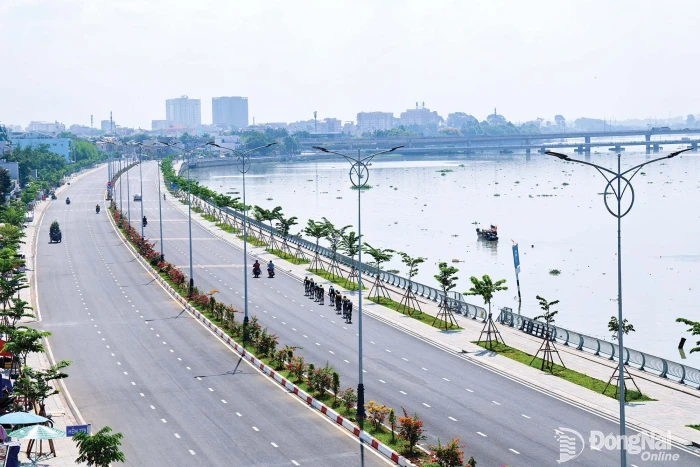
| Tri An Lake - one of the tourism axes connected to Long Thanh Airport. |
As part of this vision, the department has proposed the formation of five major tourism corridors, all radiating from Long Thanh Airport, which is expected to become one of Southeast Asia’s leading aviation hubs with a projected capacity of 100 million passengers annually.
Long Thanh Airport as the core growth driver
Dong Nai has been pursuing a strategy to integrate tourism development with the emerging Long Thanh Airport urban area, aiming to maximize international and domestic visitor flows while transforming the airport from a transportation hub into a tourism, shopping, and leisure destination.
A typical example is the five connection axes for tourism development proposed by the DCST, including the axis linking Long Thanh Airport with the Tri An Lake area and Bien Hoa urban area. This is a continuous connection axis between urban areas and nature, including forests, lakes, the island system on Tri An Lake, fruit orchards, and indigenous culture. The second is the axis linking with the Chua Chan Mountain ecological, resort, and entertainment tourist area, which features a distinctive mountain and lake ecosystem and is expected to welcome millions of visitors each year. The third connection axis links with forest ecotourism routes in Cat Tien National Park and Tan Phu Protective Forest. This is considered a nature exploration axis associated with Dong Nai's distinctive forest - river - lake - hot spring, cave, and rock mountain ecosystem, with priority given to sustainable forms of tourism aimed at green growth and reducing greenhouse gas emissions.
Along with the three connection axes mentioned above, Long Thanh Airport is also proposed to form tourism routes connecting with the Dong Nai River corridor (the longest inland river in Vietnam). Notably, these are also two pillars identified by the city as strategic drivers of a breakthrough in socio-economic development. Therefore, exploiting the advantages of the landscape and the system of relics along the river (Nguyen Huu Canh Temple, Ong Pagoda, Dai Giac Pagoda, traditional Bien Hoa pottery establishments...) is expected to create unique and distinctive tourism products.
For the Northern area of Dong Nai City, the tourism industry also aims to develop a tourism axis connecting Long Thanh Airport immediately after the Ma Da Bridge is completed, forming a "Green Heritage Journey" tourism route, connecting some prominent destinations of Tri An Lake with the northern part of Dong Nai City such as: Experiencing the unique culture of the S'tieng people in Soc Bom Bo; the Special National Historical Site of the Headquarters of the Liberation Army of Southern Vietnam (Ta Thiet Base) is the most important historical connection point, forming a "red tourism" chain from War Zone D to Ta Thiet Base; expanding the space for exploring primeval forests, mountaineering, and observing wildlife in Bu Gia Map National Park.
Dong Nai possesses a synchronous transportation infrastructure system with all five modes of transport, including road, air, rail, maritime, and inland waterway. Notably, Long Thanh International Airport, Phuoc An Port, and 10 expressways have been implemented, are being implemented, and will be implemented. This is the foundation for Dong Nai's tourism industry to leverage its advantages and break through.
Developing international-standard tourism services
According to economic experts, Dong Nai is emerging as a major growth driver of the Southern key economic region, serving as a vital gateway that connects the Southeast with the Central Highlands and other regions. Long Thanh Airport, in particular, plays a core role in this connectivity.
Discussing the advantages of Dong Nai tourism in connection with the Long Thanh Airport urban area, at the scientific conference "Orientation for Dong Nai Tourism Development in the New Context," organized by the Provincial People's Committee (now the City People's Committee) in March 2026, Master Do Le Phuc Tam from University of Economics Ho Chi Minh City said that for the tourism development model linked to Long Thanh Airport urban area to truly spread across the entire city, Dong Nai needs to establish an effective connection mechanism between the "core" of the airport urban area and satellite urban areas such as Tri An Lake, Cat Tien National Park, and Dong Nai's ecological and cultural spaces.
Also, according to Master Do Le Phuc Tam, Dong Nai needs to focus on development corridors along the main connection route, namely the rapid transport route linking the airport with urban areas, turning it into a tourism experience corridor. Along these corridors, rest stops, tourist information centers, local food courts, cultural spaces, craft villages, and activities for ecological and agricultural experiences could be arranged. In addition, sports tourism activities such as golf, mountain climbing, stand-up paddleboarding (SUP), and ecotourism could be developed in transitional areas between urban areas and natural ecosystems.
Affirming the determination to promote Dong Nai city's tourism linked to new connection axes with Long Thanh Airport as the core, speaking at the scientific conference "Orientation for Dong Nai Tourism Development in the New Context," Member of the Standing Committee of the Provincial Party Committee (now the City Party Committee), Vice Chairman of the Provincial People's Committee (now the City People's Committee) Le Truong Son noted that Dong Nai is facing new opportunities with the Long Thanh Airport project is expected to begin commercial operations. This will be a boost to the overall development of the economy, including tourism. According to Le Truong Son, Dong Nai plays an important and indispensable role in the linked development of the Southern economic region, and this will also be a great driving force for regional tourism development in the coming period.
By Ngoc Lien – Translated by Mai Nga, Minho


Thông tin bạn đọc
Đóng Lưu thông tin