
The merger of the former Binh Phuoc Province with the former Dong Nai Province to form the new Dong Nai Province, now Dong Nai City, represents an addition of area and population. It is a strategic move designed to optimize resources, broaden development opportunities, and create a new growth engine for the country. Within this vision, tourism has been identified as one of the city’s key breakthrough sectors.
The expanded geographical area transforms Dong Nai into a “miniature tourism map” of Vietnam, endowed with vast potential and positioned to emerge as a leading center for ecological, cultural, and exploration tourism.
According to official statistics, Dong Nai currently has 28 active tourism destinations offering a wide range of experiences, including sightseeing, entertainment, ecotourism, sports, spiritual tourism, and cultural exploration. The city is also home to 121 officially recognized historical and cultural sites, including six special national relics, 42 national relics, and 73 provincial-level relics, as well as nearly 1,500 inventoried relics. In addition, nearly 1,500 relic sites have been inventoried. These resources represent a significant competitive advantage. If effectively preserved, promoted, and developed, they can become a sustainable source of economic growth for the city, the region, and the country as a whole.
Before the merger, Dong Nai tourism was famous for its riverine ecosystem, garden tourist areas, and heroic historical-cultural relics. Meanwhile, the former Binh Phuoc boasts vast forests, rubber and coffee plantations stretching as far as the eye can see, and the unique indigenous culture of the S’Tieng and Khmer ethnic minority groups.
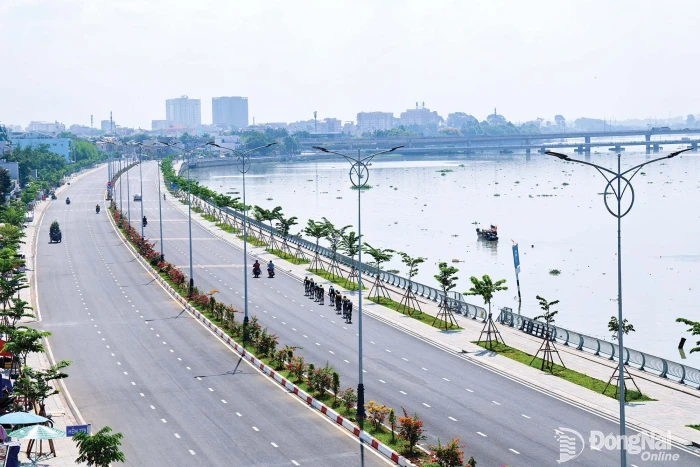
With these two pieces merged into one, Dong Nai City’s tourism space has expanded comprehensively in both breadth and depth. Tourists can now experience a perfect closed-loop journey: checking in at ecological urban areas along the Dong Nai River in the morning, immersing themselves in the cool atmosphere of Cat Tien National Park at noon, then in the late afternoon watching the sunset from the peak of Ba Ra Mountain or enjoying the cool evening air of Phuoc Long, Bu Dang.
Especially after the merger, Dong Nai City, with a population of approximately five million people, is now among the localities with the largest populations in the country. Serving the tourism, sightseeing, and leisure needs of Dong Nai residents alone represents enormous potential. The question is how to enable Dong Nai people to directly participate in the tourism service supply chain, directly benefit from it, and help spread and promote the image of Dong Nai's land and people. This is a challenge that requires a conductor to take the lead in initiating and connecting tourist areas and attractions to form a closed-loop tourism service supply chain. Strategizing the city's tourism development with specific steps and medium- and long-term investment roadmaps is an important basis for calling for and attracting investors. In addition, along with synchronous investment in transportation infrastructure, electricity, and internet, training human resources to meet the requirements of tourism development in the new period must be carried out in parallel to ensure synchronous, professional, and efficient operations...
With a strategic vision, methodical investment, and the determination and consensus of the government and people, Dong Nai tourism will surely break through and become a key economic sector, contributing to Dong Nai's sustainable and prosperous development and serving as a new development symbol of the Southeast region in the new era.
By Minh Luan – Translated by Mai Nga, Minho


Thông tin bạn đọc
Đóng Lưu thông tin