
As Dong Nai takes on city status, alongside requirements for infrastructure development and urban improvement, a key issue at each residential area is changing residents’ lifestyles, social conduct and civic awareness to help them adapt to the urban environment.
Many localities have translated the goal of building urban civic awareness into specific activities, encouraging residents to take part directly and gradually turn these practices into everyday habits.
Gradually building urban way of life
For these changes to take root in everyday life, they should begin with practical activities that are relevant to different groups of residents. Venerable Thich Duc Phuong, abbot of Nam Son Pagoda in Thong Nhat Commune, said many residents had long been accustomed to their previous lifestyles and routines and therefore needed time to adapt to changes in their living environment. Older people, in particular, need even greater support in accessing new technologies and keeping up with advances in science and technology so they can adapt to changes in daily life.
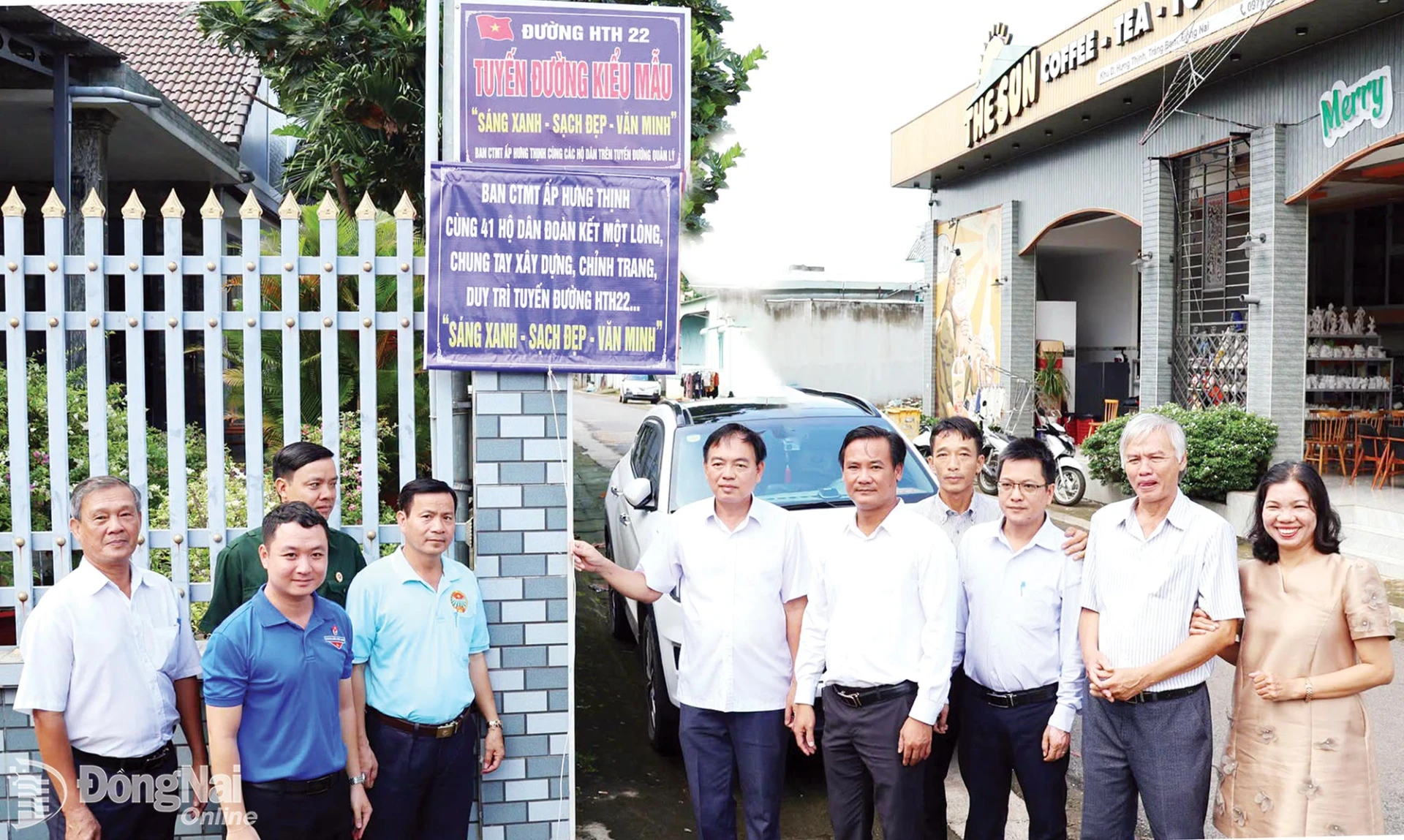 |
| Representatives of the Viet Nam Fatherland Front (VFF) Committee of Hung Thinh Commune, in coordination with the Fatherland Front Working Committee of Hung Thinh Hamlet, launch a model “bright, green, clean, beautiful and civilized” road along HTH 22 Street. Photo: Phan Ngoc Tri |
According to Venerable Thich Duc Phuong, raising civic awareness should begin with practical actions such as keeping the environment clean, complying with the law and behaving appropriately within the community. Public awareness efforts should be accessible and closely linked to practical activities, making it easier for residents to understand, participate and gradually develop these practices into habits. These values should also be incorporated into the education of younger generations. Authorities, for their part, should demonstrate their commitment through concrete actions and services that directly benefit residents, enabling people to see the changes, take part in them and gradually change their perceptions and behavior. For pagodas, educating and encouraging Buddhist followers to raise their civic awareness, comply with local regulations and adopt a lifestyle suited to urban life is also a way of supporting local authorities in this process.
In Hung Thinh Commune, this approach has been translated into a plan to develop “bright, green, clean and beautiful” roads during the 2026-2031 period. Tran Cong An, Chairman of the Hung Thinh commune VFF Committee, said the commune Party Committee had directed local VFF Committee and socio-political organizations to formulate an implementation plan, assigning specific responsibilities to each organization and hamlet. The goal is to turn the maintenance of village roads and residential areas into regular, daily tasks. Party cells incorporate the work into their monthly resolutions and assign officials, Party members and other forces within the political system to implement, inspect and assess the activities.
“At each hamlet, the VFF Committee and socio-political organizations work with residents to select the roads and identify the criteria to be met. Residents living along each road hold meetings to discuss and decide what needs to be done to meet those criteria. The VFF provides guidance and direction rather than doing the work on residents’ behalf,” Tran Cong An stressed.
Hung Thinh Commune has four hamlets. The approach is being adopted one road at a time, with each road completed to the required standards before the model is expanded to other areas. The “bright, green, clean and beautiful” road model has four basic criteria. Model roads are required to meet higher standards, including distinctive features and visual highlights that give each road its own identity.
Urban way of life begins with each individual
Urban civic awareness is reflected not only in keeping streets clean and beautiful and complying with the law, but also in social conduct, community responsibility and the ability to adapt to the digital environment.
In Long Thanh Ward, the ward People’s Council has integrated efforts to build urban civic awareness into the activities of its deputies, focusing on issues of concern to local residents. Nguyen Tuong Vi, Vice Chairwoman of the ward People’s Council, said: “The ward People’s Council, in coordination with the ward VFF Committee, has promoted public awareness and guided residents in improving their digital skills by installing and using the Dong Nai application and participating in the Digital Literacy for All movement.”
At the same time, supervision activities focus on specific local issues such as urban order, construction, public investment, and conditions for childcare and child development. Through meetings with voters, gathering public opinions and overseeing local issues, the ward People’s Council has linked the activities of its deputies to practical issues arising from the urban development process.
The thematic program “Building urban civic awareness to contribute to a civilized, modern and happy Dong Nai” has been presented in many localities in recent times by Ha Anh Dung, Member of the City Party Committee’s Standing Committee, Standing Vice Chairman of the city VFF Committee and a Central-level rapporteur. The program emphasizes that residents are not merely beneficiaries of urban development but also active participants in building a civilized city. It highlights the importance of complying with the law, building a civilized lifestyle, behaving appropriately within the community, protecting the environment and urban landscape, and promoting a sense of responsibility toward the community.
At a conference on implementing the thematic program held in Tri An Ward, Standing Deputy Secretary of the ward Party Committee Dang Huy Hieu emphasized that, following the reorganization of administrative units, the locality had entered a new development phase with higher requirements for building a civilized and modern urban area. Alongside infrastructure development, urban improvement and socio-economic development, the human factor, particularly the awareness, sense of responsibility and actions of officials, Party members and residents, play an important role. According to Dang Huy Hieu, a civilized urban area is reflected not only in infrastructure or clean and attractive streets, but also in compliance with the law, promoting a culture of proper conduct in public places, protecting the environment, maintaining solidarity and demonstrating a sense of responsibility toward the community.
In each residential area, urban civic awareness is reflected in everyday actions such as keeping local roads clean and well maintained, making use of new public services and amenities, behaving appropriately within the community and complying with the law. When practiced consistently, these seemingly simple actions will gradually become an established way of life in every family and residential area.
By H. Thao – Translated by M.Nguyet, Thu Ha

Thông tin bạn đọc
Đóng Lưu thông tin