
The Urban Development Law (UDL) marks an important step forward in strengthening the institutional framework for urban development in Vietnam. With a new approach that shifts from urban management to urban governance focused on enabling development, the law strengthens decentralization and delegation of authority, giving urban administrations greater autonomy in making development decisions.
Speaking to Dong Nai Newspaper and Radio, Television, Bui Xuan Thong, Deputy Head of the city Delegation of National Assembly (NA) Deputies, said the NA’s passage of the law is expected to provide an institutional “springboard” for cities to better harness their potential and advantages and enhance their competitiveness.
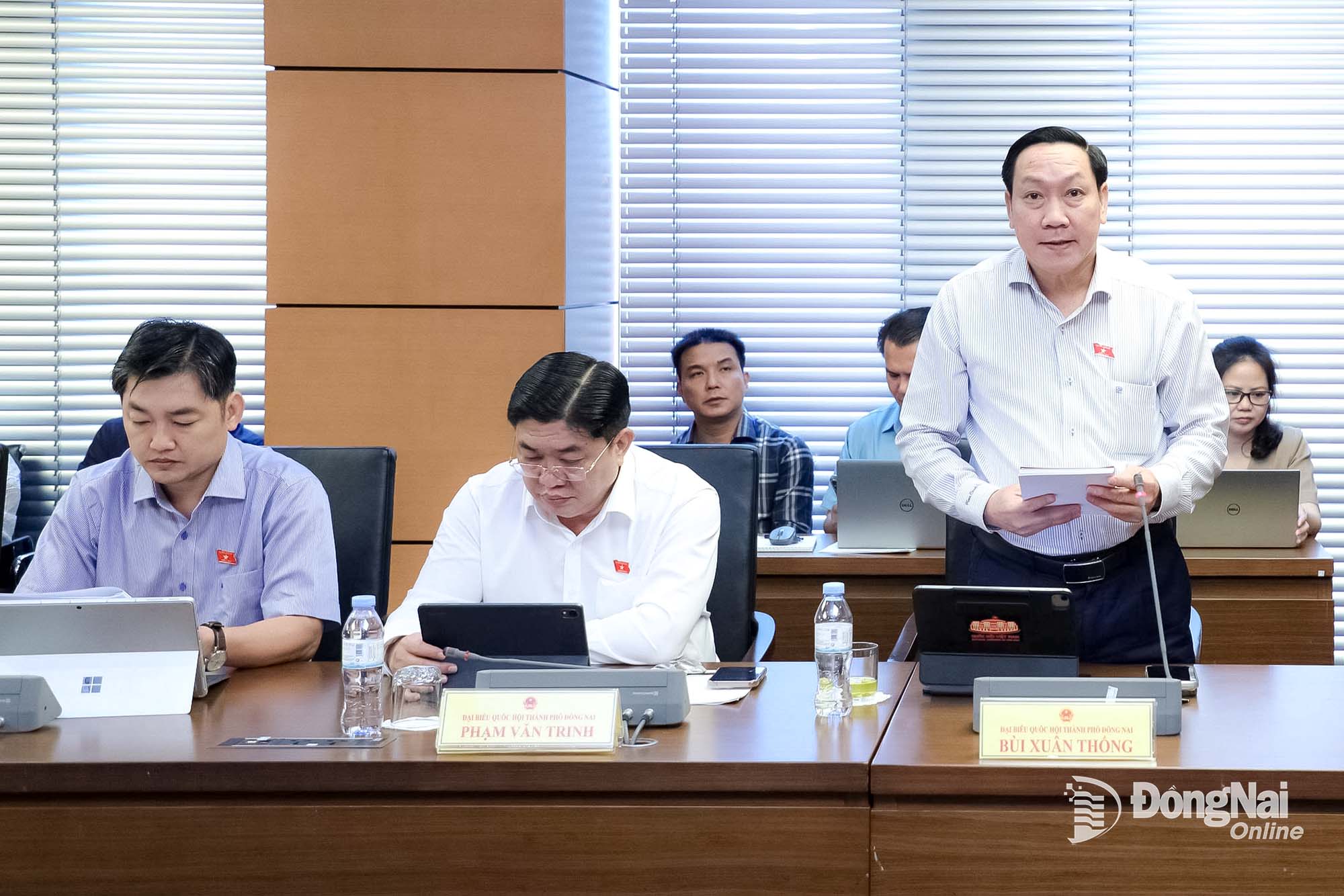 |
| Bui Xuan Thong, Deputy Head of Dong Nai Delegation of NA Deputies speaks at a group discussion session |
Creating an institutional “springboard” and empowering city administrations to drive development
*The NA has recently passed the UDL, introducing a number of mechanisms and establishing a new legal framework. This is the first time Vietnam has enacted a separate law governing urban areas. What does the UDL mean for urban development in the new period?
-In my view, the NA’s passage of the UDL is highly significant, not simply because Vietnam now has a new law, but more importantly because it represents a fundamental shift in the way urban development is approached.
For a long time, cities were viewed primarily from the perspective of construction management, planning, technical infrastructure and housing development. Meanwhile, modern cities, however, are not merely built-up spaces. They are socio-economic ecosystems where people, human resources, science and technology, finance, trade, services, culture and innovation converge. Therefore, urban development should be viewed as an important driver of economic growth and improved quality of life.
The greatest value of the UDL lies in establishing a stable legal framework focused on enabling development. During discussions, NA deputies emphasized the need to “remove institutional bottlenecks, create new growth drivers and further decentralize authority to cities.” This is particularly important as Vietnam enters a new stage of development, with rapid urbanization, growing demand for infrastructure connectivity, and increasing requirements for green and smart development, as well as greater efforts to attract international resources.
The enactment of the law is only the first step. Its real value will be measured by the ability to translate policies into practice, shorten processing times, facilitate the work of citizens and businesses, and give urban administrations greater autonomy in making decisions within their jurisdiction.
In other words, the UDL must shift the mindset from “managing cities” to “enabling urban development,” putting people at the center and using quality of life and development effectiveness as key benchmarks.
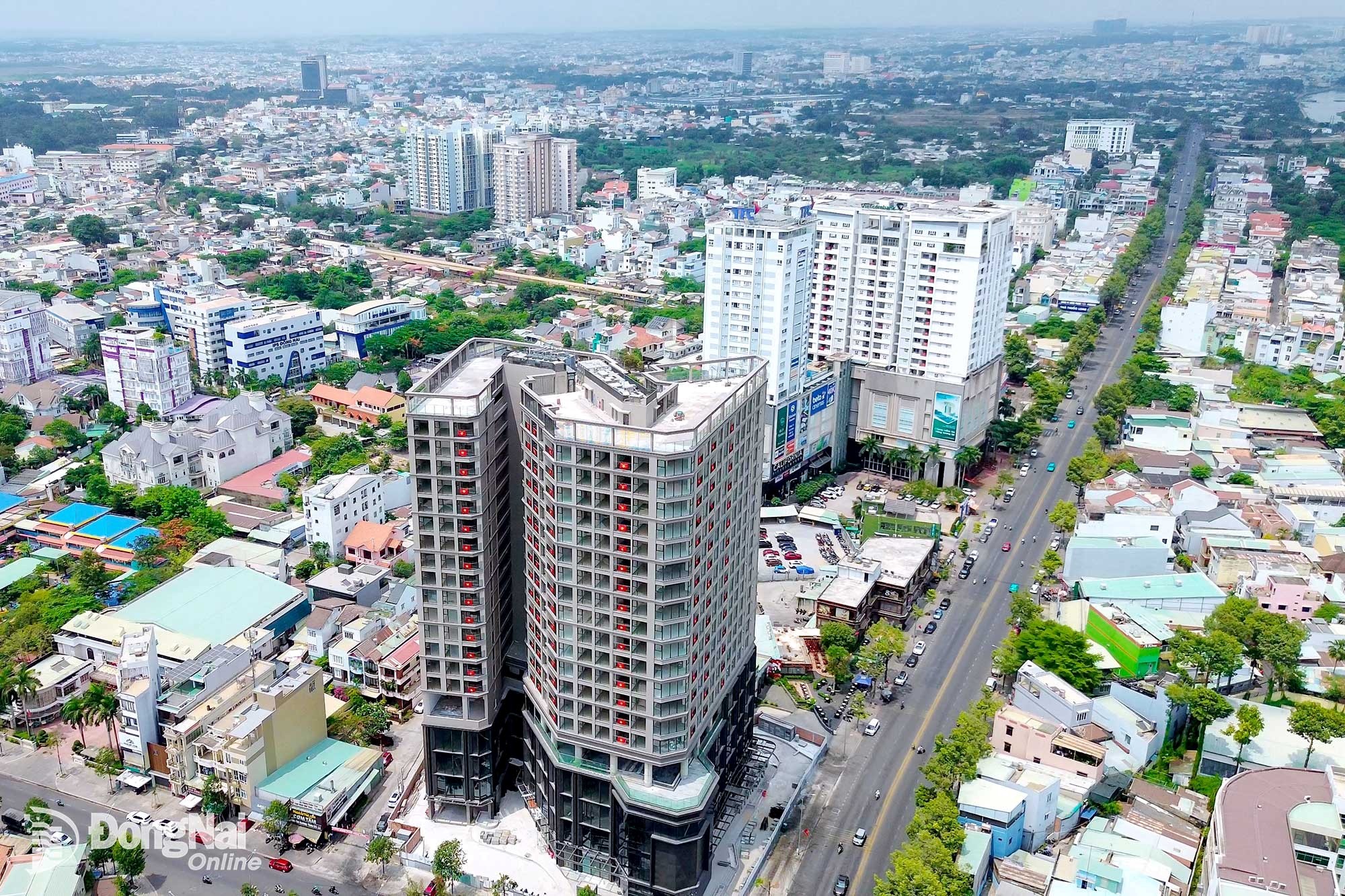 |
| A corner of the urban area in Tran Bien ward, Dong Nai City. Photo: Minh Tai |
*One of the notable features of the UDL is stronger decentralization and delegation of authority, giving city administrations greater on-the-spot authority. How do you think this mechanism will help cities address shortcomings in management and administration and create momentum for faster and more flexible development?
I consider this one of the law’s breakthrough provisions. Decentralization and delegation of authority under the UDL should not simply be understood as “giving more power,” but as empowering local authorities to make decisions proactively while holding them accountable for those decisions.
I strongly agree with the view expressed by many NA deputies during the discussions that greater decentralization must go hand in hand with clearly defined authority and responsibilities, openness, transparency, accountability and power control.
This is particularly important because decentralization without clearly defined responsibilities could lead to officials shirking responsibility or abusing their authority. Conversely, if powers are delegated but local officials and administrations still have to seek approval on too many matters, decentralization will fail to deliver its intended results.
Therefore, I expect the law to establish a new governance model: the central government focuses on developing institutions, standards, technical regulations and strategies, as well as inspection and supervision, while local authorities are given sufficient room to organize implementation proactively and mobilize resources in line with their specific circumstances.
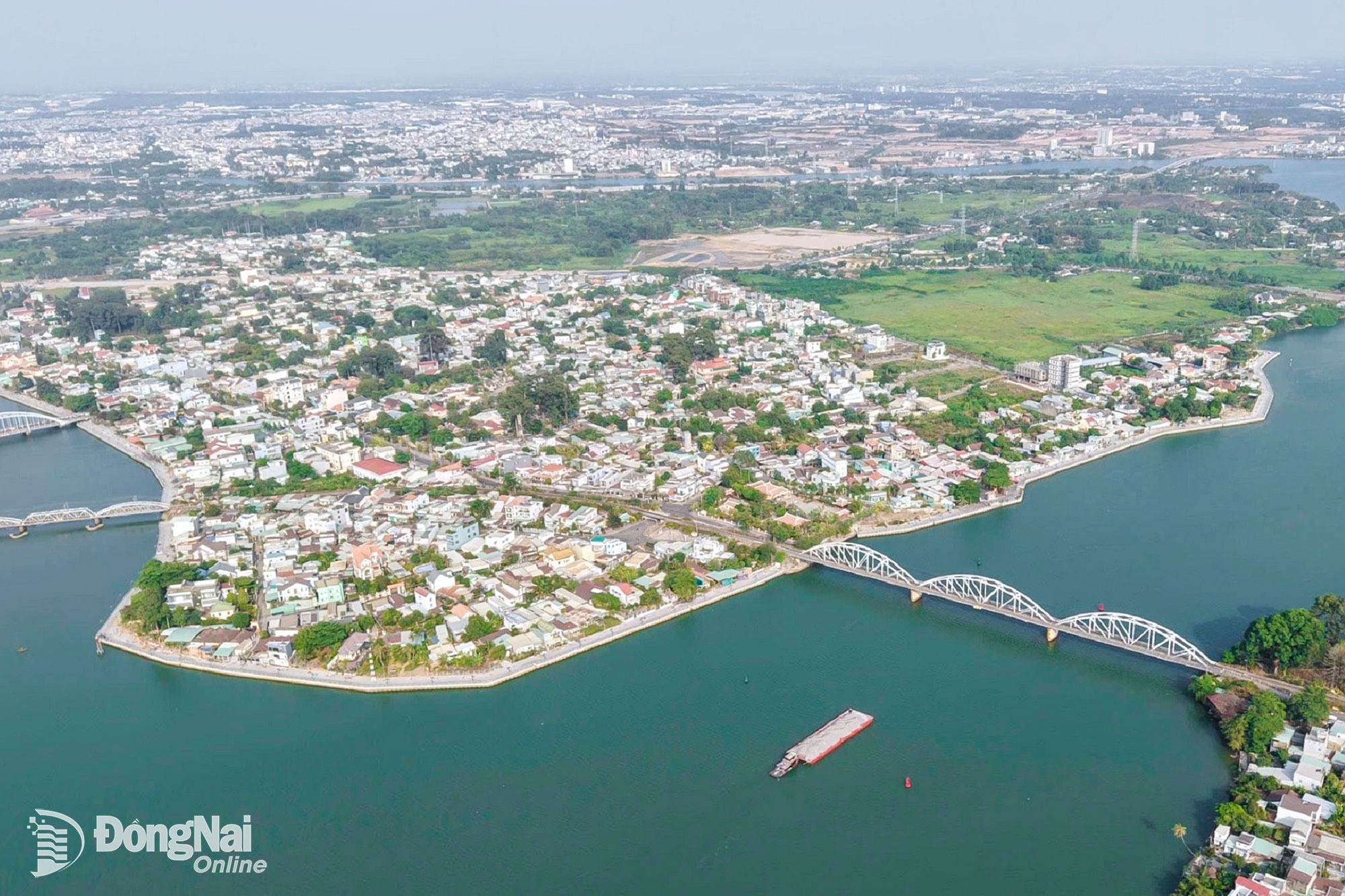 |
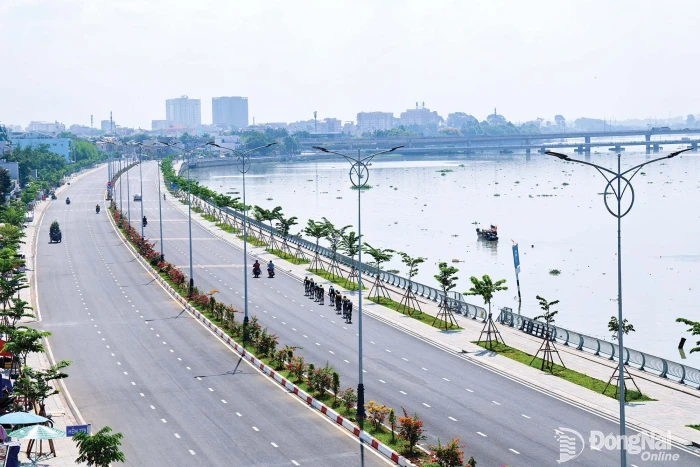
| With the advantage of the Dong Nai River, the city is oriented toward riverfront urban development. |
*How do you assess the role of the new institutional framework in helping cities make better use of their potential and advantages and mobilize resources for development?
-A city may have a favorable geographical location, abundant land, human resources, a transport network and a large market. However, if its institutional framework is inappropriate, administrative procedures are prolonged and authority is unclear, it’s difficult to translate these advantages into tangible development opportunities.
A notable aspect of the UDL is that it goes beyond traditional urban management regulations and gives cities greater scope to mobilize social resources, attract strategic investors and pilot new development models. This is also the spirit reflected throughout the drafting process.
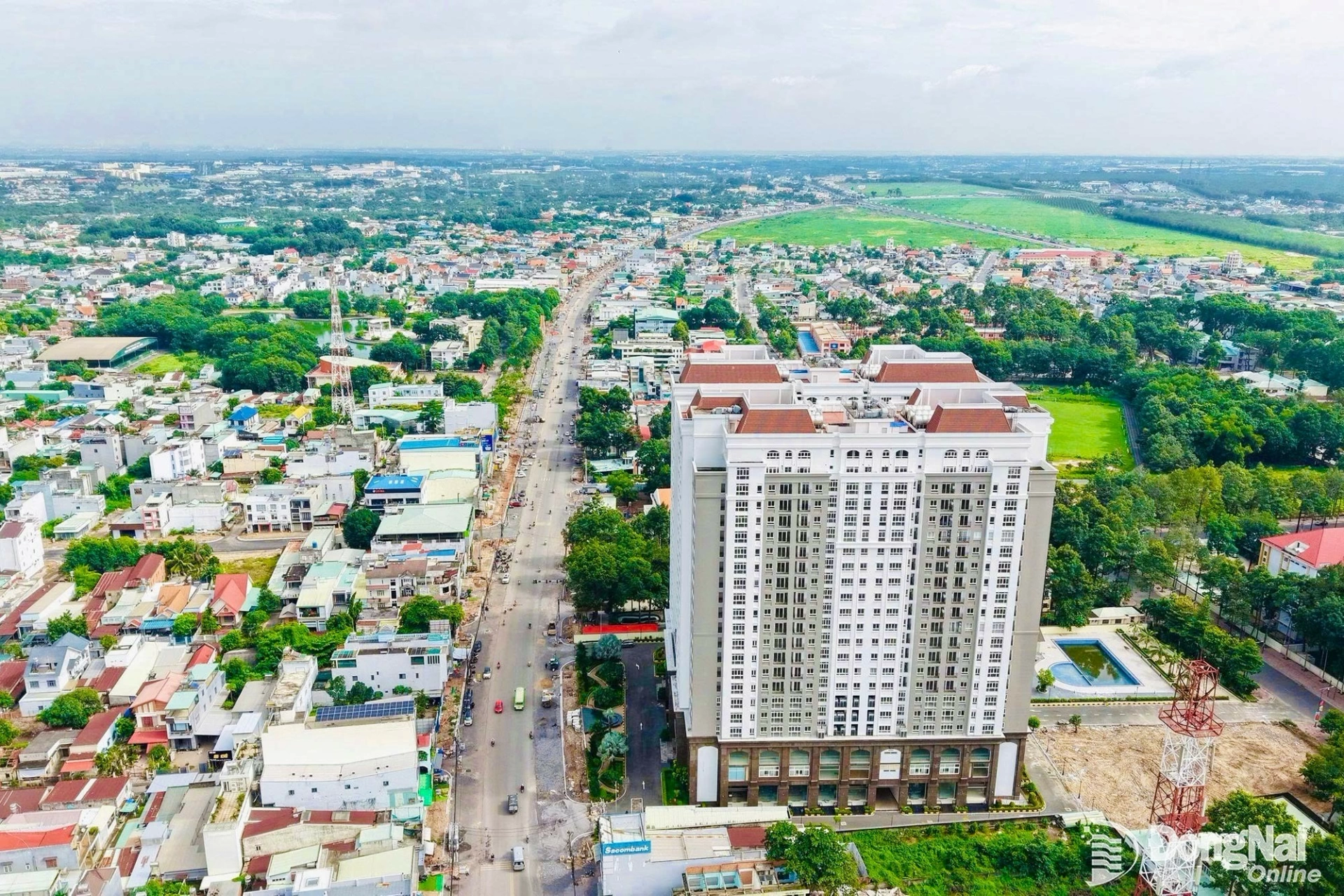 |
| Long Thanh ward has been identified as an airport urban area of Dong Nai. Photo: Cong Nghia |
Opening up development space, creating new growth poles and strengthening regional connectivity
*The law provides new mechanisms and development spaces, including models such as special economic zones and free trade zones. How will these provisions contribute to the formation of new growth poles, investment attraction, development of emerging economic sectors and stronger regional connectivity?
-In today’s international competition, economic space is no longer confined by administrative boundaries. For a city to develop, it must position itself within regional, national and international networks. Models such as free trade zones, special economic zones, financial centers, logistics hubs and specialized functional areas, if properly designed, can become hubs for capital, technology, human resources and markets.
However, I believe special economic zones and free trade zones should not simply be understood as areas offering greater incentives. The core objective must be to create an internationally competitive business environment, supported by quality infrastructure, transparent procedures, effective governance, highly skilled human resources and strong connectivity with global supply chains.
From the perspective of regional connectivity, this issue is even more significant. A free trade zone or logistics center cannot operate effectively if it serves only a single urban area. It must be connected to seaports, airports, railways, expressways, industrial parks, production centers and consumer markets.
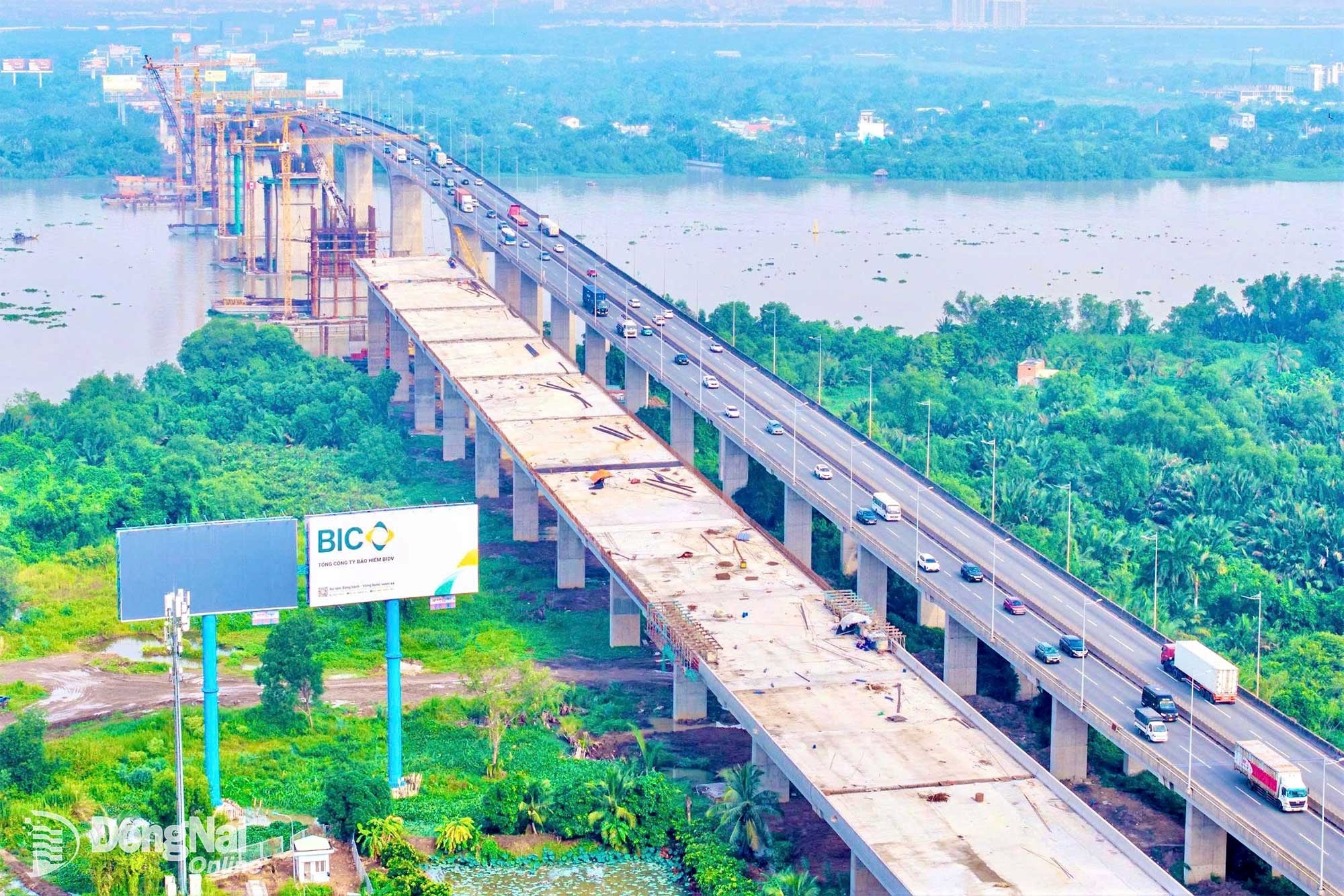 |
| The Ho Chi Minh City - Long Thanh Expressway expansion project. Photo: Pham Tung |
*An important requirement for urban development today is to capitalize on the advantages and distinctive characteristics of each locality. How will the UDL create room for cities to formulate mechanisms, policies and development models suited to their specific conditions rather than applying a one-size-fits-all approach?
-Vietnam has many cities with very different conditions. Hanoi is a special-class city and the country’s political and cultural center. Ho Chi Minh City serves as an international financial and commercial hub. Da Nang has strengths in the marine economy, tourism and services, while Hai Phong has advantages in seaports, logistics and industry. Dong Nai, meanwhile, has distinct advantages in industry, logistics, aviation, inter-regional connectivity and vast development space. Therefore, applying the same formula to all cities would make it difficult to achieve breakthroughs.
The spirit of the law is for the central government to establish the framework, principles and common standards, while local authorities are given room to organize implementation proactively, mobilize resources and explore models suited to their specific conditions. However, autonomy must go hand in hand with responsibility. Local authorities may proactively choose their development options, but they must demonstrate effectiveness, feasibility and sustainability, as well as their compatibility with overall planning. At the same time, they must be accountable to residents, the People’s Council, the Government and supervisory agencies for their decisions.
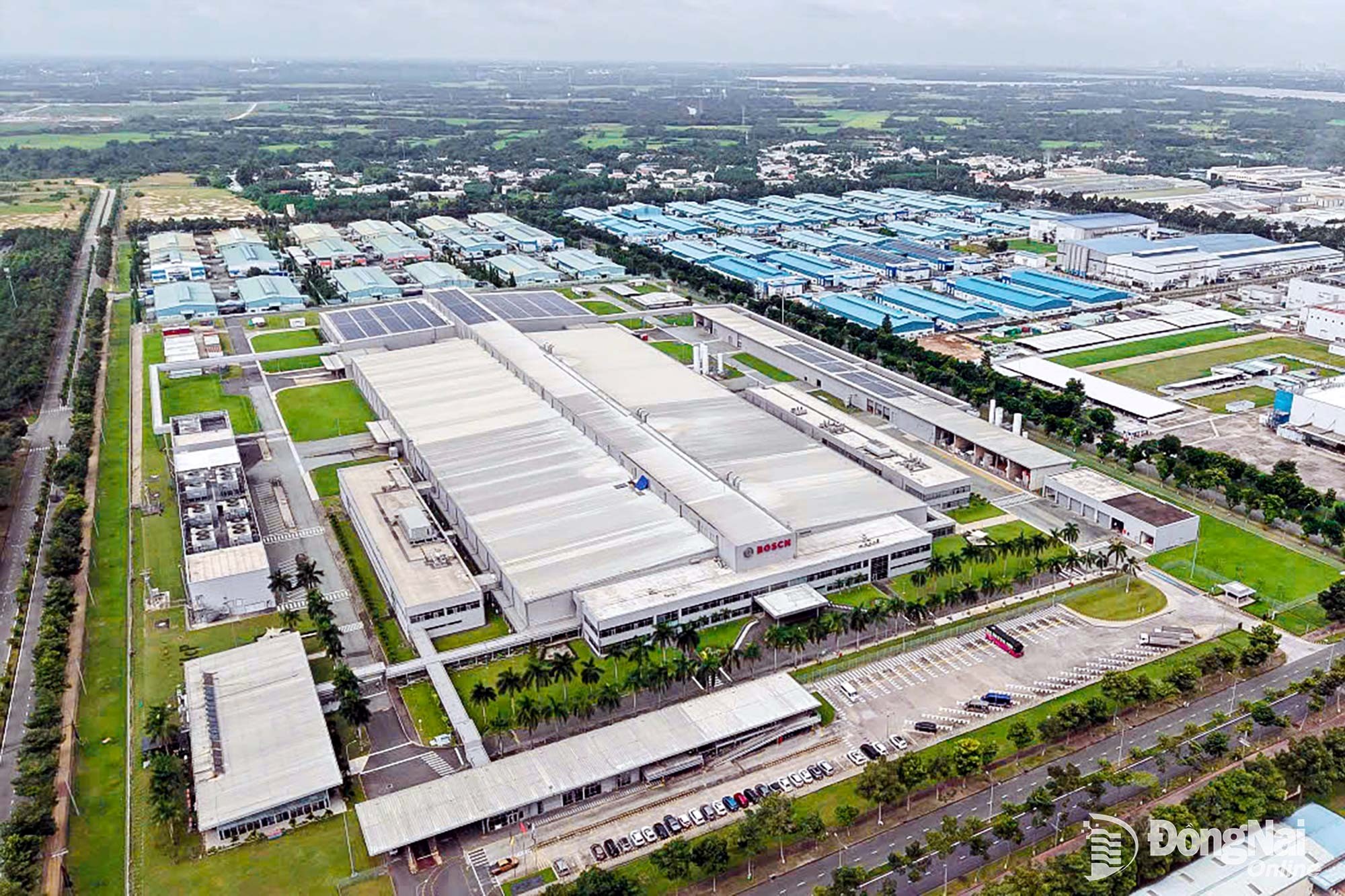 |
| High-tech factory at Long Thanh Industrial Park. Photo: Vuong The |
*Dong Nai City is facing numerous new development opportunities, particularly in transport infrastructure, logistics, industry, services and regional connectivity. In your view, what specific opportunities could the UDL open up for Dong Nai to expand its development space, mobilize resources, establish new economic models and strengthen its role in regional connectivity?
-Dong Nai is among the localities that stand to benefit significantly from the new development mechanisms under the UDL, but this also places high demands on governance capacity. Dong Nai’s major strength today is its strategic position at the intersection of several major development areas. Following the recent administrative boundary reorganization, Dong Nai has gained a broader development space, with greater diversity in land resources, industry, urban development, agriculture, border-gate economic activities and the marine economy. Dong Nai is also gaining new growth drivers from its strategic transport infrastructure, including Long Thanh International Airport and a growing network of expressways connecting the province with the Southeastern region.
In particular, the development orientation for Dong Nai to 2035, with a vision to 2065, sets out the goal of developing an airport city that is riverfront, polycentric, green and smart, with a focus on high-tech industry, the aviation industry, the aviation economy and the knowledge economy.
To fully capitalize on the UDL, Dong Nai needs to make immediate preparations in planning, human resources, urban data, digital infrastructure, capital mobilization mechanisms and land reserves for infrastructure development. Most importantly, it needs to strengthen its capacity to govern a large-scale urban area. If these preparations are effectively carried out, the UDL will be more than a legal framework governing urban activities. It can become a key institutional foundation for Dong Nai to enter a new phase of development.
By H. Thanh – Translated by M.Nguyet, Thu Ha


Thông tin bạn đọc
Đóng Lưu thông tin