
In recent years, Party committees at both central and local levels have adopted numerous strategic resolutions to guide the country’s development. However, these resolutions can make a real difference only when they are translated into concrete action and measurable results.
Dong Nai is entering a new phase of development. Major policies and resolutions adopted by the Party Central Committee (PCC) and the city’s Party Organization have created new opportunities and opened up fresh avenues for growth.
Action determines results
At a conference on the implementation of Resolution No. 05-NQ/TU, dated May 1, 2026, Vu Hong Van, Member of the PCC and Secretary of the Dong Nai City Party Committee (CPC), stressed that the special 500-day-and-night emulation campaign launched under the resolution by the CPC Executive Board was a call to action for the entire political system in Dong Nai. The campaign, themed “Unity – Discipline – Efficiency – Breakthrough, building a civilized and modern Dong Nai,” is also intended to continue through 2030, with a focus on improving its quality. He said the campaign was designed to turn the resolutions adopted at the first Dong Nai Provincial (now Dong Nai City) Party Congress, the 14th National Party Congress, and the central government’s major policy initiatives into concrete, measurable outcomes. These include policies on developing the Southeastern region, establishing a two-tier local administration system, and promoting rapid and sustainable national development in the new period. The results, he stressed, must be tangible and verifiable in practice.
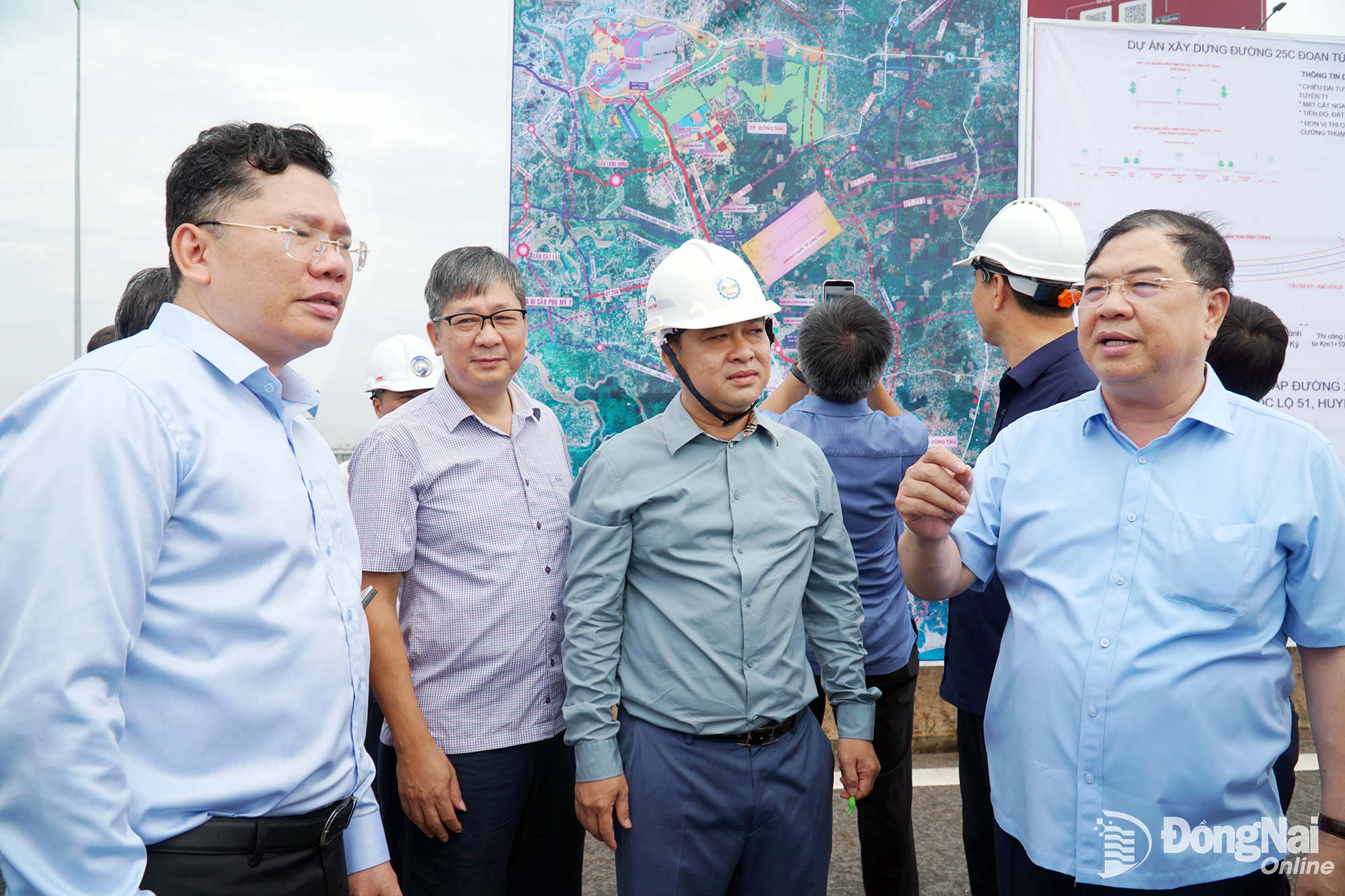 |
| An inspection delegation led by Standing Deputy Prime Minister Pham Gia Tuc (right) examines the Long Thanh International Airport project on October 4, 2026. Photo: Le Lam |
Dong Nai has a unique foundation for development. As a gateway to Southeastern Vietnam, the city is home to Long Thanh International Airport and benefits from an extensive network of expressways and regional transport links, a long-established industrial base, and well-developed logistics and port infrastructure. Realizing the full potential of these advantages requires sound policies, decisive implementation and tangible progress on key infrastructure projects and other assigned tasks. Delays at any critical stage could undermine these advantages and hold back the city’s overall development.
The central government has placed its trust in Dong Nai, while the public has high expectations for the city’s development. To turn Resolution No. 05 into tangible results, the city’s entire political system is shifting its approach from simply completing assigned tasks to focusing on clear objectives, implementation deadlines and measurable outcomes. Public and business satisfaction is also becoming an important measure of performance and accountability.
Head of the CPC’s Commission for Information and Education Duong Minh Dung said that under Resolution No. 05, the city’s Vietnam Fatherland Front (VFF) Committee and 99 Party Committees directly subordinate to the CPC had registered a total of 821 projects, undertakings and tasks with the CPC’s Executive Board. The registered initiatives focus on removing bottlenecks, addressing difficult issues and resolving longstanding problems in localities and agencies. As of September 30, 228 of the 821 registered projects and undertakings had been completed, representing 27.77% of the total.
Thousands of projects and undertakings registered
Beyond these 821 projects, undertakings and tasks, localities and agencies have registered another 4,626 projects and undertakings with their respective Party committees as part of the implementation of Resolution No. 05. These are being carried out according to the required schedules and quality standards.
Monitoring by the CPC’s Commission for Information and Education shows that the early implementation of Resolution No. 05 has produced a range of innovative models and approaches that are contributing to socioeconomic development in localities and agencies.
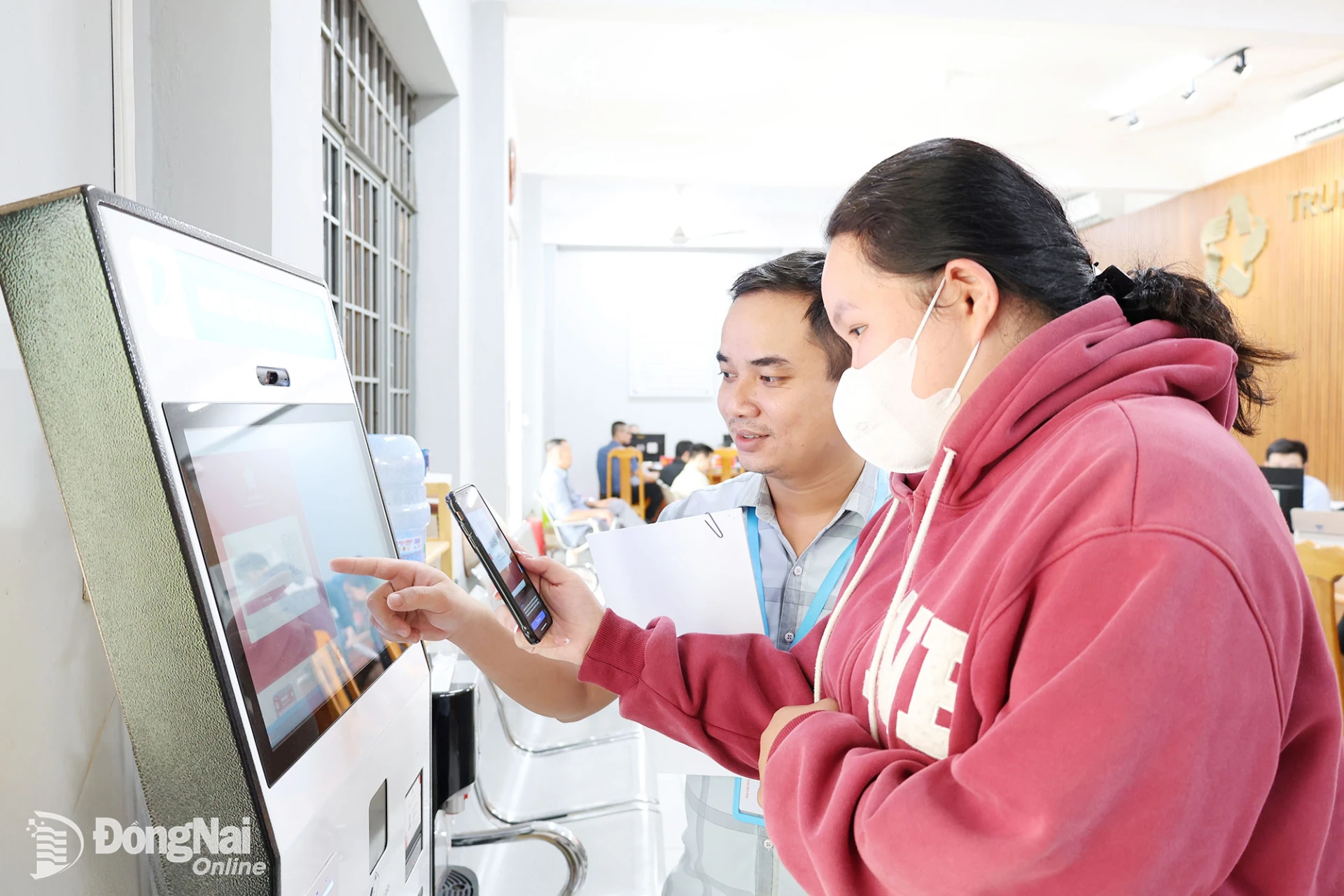
Dong Xoai ward, for example, has introduced a digital citizen station at its Public Administration Service Center. A robot helps residents navigate administrative procedures and find information about required documents, working hours and the status of their applications. The initiative is designed to shorten waiting times and make it easier for residents to access administrative information.
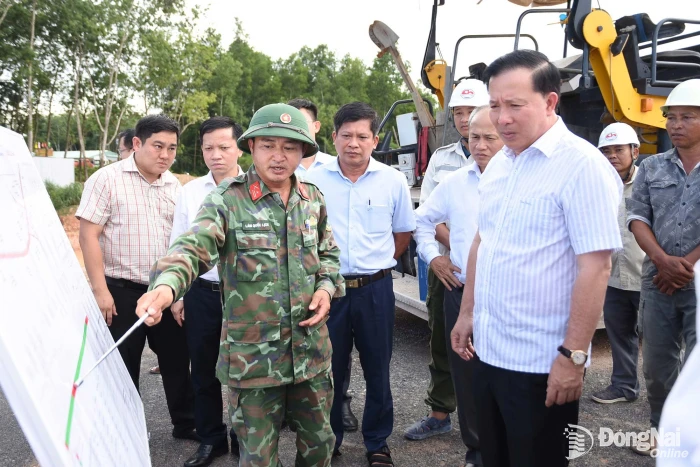
In Bu Dang commune, seven working groups have been set up to visit residents and help them complete procedures for obtaining land-use rights certificates. As of October 1, 38 applications had been processed, and the commune People’s Committee had issued the certificates and delivered them directly to residents’ homes. The initiative provides residents with better conditions to improve their livelihoods. Alongside efforts to implement Resolution No. 05 and other key Party resolutions, including those adopted at the first Dong Nai Party Congress and the 14th National Party Congress, the city has made progress in several areas during the first nine months of 2026.
According to Dong Nai Industrial Parks and Economic Zones Authority, from January 1 to September 28, 2026, the city approved 65 new foreign direct investment (FDI) projects with a combined registered capital of US$873.59 million. A further 98 existing projects registered additional capital totaling approximately US$965.36 million, while domestic investment reached around VND8.374 trillion. Dong Nai’s industrial parks (IPs) currently employ around 800,000 workers, contributing significantly to industrial output, exports, job creation and local budget revenue.
To date, Dong Nai’s IPs, economic zones and high-tech parks have attracted 2,813 projects from investors in 45 countries and territories, including 1,966 FDI projects and 847 domestic investment projects.
Nguyen Van Ut, Deputy Secretary of the CPC and Chairman of the City People’s Committee, said that since the beginning of 2026, the CPC and the City People’s Committee had focused on directing and managing the economy to achieve the annual growth target of 11%. At the beginning of the year, the City People’s Committee drew up plans, action programs and growth scenarios, set targets for different sectors, and established a steering committee to oversee economic growth and state budget revenue for 2026–2030.
Dong Nai maintained positive economic momentum in the first 9 months of 2026, with gross regional domestic product (GRDP) estimated to have grown by 10.01%. State budget revenue reached nearly VND79.9 trillion, equivalent to 80% of the assigned annual estimate. As of September 30, public investment disbursement totaled more than VND18.65 trillion, or approximately 68.7% of the target set by the Prime Minister.
During the same period, around 6,100 new businesses registered for establishment in Dong Nai, with total registered capital exceeding VND255.7 trillion.
Building on these achievements, Dong Nai is pursuing a more ambitious development agenda. Politburo Resolution No. 16-NQ/TW, dated July 21, 2026, on the city’s development through 2035, with a vision to 2065, envisions Dong Nai as a green, smart, multicenter city with airport-oriented and riverside urban development models. It also aims to establish the city as an internationally recognized hub for high-tech manufacturing, aviation and aerospace, and the broader aviation economy. By 2065, Dong Nai aims to become a globally connected city and one of the world’s leading multifunctional airport cities, offering a high quality of life and a strong sense of well-being for its residents.
At a meeting of the CPC’s Executive Board on October 2, 2026, Secretary of the CPC Vu Hong Van expressed confidence that the entire Party organization, local authorities, the VFF, political and social organizations, the business community and residents would remain united and act decisively. He called on all stakeholders to make every effort to achieve the city’s 2026 targets, laying a solid foundation for rapid and sustainable development.
At the same meeting, Van stressed that implementing Resolution No. 16-NQ/TW must go beyond studying the document, publicizing its contents or issuing implementation plans. Each major strategic direction must be translated into specific tasks, mechanisms, programs and projects, backed by adequate resources and clear timelines. Progress must be reflected in completed infrastructure projects, business growth, job creation, higher public revenue and tangible improvements in residents’ quality of life.
By P. Hang – Translated by M.Nguyet, Thu Ha

Thông tin bạn đọc
Đóng Lưu thông tin