
As from April 30, 2026, Dong Nai officially becomes a city. This marks a milestone of special significance, not only in legal terms but also in historical stature, opening a new chapter of development for Dong Nai with a new position, a new vision, new demands and renewed aspirations.
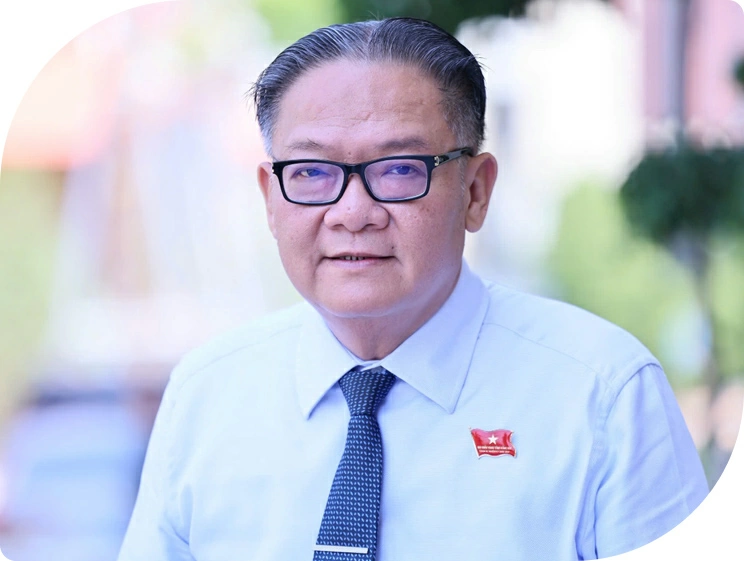 |
To realize the “airport city” model and ensure effective urban governance, however, strong determination and decisive action are required from the entire Party Committee, authorities and people of Dong Nai City. Dong Nai Newspaper and Radio, Television conducted an interview with Nguyen Kim Long, Member of the City Party Standing Committee and Standing Vice Chairman of the Dong Nai People’s Committee, on urgent tasks and breakthrough solutions to ensure the new administrative apparatus operates efficiently from the very first days.
Dong Nai city: new thinking, new approaches
*Immediately after becoming a city, how will Dong Nai shape a new development vision to truly match its new status?
First and foremost, it must be affirmed that once it enters a new stage of development, Dong Nai can no longer continue with old thinking, outdated approaches or traditional management models. A city requires a new vision, a new mindset and an administrative apparatus capable of leading development in a new context.
We believe that building Dong Nai City must begin with building a political system that is truly clean, strong, united, disciplined, action-oriented and capable of shouldering new responsibilities. In other words, before building a modern urban center, we must first build a modern public administration; before elevating the city, we must elevate its officials.
 |
| Civil servants at the Dong Nai City Public Administration Service Center assist residents with online administrative procedures. Photo: Hai Quan |
Accordingly, the city will place special emphasis on building a contingent of officials, civil servants and public employees who are resilient, responsible, professionally competent, innovative in thinking and adaptable to the requirements of modern governance. More importantly, they must dare to think, dare to act and dare to take responsibility for the common good. A major city cannot thrive if its administrative apparatus continues to operate under outdated practices, resists change and lacks a spirit of public service.
In terms of development vision, Dong Nai will not merely grow as a conventional urban administrative unit. Instead, it must be positioned as a new growth pole and a strategic connectivity hub for the southeastern region and the country as a whole. Within this framework, the “airport city” model will serve as a key pillar, creating distinct, long-term competitive advantages for Dong Nai in regional, national and international integration.
Urban planning in the coming period will follow an open-space approach, with synchronized infrastructure, multi-center development, modernity combined with identity, and rapid yet green and sustainable growth. The city will organize urban space in harmony with its river systems and natural ecosystems, while promoting smart, climate-resilient and environmentally friendly development. Dong Nai must not only grow quickly, but also harmoniously, deeply and with enduring competitiveness.
Moreover, the city will embrace a new growth model driven by science, technology and digital transformation, with data emerging as a strategic resource, businesses leading innovation, and citizens at the center of both public service and development gains.
Ultimately, Dong Nai aims to become a civilized, modern and happy city, where economic development goes hand in hand with cultural progress, improved quality of life and better material and spiritual well-being for the people. After all, every policy, plan, project and reform must serve people.
To realize that vision, how will the city’s organizational structure and personnel arrangements be implemented so that it is not merely “new bottles” but truly “new wine”?
Becoming a city places very high demands on the management and operational capacity of the local administration. As the scale expands, urbanization intensifies, regional connectivity deepens and integration pressures increase, the system can no longer function in the old way.
The first solution is to continue refining the urban governance model toward greater efficiency, with clear functions, responsibilities, authority, focal points and measurable effectiveness. Each agency and unit must be arranged more rationally, reducing unnecessary intermediary layers while increasing coordination and improving the speed and accuracy of decision-making.
Yet streamlining is not simply about mechanically cutting units. More importantly, it requires genuine innovation in operations. The city government must move from a mindset of administrative control to one of modern urban governance; from rigid oversight to development facilitation; from doing things on behalf of others to supporting, guiding and enabling; and from process-based handling to results-oriented delivery that truly meets the needs of residents and businesses.
We view the city’s officials and civil servants as the most decisive factor in turning policy into tangible results. No matter how well the system is designed, if the people within it fail to meet requirements, substantive efficiency cannot be achieved. Therefore, Dong Nai will focus on building a team of officials with strong political steadfastness, sound public ethics, high responsibility, professional excellence, global-minded thinking, digital skills and the ability to adapt quickly to a modern governance environment.
At the same time, the city will continue to strongly reform recruitment, assignment, utilization, training and evaluation of officials in a transparent, merit-based and competitive direction, grounded in actual capacity and work results. Officials must be assessed through concrete outputs, advisory quality, processing speed, coordination effectiveness and the satisfaction of residents and businesses, rather than vague general comments.
 |
| Dong Nai City will also continue developing digital government, digital governance and digital public services, step by step forming a modern, transparent, open and convenient administration. In photo: Operations at the control dashboard of the Dong Nai City IOC Center in Tran Bien ward. Photo: Ha Le |
Another crucial task is to accelerate administrative reform in tandem with digital transformation. The goal is clear: fewer procedures, shorter processing time, lower costs, and most importantly, residents and businesses must tangibly feel greater convenience, accessibility and efficiency in every interaction with government agencies.
In parallel, the city will cultivate a modern public-service culture that values professionalism, discipline, ethics and personal accountability. In short, the city government must be measured by practical effectiveness, validated by public trust and reflected in local development outcomes.
A city seeking rapid growth must have spearhead sectors. Which areas will Dong Nai prioritize to generate growth momentum from the very beginning?
Overall, Dong Nai will focus on three major groups of tasks: upgrading infrastructure, developing a modern urban system and creating new growth drivers.
First is urban planning and management. The city will prioritize the renovation and upgrading of existing urban areas toward greater civility and modernity while preserving cultural identity, history and the distinctive values of Dong Nai. Development does not mean erasing the old; rather, it means selectively inheriting and elevating what is valuable while adding new elements suited to future needs.
Alongside this, Dong Nai will accelerate the development of new urban zones, riverside urban areas and modern urban spaces, forming a synchronized urban chain in both technical and socio-cultural infrastructure. In urban development, the city will pay attention to transit-oriented development (TOD), compact growth, and mixed-use development, creating dynamic spaces linked to major transport hubs, railway stations and strategic corridors.
 |
| Dong Nai will prioritize the renovation and upgrading of existing urban areas toward greater civility and modernity while preserving their cultural identity and distinctive values. Photo: Cong Nghia |
For densely populated areas, the city will study effective use of underground space, improve land-use efficiency and invest synchronously in transport, electricity, water, telecommunications, environmental treatment and urban services.
From an economic perspective, the city will decisively implement measures to mobilize and efficiently utilize all available development resources. A key orientation is the strong development of the private sector, which is regarded as one of the foremost engines of growth. The city will continue improving the investment and business environment in a more transparent, stable and efficient direction, with faster procedures and lower costs so enterprises can invest and expand with confidence.
Beyond large corporations, Dong Nai will also support small enterprises, micro-enterprises and household businesses in scaling up into formal companies, while providing assistance in digital platforms, legal consulting, accounting, management and workforce training. The goal is to build a balanced, resilient and adaptable business community.
 |
| Deputy Secretary of the City Party Committee Vo Tan Duc and Member of the City Party Standing Committee, Standing Vice Chairman of the City People’s Committee Nguyen Kim Long present an investment certificate to the Sembcorp Integrated Hub Dong Nai 1 project on February 5, 2026. Photo: Ngoc Lien |
In addition, the city will prioritize attracting and developing high value-added sectors with broad spillover effects, such as high technology, supporting industries, logistics, airport services, modern trade, the digital economy and innovation. With the unique advantages offered by Long Thanh Airport and regional connectivity, Dong Nai is well positioned to create new growth engines if it can organize development space properly and establish sufficiently strong mechanisms to attract social resources.
Economic development must go hand in hand with culture, society and welfare. How will the vision of a “civilized – modern – happy” city be realized?
We are fully aware that development must result in tangible benefits for residents. If the economy grows while people’s lives do not substantially improve, that development remains incomplete.
Therefore, throughout Dong Nai’s development strategy, people remain the center, the driving force, the objective and the beneficiary of progress. The city will devote greater attention to social welfare policies, improving quality of life and creating fairer development opportunities for all.
Dong Nai is a major industrial locality, with a large workforce and a substantial number of migrant workers. As such, industrial development must go hand in hand with synchronized social infrastructure for workers. This is not only a matter of welfare but also a prerequisite for sustainable growth.
 |
| Model of the social housing apartment project on a 2.1-hectare site in Phuoc An commune, launched in early 2026. Photo: Hoang Loc |
In the coming period, the city will continue promoting social housing and worker accommodation, while investing in cultural, healthcare and educational facilities, childcare centers, community spaces and essential public services in or near industrial zones so workers can enjoy more stable housing, better living conditions and greater long-term commitment.
In education and training, Dong Nai will continue improving comprehensive education quality while strongly developing a modern vocational training system aligned with labor market demands, especially in high-tech industries, logistics, airport services, modern trade and the digital economy. The city aims to better prepare its young workforce to participate in new economic value chains.
 |
| Young people visit and experience digital technology booths at Techfest Dong Nai 2025. Photo: Hai Quan |
In healthcare, the city will continue investing in system capacity from grassroots to specialized levels, improving access to health services, promoting digital applications in treatment, health management and epidemic prevention. The goal is to ensure faster, better and fairer healthcare services for all residents.
Furthermore, the city will continue to effectively implement sustainable poverty reduction programs, livelihood support, expand social protection networks and better care for vulnerable groups. Urban development is not simply about becoming larger or more beautiful, but about becoming more livable, humane and inclusive.
Another important area is environmental protection and the creation of a green, safe and sustainable living environment. Dong Nai will strengthen natural resource management, pollution control, green urban development, waste treatment and climate adaptation. The quality of development is measured not only by growth rates, but also by air quality, water quality, green spaces and environmental safety for present and future generations.
Administrative procedures: better service, less burden for residents
Administrative procedures are often what concerns residents most when an administrative unit changes. What will the city government do to maximize convenience?
We fully understand that whenever there is a major change in administrative boundaries or models, what concerns people most are not grand concepts, but practical matters: whether documents must be changed, whether procedures will become complicated, whether additional travel will be required, and whether time and costs will increase.
For this reason, the city’s consistent guiding principle is to implement everything in the most convenient way for residents, the fastest way for businesses, and with minimal inconvenience.
 |
| The city will direct functional agencies, especially the police force and relevant sectors, to develop specific plans to support residents in updating necessary documents. Photo: Ha Le |
Immediately after the resolution took effect on April 30, 2026, the city instructed relevant agencies to prepare plans to support residents in adjusting documents such as citizen ID cards, civil-status records, land-use certificates, business registration papers and other related documents in accordance with regulations. Any changes involving only the administrative units’ names will be entirely free of charge.
Implementation must be systematic, with clear roadmaps, detailed area-based assignments and specific schedules down to residential quarters and neighborhood groups. Priority will be given to urgent cases, ongoing transactions and those requiring early completion. Documents that do not need immediate updates will be accompanied by clear guidance so residents can remain reassured and avoid unnecessary procedures.
At the same time, renaming, seal replacement and information updates for administrative agencies must be carried out in a synchronized and urgent manner to ensure uninterrupted transactions for residents and businesses.
Simply put, when major changes occur, the government’s responsibility is to serve residents better, not make life harder for them. That must remain the city government’s operating principle during the transition period.
The establishment of Dong Nai City is a historic transformation. What are your expectations regarding the support of residents and businesses in this new chapter?
I believe the National Assembly’s Resolution carries immense significance. Yet turning that decision into a vivid reality in everyday life ultimately depends on people, on unity, consensus, support and collective effort across society.
There is still much work ahead, many major tasks to implement and many challenges to overcome. However, with Dong Nai’s tradition of solidarity, dynamism, compassion and determination, we have every reason to believe in a stronger, more systematic and more sustainable path of development.
I hope every official and Party member will truly lead by example, not only in responsibility but also in service attitude, innovative spirit and concrete action, always matching words with deeds, daring to think, daring to act and daring to take responsibility for the common good.
I also hope the business community will continue to trust, accompany and boldly invest, expand production and business activities, while playing its pioneering role in creating wealth, jobs and resources for society. Meanwhile, I hope every resident of Dong Nai will continue to join hands with the government so that together we can build a more developed, more civilized and more livable city.
As for the city government, we remain firmly committed: every policy, mechanism and reform in decentralization, administrative simplification and organizational restructuring must not exist merely to embellish the system, but to better serve residents and businesses. Innovation only makes sense when work is handled faster, more conveniently and more effectively; when residents wait less, businesses travel less, and trust in government is strengthened through concrete and practical results.
By V.Lam, H.Le – Translated by M.Nguyet, Thu Ha



Thông tin bạn đọc
Đóng Lưu thông tin