
Dong Nai is moving closer to the day it will officially become Vietnam’s seventh centrally governed city. This milestone not only reflects the long-standing aspiration of nearly 4.5 million local residents but also embodies the confidence and expectations of the Central Government and the Politburo for a dynamic urban center that aspires to modernity while preserving its unique identity.
 |
| Dong Nai urban center, located in Tran Bien ward, serves as a growth driver. Photo: Cong Nghia. |
During a working session with a Government delegation on the proposal to establish Dong Nai City, Vu Hong Van, Member of the Party Central Committee, Secretary of the Provincial Party Committee and Head of the Dong Nai Delegation of National Assembly (NA) Deputies, emphasized that becoming a city is not merely an administrative upgrade, but a strong driver for Dong Nai to further leverage its heroic revolutionary history, diverse natural resources and rich cultural heritage. More importantly, it is an opportunity to fully harness the locality’s dynamic, innovative and creative mindset in economic development.
Pride in Dong Nai
With a history spanning nearly 330 years, Dong Nai has undergone numerous ups and downs. The land still bears the enduring legacy of Nguyen Huu Canh, who established the administrative system in the early days of Southern expansion. Notably, the province was also the first place in Southern Vietnam to build a Van Mieu (Temple of Literature), symbolizing the people’s strong tradition of valuing education.
Under the leadership of the Party and President Ho Chi Minh, Dong Nai’s revolutionary movement developed with many remarkable milestones. It began with the Phu Rieng Do movement in February 1930, marked by a resounding strike of thousands of rubber workers at the Phu Rieng plantation, which dismantled what was once described as the “hell on earth” and underscored the strength of the working class under the leadership of the Indochinese Communist Party. The event resonated as far as France and served as a catalyst for subsequent waves of struggle.
The NA has consistently accompanied Dong Nai on its path toward prosperity. Accordingly, the province is required to develop a concrete action program to promptly implement the resolution on the establishment of Dong Nai city once approved at the first session of the NA. The action program must align with the strategic orientations of the Central Committee and the Politburo, focusing on rapid, modern and sustainable development, while ensuring that no one is left behind.
Do Van Chien, Politburo member, Secretary of the Party Central Committee and Standing Vice Chairman of the NA.
Across the province, historical landmarks stand as vivid reminders of a heroic past. These include Ba Ra Prison relic, Tan Hiep Prison, War Zone D and Bien Hoa Airbase, alongside numerous victories that have gone down in the world history. Among them, the victories of Phuoc Long and Xuan Loc made significant contributions to the historic April 30, 1975 triumph, which led to the complete liberation of the South and national reunification. These invaluable legacies continue to inspire the Party Committee, authorities and people of Dong Nai to move forward with determination to build a brighter future and live up to the sacrifices of previous generations.
 |
| Dong Nai’s urban development is being oriented along river corridors. Photo: Cong Nghia. |
In the post-war reconstruction period, particularly during the Doi Moi (Renewal) process and international integration, the province’s traditions have been further strengthened. Dong Nai not only made its mark with Bien Hoa Industrial Zone—the country’s first industrial park—but also pioneered numerous dynamic approaches and effective economic models. These include the development of large-scale concentrated industrial parks, early attraction of foreign investment and diversification of economic sectors, creating millions of jobs. As a result, the province currently hosts the largest number of industrial parks nationwide and consistently ranks among the top contributors to the central budget.
According to Secretary of the Provincial Party Committee Vu Hong Van, Dong Nai can be seen as a “miniature Vietnam,” as it has welcomed residents from 34 provinces and cities who have settled and made it their second hometown.
Towards a prosperous future
At the first session of the NA Standing Committee on April 14, where the Government’s proposal on the establishment of Dong Nai city was reviewed, all members expressed unanimous support. This reflects not only the aspirations of the local Party Committee, authorities and nearly 4.5 million residents, but also a strategic direction set by the Central Government and the Politburo to develop Dong Nai into a key growth pole of the nation, a major economic connectivity hub and an international gateway in the new era, with the goal of becoming a dynamic and prosperous growth hub for the Southeast region.
 |
| Engineers operate chip manufacturing equipment at ONSEMI Vietnam Co., Ltd. in Bien Hoa 2 Industrial Park. Photo: Cong Nghia. |
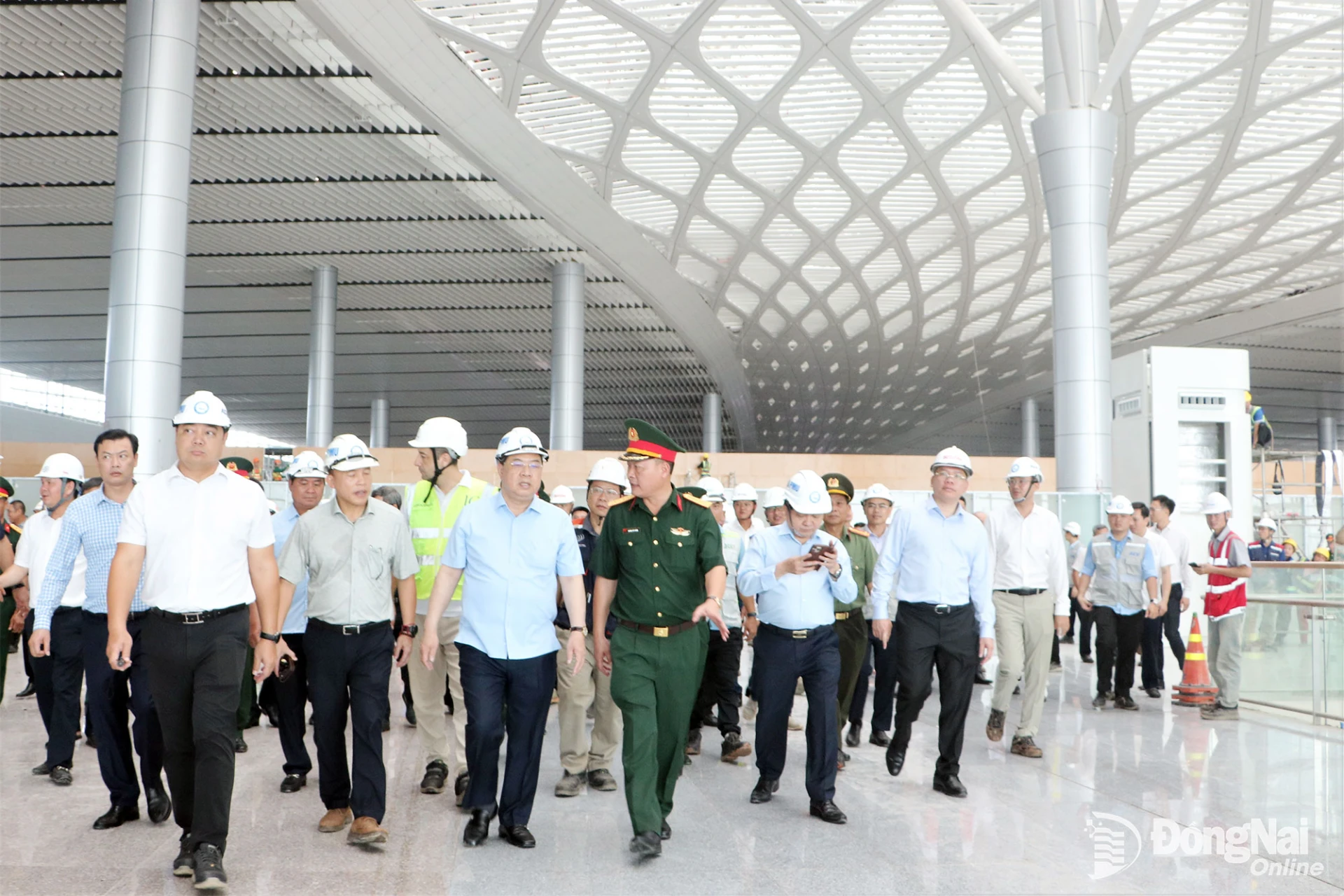
Phan Van Mai, Member of the Party Central Committee and Chairman of the NA’s Economic and Financial Committee, noted that Dong Nai has long demonstrated dynamic economic development. Following its merger with Binh Phuoc, its development space has expanded significantly. In addition, the upcoming operation of Long Thanh International Airport, together with a strategic transport and logistics system with strong interregional connectivity, is set to become a key growth engine, positioning Dong Nai as a driving city for both the Southeast region and the country as a whole. The establishment of Dong Nai City thus represents a concrete step in implementing the Central Government’s strategic vision.
Many members of the Government and the NA Standing Committee have expressed confidence that Dong Nai will evolve into a modern, identity-rich city. Beyond its strengths in industry and modern services, and its potential to become a regional innovation hub, the province also boasts significant advantages in natural landscapes and historical sites for tourism development. These include Dong Nai Culture and Nature Reserve, Cat Tien National Park with its well-preserved ecosystems, as well as Chua Chan Mountain, Ba Ra Mountain and Tri An Lake. Notably, the Dong Nai River is being revitalized with the development of modern, high-class riverside urban areas and ports.
Do Thanh Binh, Member of the Party Central Committee and Minister of Home Affairs, remarked that through field surveys and working sessions, the strong internal strength and development aspirations of Dong Nai’s leadership and people have become clearly evident. He emphasized that Dong Nai’s ambition to become a centrally governed city is not only aimed at improving the quality of life for its nearly 4.5 million residents, but also reflects a broader vision and responsibility to contribute more substantially to national development in a new era. This commitment is demonstrated through concrete goals, including maintaining double-digit growth in the coming years and remaining among the leading contributors to the state budget.
By C.Nghia – Translated by M.Nguyet, Thu Ha


Thông tin bạn đọc
Đóng Lưu thông tin