
On April 16, Minister of Construction Tran Hong Minh signed a decision recognizing Dong Nai province as meeting the criteria of a Grade-I urban area. With this milestone, the province has now fulfilled all criteria required to become a centrally governed city.
Dong Nai meets all seven criteria
 |
| Dong Nai is officially recognized as a Grade-I urban area. Photo: An urban corner of Tran Bien ward, Dong Nai. Photo: Pham Tung. |
According to the decision, the entire administrative boundary of Dong Nai, with a natural area of more than 12,700 square kilometers, including 95 commune-level administrative units and a population of nearly 4.5 million as of 2025, has been officially recognized as meeting Grade-I urban standards.
Under Resolution No. 112/2025/UBTVQH15 dated December 24, 2025, of the National Assembly (NA) Standing Committee on criteria for administrative units, a locality must meet seven key requirements to become a centrally governed city. These include population size, natural area, the proportion of wards among total commune-level units, urbanization rate, designated role and function in approved planning, Grade-I urban classification, and the structure and level of socio-economic development. With the latest recognition, Dong Nai has now satisfied all seven criteria required to establish a centrally governed city.
The establishment of a centrally governed Dong Nai City stems from objective demands arising from the province’s development trajectory and the reorganization of its socio-economic space in the new context. It marks a necessary step toward building a governance model commensurate with its expanding scale, growing connectivity, and increasingly important role in the national development landscape.
Proposal on the establishment of Dong Nai city to be submitted to the 16th NA for consideration at its first session
 |
| Dong Nai possesses a strategic infrastructure system serving as a key driver for national socio-economic development. Photo: Pham Tung. |
Earlier, conclusions by the inter-agency appraisal council on the proposal to recognize Dong Nai as a Grade-I urban area highlighted the province’s role as a key gateway for inter-regional, international, and global connectivity. Dong Nai ranks among the country’s leading localities in GRDP and serves as a major hub for industry, exports, and logistics.
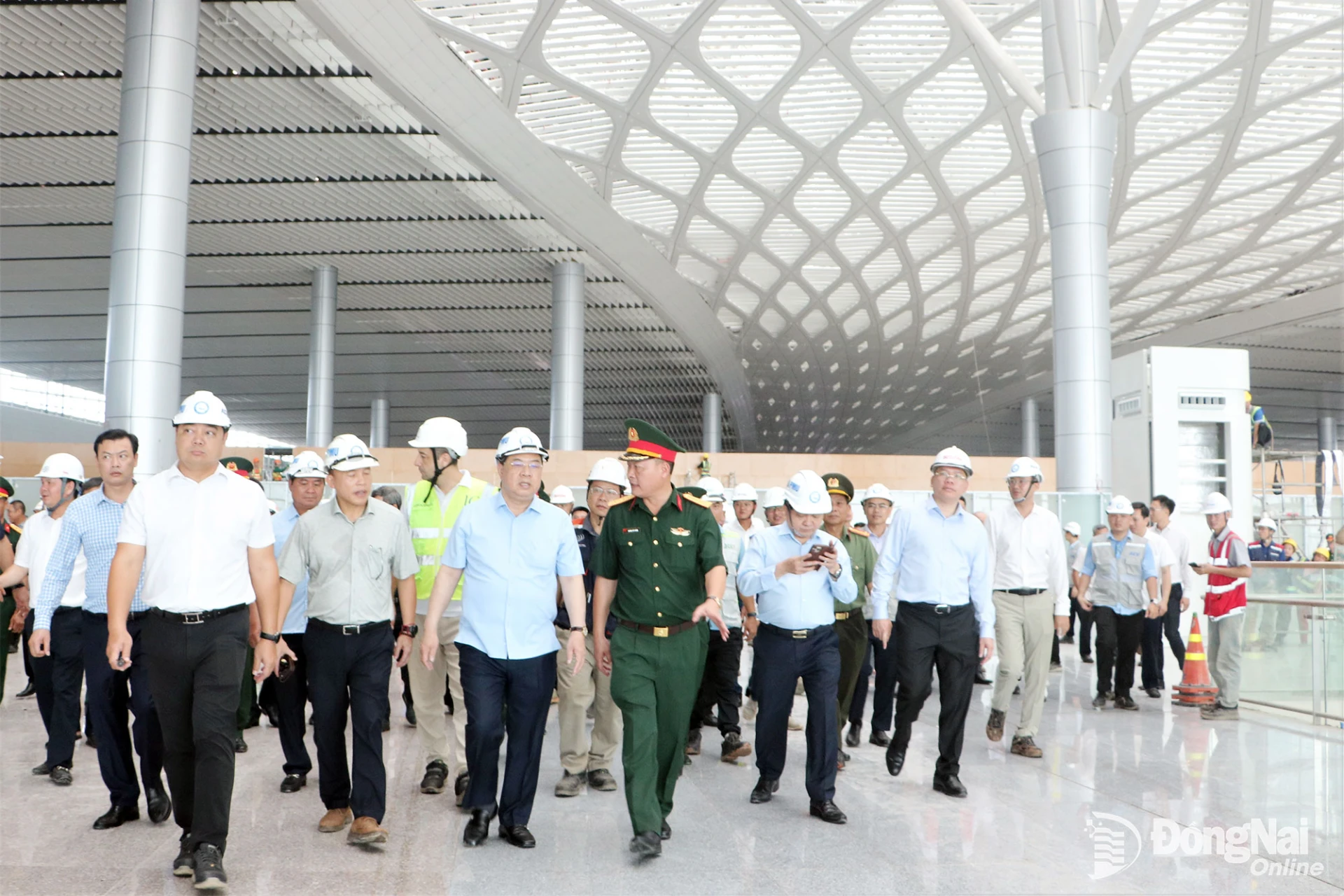
Moreover, the province is equipped with a system of strategic infrastructure, notably Long Thanh International Airport, which has been identified as a major growth driver for national socio-economic development. This is complemented by an expanding network of expressways, national highways, planned high-speed rail, urban railways, and regional ring roads. Given its geographic position and development potential, Dong Nai is expected to emerge as a key center for economic connectivity, logistics, and international trade in the Southern region and the Southeast, while also supporting Ho Chi Minh City.
Recently, on April 14, during its first session reviewing the Government’s proposals on the establishment of 10 wards, the formation of Dong Nai City, and the establishment of the People’s Court and People’s Procuracy of Dong Nai City, the NA Standing Committee unanimously agreed to submit the establishment of Dong Nai city to the 16th NA for approval at its first session.
By Pham Tung – Translated by M.Nguyet, Thu Ha


Thông tin bạn đọc
Đóng Lưu thông tin