
With strategic geographic location and strong regional connectivity to seaports, airports, and major economic hubs, Dong Nai has increasingly positioned itself as a prime destination for both domestic and foreign investors. The province’s proactive efforts to review, adjust, and refine planning for industrial parks, economic zones, and high-tech zones reflect not only immediate development needs but also a long-term vision aligned with regional and national strategies.
In recent years, Dong Nai has remained consistent in pursuing a green, smart, technology-driven industrial development model. The province has shifted from extensive investment attraction to a more selective, quality-focused approach, prioritizing high-value-added industries and advanced technologies. As of February 2026, Dong Nai had established 58 industrial parks, 43 of which are currently operational, covering a total area of over 14,600 hectares with an average occupancy rate of approximately 76%. By 2027, three additional industrial parks, spanning nearly 2,300 hectares, are expected to be put into operation in areas adjacent to Long Thanh International Airport.
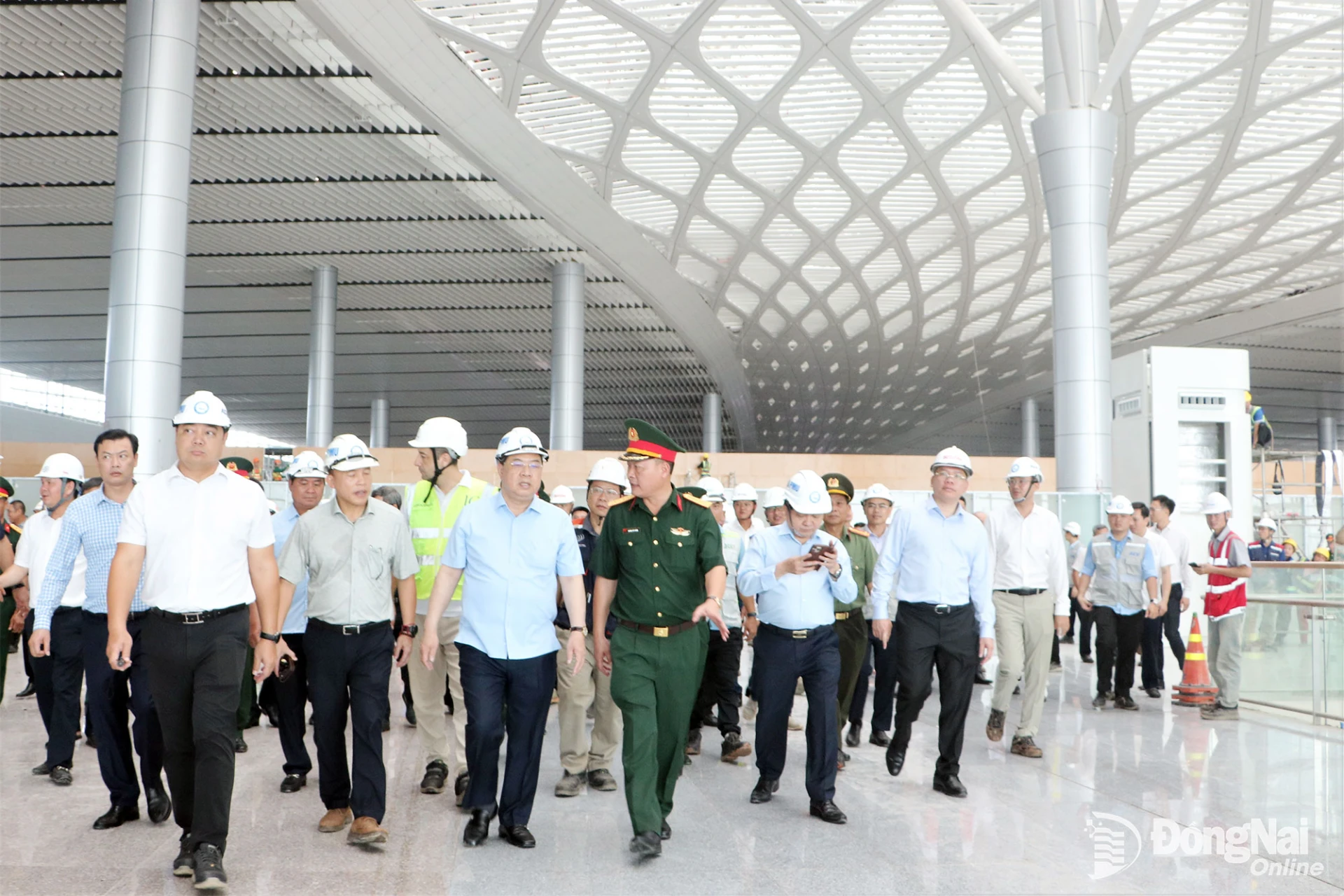
The planning and development of large-scale industrial parks linked to the Long Thanh International Airport is considered a strategic “lever” expected to generate strong spillover effects across investment, infrastructure, logistics, and services. This approach is also key to attracting multinational corporations, enabling deeper integration into global value chains, and supporting the province’s goal of achieving double-digit economic growth in the coming years. It further lays a solid foundation for Dong Nai’s ambition to become a centrally governed city.
For the 2025–2030 period, the provincial Party Committee has identified core development pillars, including the digital economy, green economy, circular economy, and knowledge-based economy. At the same time, Dong Nai aims to take the lead in sectors such as aviation economics, high-tech industry, high-tech agriculture, logistics, science and technology, and innovation.
To realize these goals, Dong Nai has identified two key drivers that must be advanced in a coordinated manner. First, industrial development will be anchored in attracting next-generation strategic investors, accelerating occupancy in existing industrial parks, while also expanding promising new industrial parks, with priority given to high-tech, green, and supporting industries. Second, service sector development will center on a comprehensive urban service hub linked to Long Thanh International Airport, forming a modern service ecosystem encompassing logistics, trade, finance, tourism, and aviation services.
At the same time, Dong Nai is continuing to step up the application of science and technology, promote digital transformation in industrial production, and build an innovation ecosystem linking businesses, research institutes, and training institutions. Development policies should focus on helping enterprises access new technologies and develop a high-quality workforce, while also improving institutions and reforming administrative procedures to create a transparent and stable investment environment. Particular emphasis should be placed on developing supporting industries, increasing localization rates, and gradually achieving greater autonomy in raw material supplies. This endeavor is intended to reduce production risks and costs, while raising the added value and international competitiveness of Vietnamese products.
It can be affirmed that the development of the high-tech industry is not only a prevailing trend but an inevitable pathway for Dong Nai to elevate its position in the new development phase, transforming into a modern industrial urban center and a key economic hub at both national and regional levels.
By Thu Ngoc – Translated by Mai Nga, Minho


Thông tin bạn đọc
Đóng Lưu thông tin