Located along the shores of Tri An Lake, one of the largest freshwater reservoirs in the Southeastern region, especially at the gateway to the Dong Nai Nature and Culture Reserve, which UNESCO has recognized as a World Biosphere Reserve, Tri An Commune is rapidly positioning itself as a standout model in Dong Nai’s strategy for sustainable, eco-urban development.
 |
| Tri An Lake is a strength of Tri An Commune in its eco-urban development. Photo: Quang Huy |
Under provincial planning, Tri An is being developed as a green, ecological urban area to ease population pressure on the central area.
 |
| Tri An is not only a potential land but is gradually becoming a new "destination" for green living and eco-tourism trends. Photo: Quang Huy |
Synchronized investment in transport infrastructure has played a decisive role in promoting Tri An's socio-economic development. Currently, there are 4 key provincial roads in the area, including DT.761, DT.762, DT.767, and DT.768. Among them, DT.767 plays a vital role, directly connecting with National Highway 1A and major industrial parks.
 |
| DT.767 road is a vital route, connecting Tri An commune with National Highway 1A. Photo: Quang Huy |
 |
| Synchronously invested transport projects help Tri An commune become a link, connecting the region with other localities. Photo: Hoang Loc |
Notably, in the future, the planned Ma Da Bridge, connecting DT.761 to Ring Road 4, is expected to unlock even greater development potential. This strategic route will position Tri An as a central node linking northern Dong Nai (formerly Binh Phuoc province), the Central Highlands, Long Thanh International Airport, and major seaports such as Phuoc An and Cai Mep–Thi Vai. The formation of the route will further enhance its position and importance in linking and connecting the region with other localities in Tri An Commune.
 |
| The central area of Tri An Commune is becoming increasingly spacious and modern. Photo: Quang Huy |
With a natural area of over 66,000 hectares, Tri An is well-suited for the development of urban zones that harmonize with natural landscapes, promoting sustainability and climate change.
 |
| Agricultural production activities in the locality are being invested in a specialized direction, bringing stable income to the people. Photo: Quang Huy |
Alongside infrastructure development, Tri An's economy is also undergoing a clear shift. From a locality that mainly relied on agriculture and forestry, its economic structure is gradually tilting toward industry, construction, and services. The combined share of industry-construction and services reached 71.79%.
 |
| People's lives are increasingly improving. Photo: Quang Huy |
Currently, the proportion of non-agricultural labor in Tri An commune reaches about 71%, showing a clear urbanization trend. The average per capita income in 2025 was expected to reach about 87 million VND per person per year, higher than the provincial average, and people's lives are increasingly improving. By the end of 2025, Tri An commune was expected to have no poor households according to multidimensional standards, and people's lives will be significantly improved.
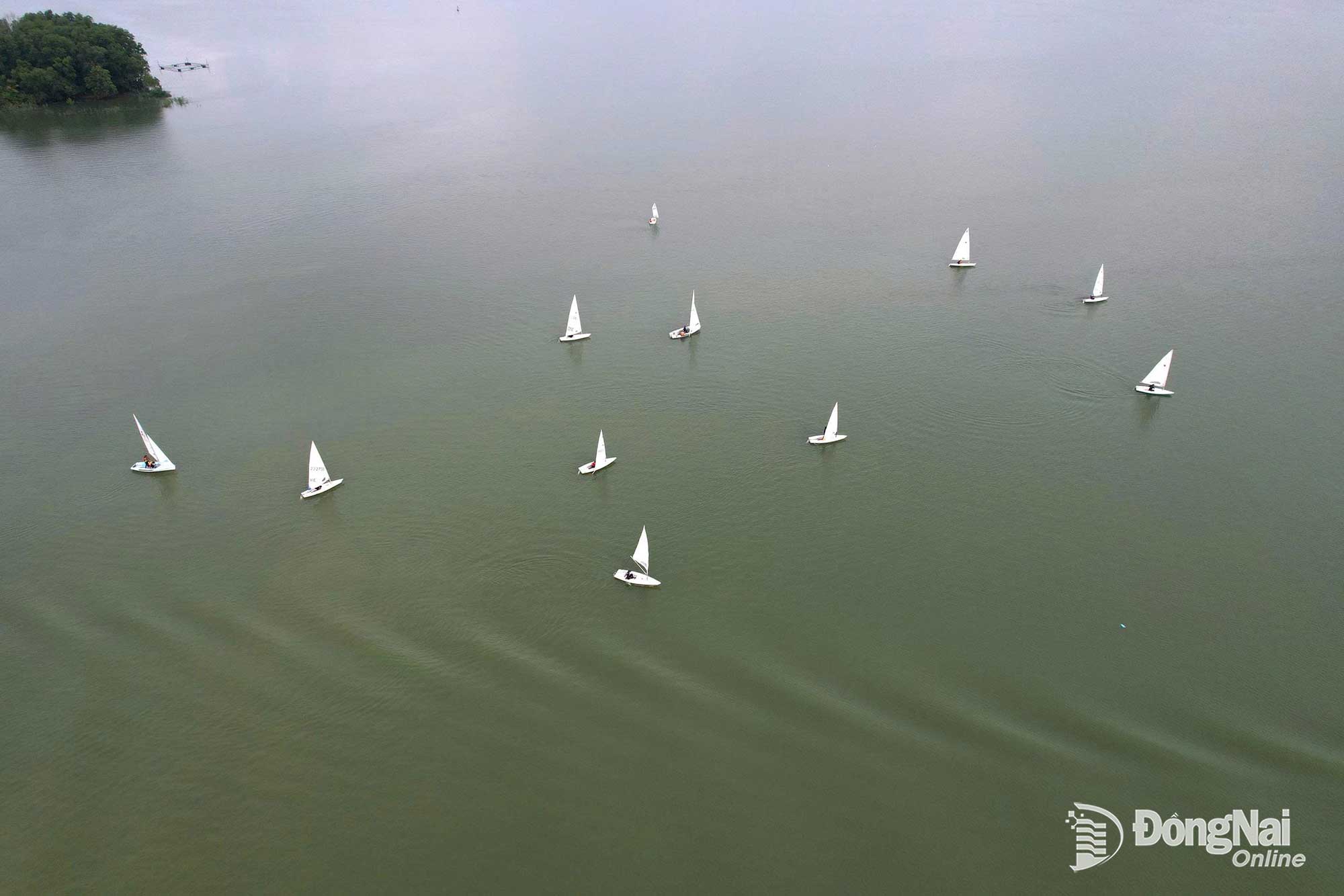 |
| The most notable bright spot remains its eco-tourism potential. With more than 13,000 hectares of water surface and dozens of large and small islands, Tri An Lake offers an ideal setting for activities such as resort tourism, camping, boating, forest exploration, and experiencing the lives of fishermen. Photo: Quang Huy |
A prominent highlight in Tri An's development strategy is eco-tourism. Tri An Lake, alongside the Dong Nai Nature and Culture Reserve, creates a special competitive advantage. This foundation is the basis for developing types of resort tourism, nature experiences, and biodiversity research.
 |
| Sunset on Tri An Lake. Photo: Quang Huy |
With a clear development vision, rich natural resources, and accelerating urban growth, Tri An is steadily establishing itself as a model eco-urban area, contributing to the sustainable socio-economic development of Dong Nai province.
By Quang Huy, Van Chinh – Translated by Mai Nga, Minho



Thông tin bạn đọc
Đóng Lưu thông tin