
The Dong Nai Chefs Association has recently introduced 106 dishes made from distinctive local ingredients. The event, held at Buu Long Tourist Area in Tran Bien Ward, attracted large numbers of residents and visitors who came to explore and sample the dishes. In addition to the food, a display featuring the 106 dishes drew attention for its elaborate fruit and vegetable carving.
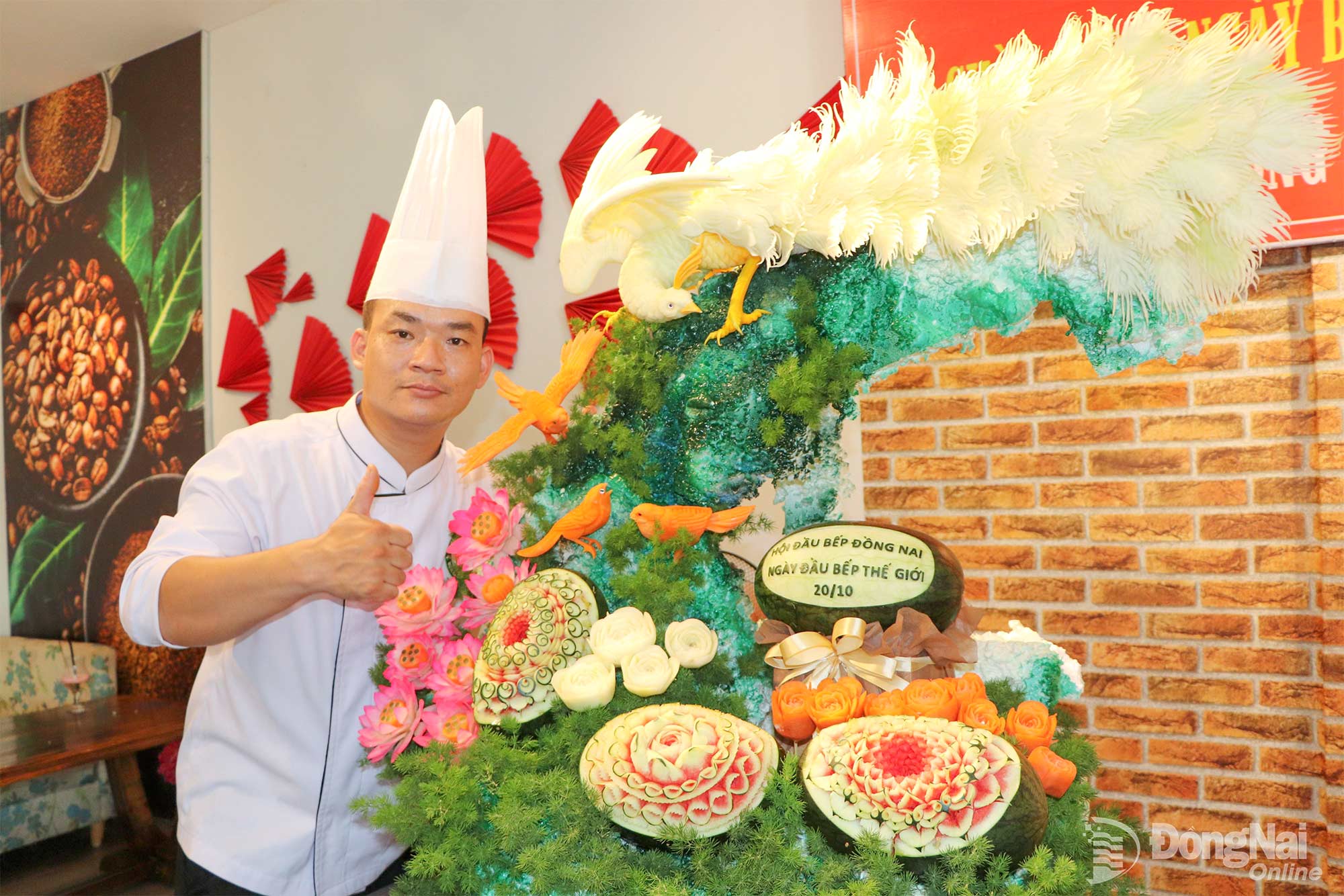 |
| Fruit and vegetable carving artisan and Vice Chairman of the Dong Nai Chefs Association Pham Van Hoang poses with one of his carved creations. |
Through the skillful hands of artisans, familiar vegetables and fruits such as carrots, white radishes, pumpkins and watermelons are transformed into fish, shrimp, flowers, animals and various other models.
A visual experience
Using vegetables and fruits commonly found in everyday meals, artisans have created works depicting flowers, peacocks, phoenixes, dragons, tigers and other figures. Intricate carving and cutting techniques turn familiar agricultural products into eye-catching highlights in culinary settings.
Tran Thi Phuong Thanh, a visitor from Long Khanh Ward, said this was her first time attending the Dong Nai Chefs Festival. In addition to dishes such as puffed fried sticky rice and ‘canh thuc’ (Stieng tube-cooked smashed vegetable and meat soup), she was particularly impressed by the models carved from vegetables and fruits.
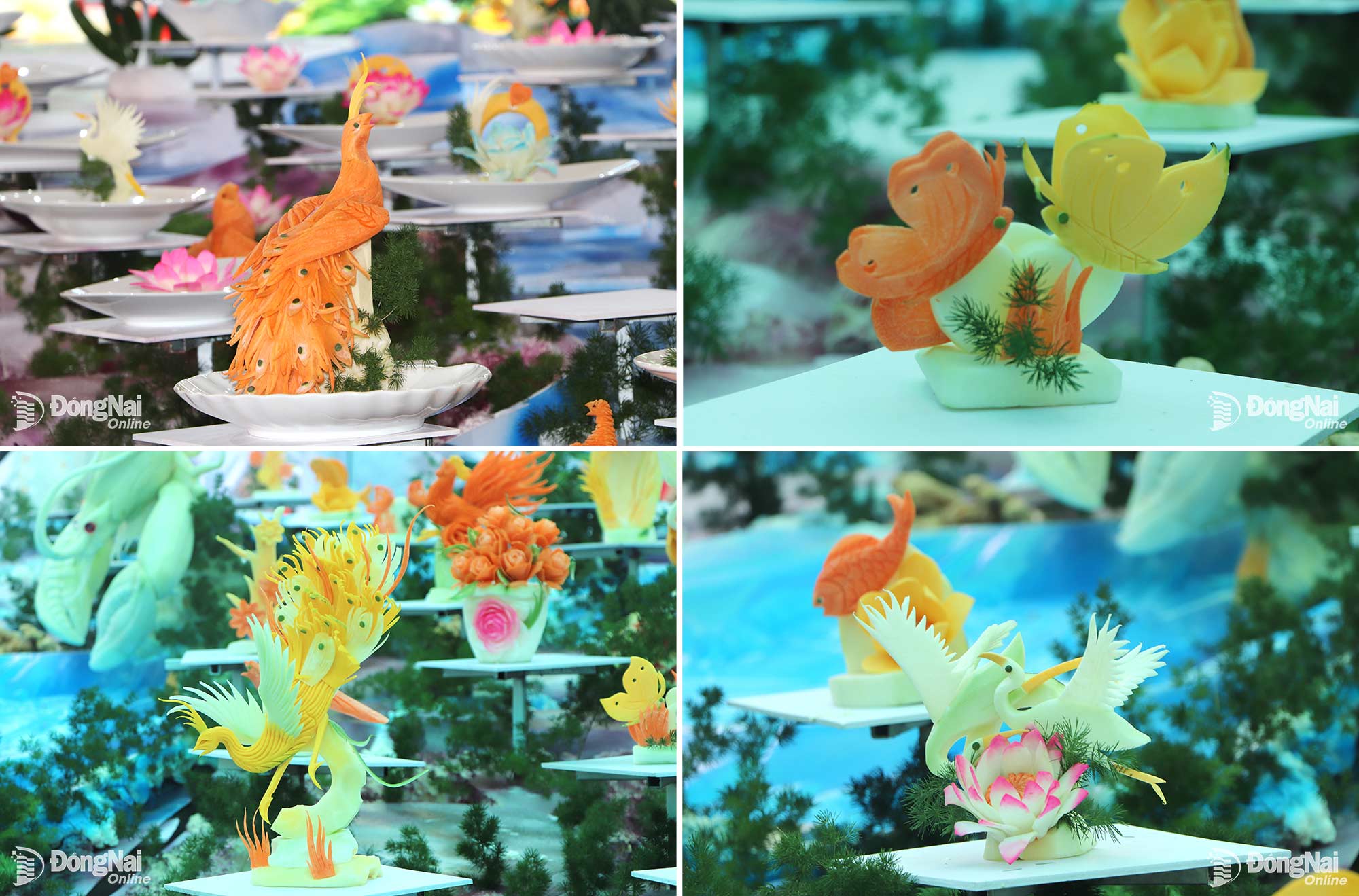 |
| Artistic carvings made from locally grown vegetables and agricultural products. |
“What impressed me most about the carved vegetables and fruits was the exquisite detail. It was the first time I had seen skilled artisans working up close, making clean, precise cuts. Although each piece is made from agricultural products, it has considerable aesthetic value. When displayed alongside local dishes, these carvings allow visitors to learn more about the stories behind local cuisine through images created from local produce,” Thanh said.
Nguyen Van Tri, a fruit and vegetable carving artisan, one of the young artisans of the Carving Club under the Dong Nai Chefs Association and Deputy Head of the club, said the art not only creates decorative items but also enhances the visual appeal and value of dishes.
“As a young artisan, I hope to continue preserving this craft by constantly learning and creating new designs. In particular, I want to share my knowledge, provide guidance and create opportunities for young people who are passionate about this art. We also hope vegetable and fruit carving will be applied more widely and combined with modern cuisine and contemporary decoration,” Tri said.
Elevating the culinary experience
In recent years, alongside the growth of the tourism industry, restaurants and hotels have placed increasing emphasis on decorating and enhancing the presentation of dishes served at banquets. Elaborately presented banquet tables help create visually appealing dining spaces.
Pham Van Hoang, a fruit and vegetable carving artisan and Vice Chairman of the Dong Nai Chefs Association, said vegetable and fruit carving transforms familiar ingredients into works of art, thereby enhancing both the visual appeal of dishes and diners’ overall experience.
According to Pham Van Hoang, Vice Chairman of the Dong Nai Chefs Association, a skilled artisan needs not only carving techniques but also the ability to transform simple, familiar ingredients from their homeland into works suited to different culinary settings. This gives local agricultural products greater value and creates stories that can be shared with diners.
The presence of shapes and patterns carved from vegetables adds elegance and sophistication to dishes while demonstrating the care and dedication of chefs. Vegetable and fruit carving is not merely a food-preparation technique; it also reflects craftsmanship and aesthetic values in traditional culinary culture, helping Vietnamese cuisine reach wider audiences.
“A banquet or culinary space featuring intricate carvings demonstrates appreciation for diners while also highlighting the skills, artistic vision and meticulousness of those preparing the food,” Hoang said.
Fruit cutting and carving also bear the distinctive influence of East Asian cuisine. Traditional motifs such as dragons, phoenixes and classical patterns help showcase Vietnam’s cultural identity to international audiences at major culinary events.
By Ngoc Lien – Translated by Mai Nga, Minho


Thông tin bạn đọc
Đóng Lưu thông tin