
Established in 2003 in Nghia Trung Commune, Hoang Son 1 Joint Stock Company (JSC) became one of Vietnam's five largest cashew exporters within just five years. It was also among the first companies in the country to invest in modern machinery and equipment for the deep processing of cashews and other nuts for export. Today, some of its products have secured places on supermarket shelves in Europe and the United States (US).
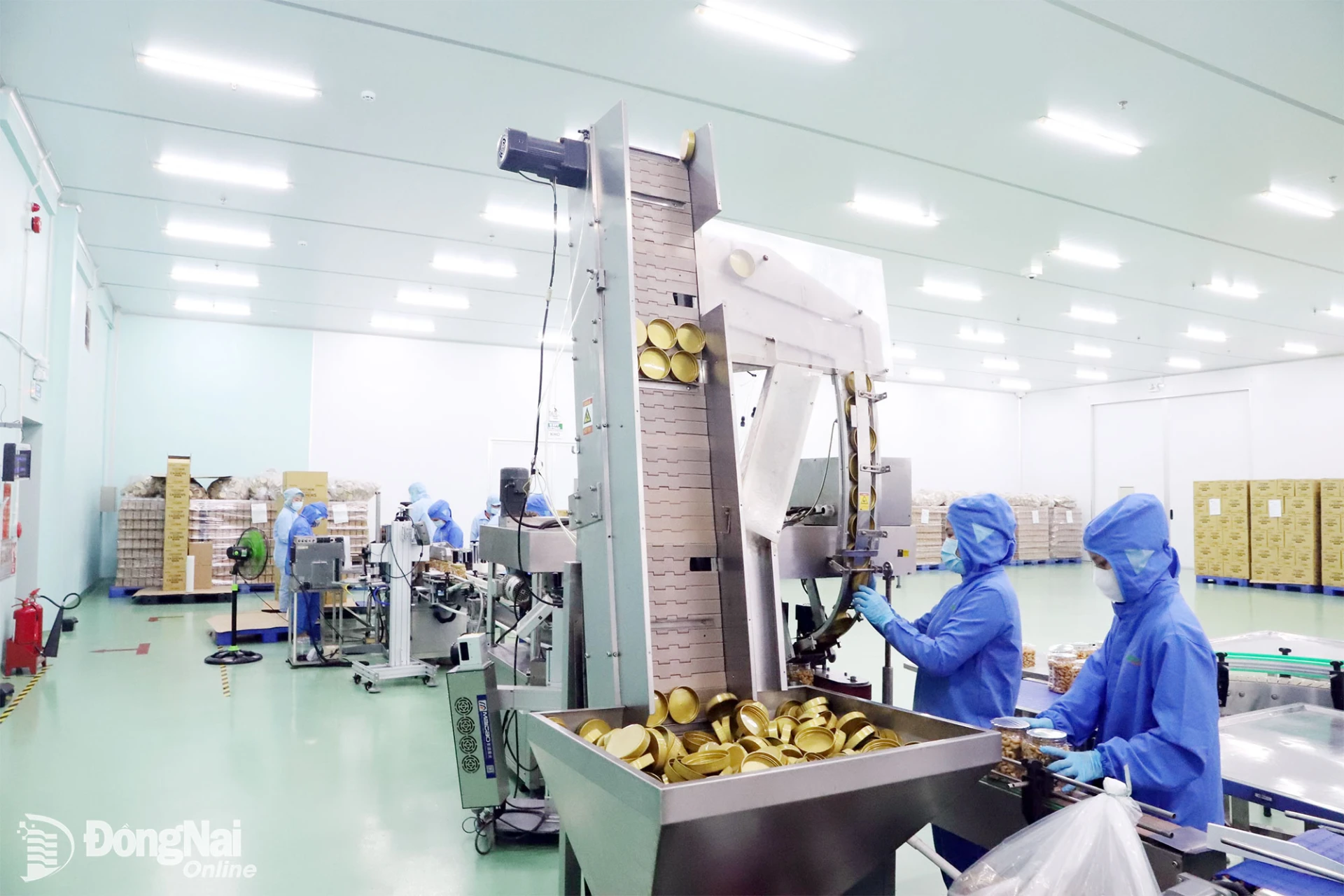 |
| A packaging line for deeply processed cashew products at a processing company in the city. |
In an interview with Dong Nai Newspaper and Radio, Television, Ta Quang Huyen, Chairman of the Board of Directors and General Director of Hoang Son 1 JSC, discussed the company's efforts to bring Vietnamese deep-processed cashew products to international supermarket chains.
Challenges facing the cashew industry
What are the major challenges currently facing Vietnam's cashew processing industry?
Vietnam's cashew processing industry started on a small scale before expanding rapidly. In recent years, the country has established itself as the world's leading cashew kernel processor and exporter. Global supplies of raw cashew nuts are estimated at around six million tonnes a year, of which Vietnam processes approximately four million tonnes. More than three million tonnes of the raw material processed in Vietnam are imported, with the remainder sourced domestically. Vietnam therefore plays a major role in processing and supplying cashew kernels to the global market.
Vietnamese businesses have developed modern, high-capacity machinery for cashew processing. The country not only processes cashews but also exports processing equipment to African countries and transfers technology to local businesses. These capabilities have been built up through years of experience and technological development.
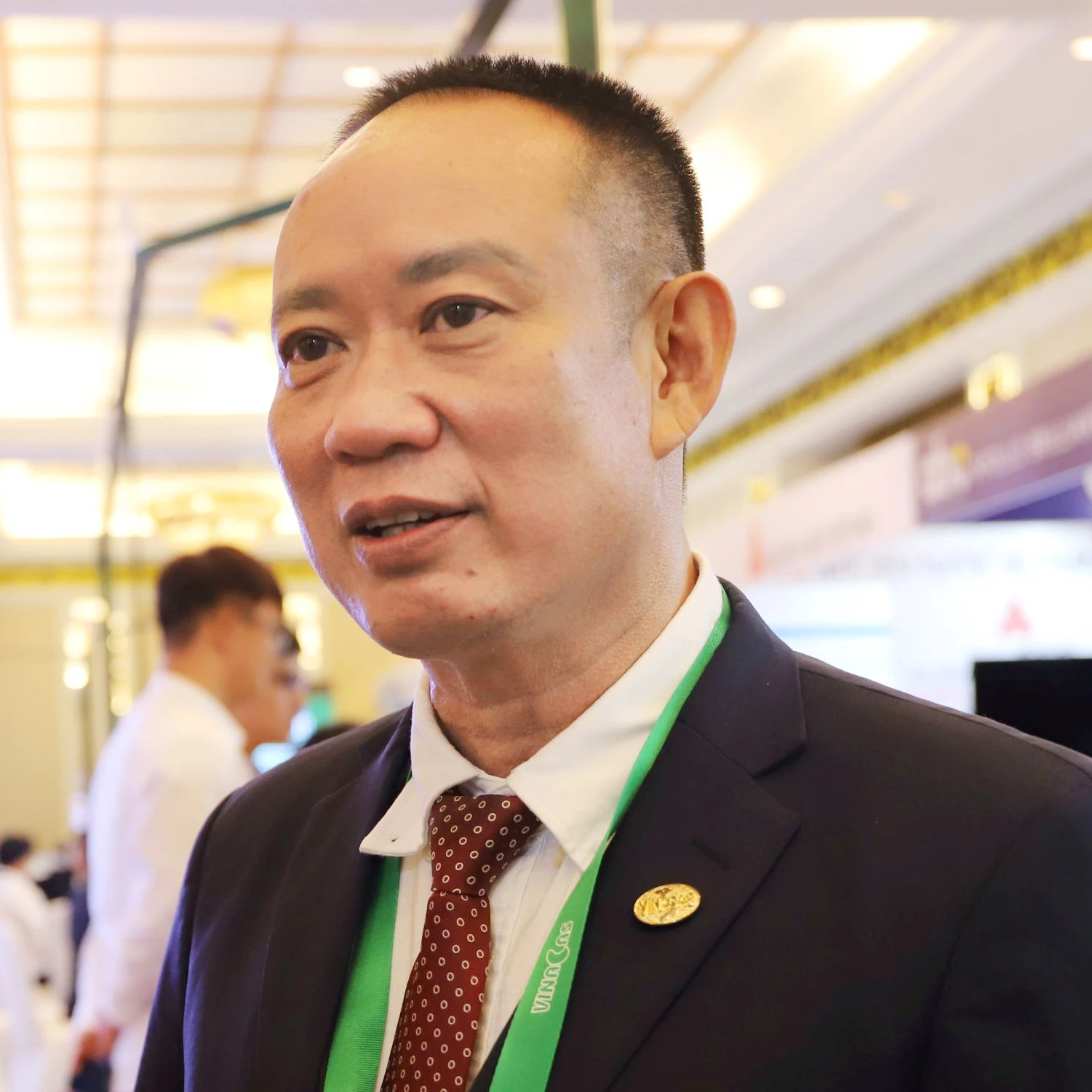 |
"Business success depends not only on product quality and competitive pricing. Equally important is a company's ability to read market trends, choose the right time to buy and sell, and proactively build up inventories when market conditions are favourable to gain a pricing advantage."
Ta Quang Huyen, Chairman of the Board of Directors and General Director of Hoang Son 1 JSC.
However, the industry faces several challenges. One major external constraint is Vietnam's heavy reliance on imported raw cashew nuts. African countries and other raw cashew exporters are increasingly processing the nuts domestically and introducing protectionist policies to support their own industries. These measures include imposing high export taxes on raw cashews and reserving higher-quality raw materials for domestic processors.
Vietnamese processors also face high transportation costs. Approximately five kilograms of raw cashew nuts are needed to produce one kilogram of kernels. As a result, shipping raw cashews from Africa to Vietnam for processing is estimated to cost five times as much as processing them at source.
Domestically, intense competition among the many businesses involved in cashew processing and exports has put pressure on both raw material procurement and kernel sales. Some processors have been forced to suspend operations as they could no longer stay in business. The industry's growth is slowing, and it could even shrink unless a new direction for development is found.
As a company investing in cashew-growing areas and processing facilities in Dong Nai, how do you assess the city’s position as a major cashew production and processing hub?
Dong Nai offers favourable conditions for our business, particularly in terms of raw material supply. Cashews grown in the city are highly regarded for their quality, with a naturally sweet, rich and aromatic flavour. Their firm kernels are also less likely to break during processing.
This is one reason why many cashew processors have established operations in Dong Nai. Vietnam in general, and the city in particular, has become an important hub for the global cashew industry.
Competing through deep processing
Could you share your company's investment journey in deep processing and exporting products to demanding markets?
Our company has entered a new phase of development, focusing on the roasting and deep processing of cashews and other kinds of nuts. The factory has a designed production capacity of up to 300 containers a month and is currently operating at around 50% of that capacity. We have also invested in a separate company in Ho Chi Minh City specialising in the deep processing of nuts for export.
Our deep-processing products are mainly intended for export. We currently ship them to the U.S., Europe, Japan, China and the Middle East. Notably, we have secured orders from supermarket chains in Europe and the U.S.
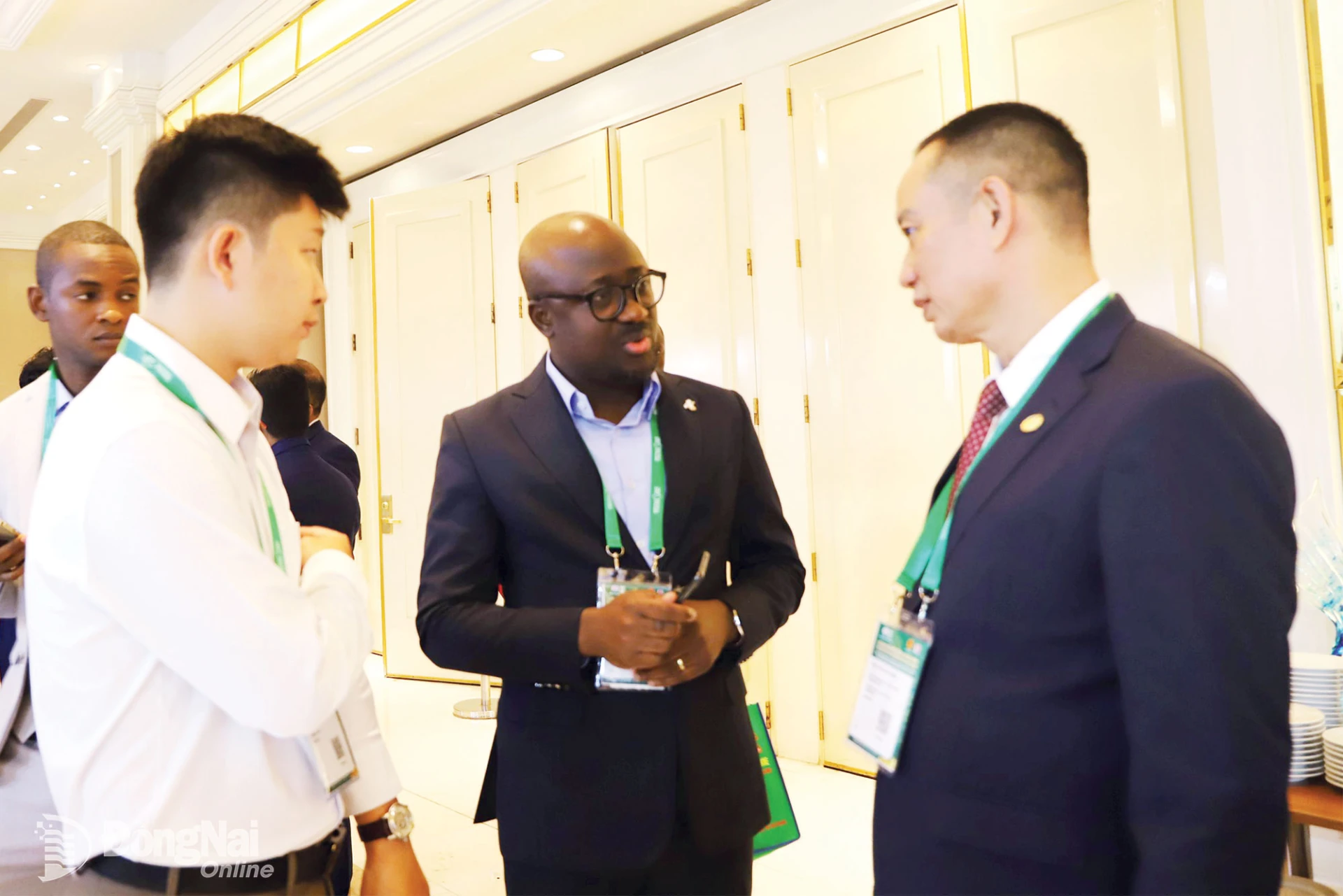 |
| Ta Quang Huyen (right), Chairman of the Board of Directors and General Director of Hoang Son 1 JSC, speaks with a foreign partner at the 15th Vinacas Golden Cashew Renderzvour 2026. Photo: Binh Nguyen |
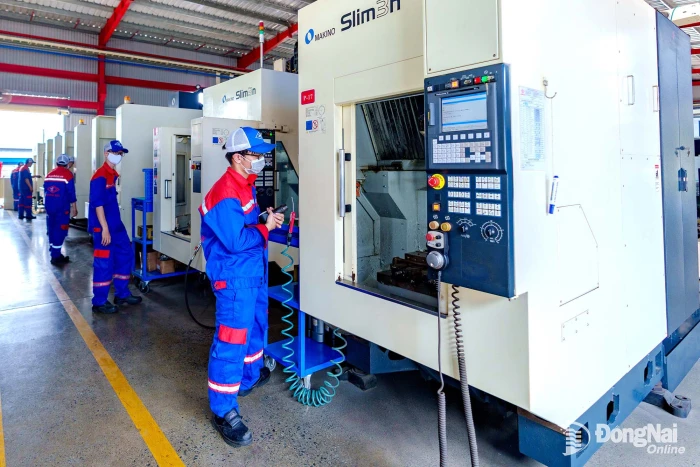
Developing deep-processing operations requires more than conventional frying machines. Businesses need to invest in modern, integrated production systems, most of which still have to be imported. For example, three years ago, our company invested US$2 million (approximately VND77 billion) in a packaging system equipped with moisture-control technology.
Investment in deep processing should go hand in hand with an export strategy that targets large markets. This is essential for sustainable growth, as relying solely on domestic demand makes it difficult to compete in a sector with so many players.
What is your advice for exporting made-in-Vietnam deep-processing cashew products to international markets, particularly for securing shelf space in supermarkets in Europe and the U.S.?
The challenges of investing in deep processing and exporting to demanding markets go beyond the need for substantial capital. More importantly, businesses must earn the trust of their customers.
Trust is particularly important to European consumers. To earn it, businesses need to invest systematically in their production facilities and processes, ensuring that food safety and hygiene standards meet or exceed market requirements. We have invested in a modern factory equipped with advanced technology to meet stringent quality standards. When representatives of European supermarket chains visited the facility, they were impressed by the quality of Vietnam's production system. This helped build their confidence in our products and paved the way for them to appear on supermarket shelves.
Getting products onto the shelves of international supermarket chains often requires businesses to participate in bidding and compete on price, except when their products have distinctive features. Competitive pricing remains essential to making products accessible to consumers.
Another guiding principle of our business is to sell what customers need and tailor products to the tastes of each market, rather than simply selling what we have. Businesses must conduct market research to understand consumer demand and develop products accordingly.
Being well prepared is a necessary condition, but the sufficient condition is winning the trust of customers. I often half-jokingly say that this is where technology needs to "speak for itself".
The Vietnamese Government has set a 2030 target to promote deeper processing across industries. What are your expectations regarding current policies to support this sector?
The government's focus on developing the processing industry, particularly deep processing, is intended to create a new impetus for growth. However, businesses must also take the initiative and make their own efforts to develop. Government policies that facilitate imports of raw materials and auxiliary materials for processing, including zero import tariffs, are positive steps towards promoting exports.
From the business perspective, we hope the State will continue to improve the regulatory framework, making it more open, transparent and practical, and better aligned with actual production conditions in Vietnam. This would allow businesses to devote more resources to expanding their operations.
By B. Nguyen – Translated by M.Nguyet, Thu Ha

Thông tin bạn đọc
Đóng Lưu thông tin