
Revenue from trade and services in Dong Nai continued to grow strongly in the first nine months of 2026, supported by the expansion of retail and distribution networks and the growing role of e-commerce. These developments are expected to sustain growth momentum in the final months of the year.
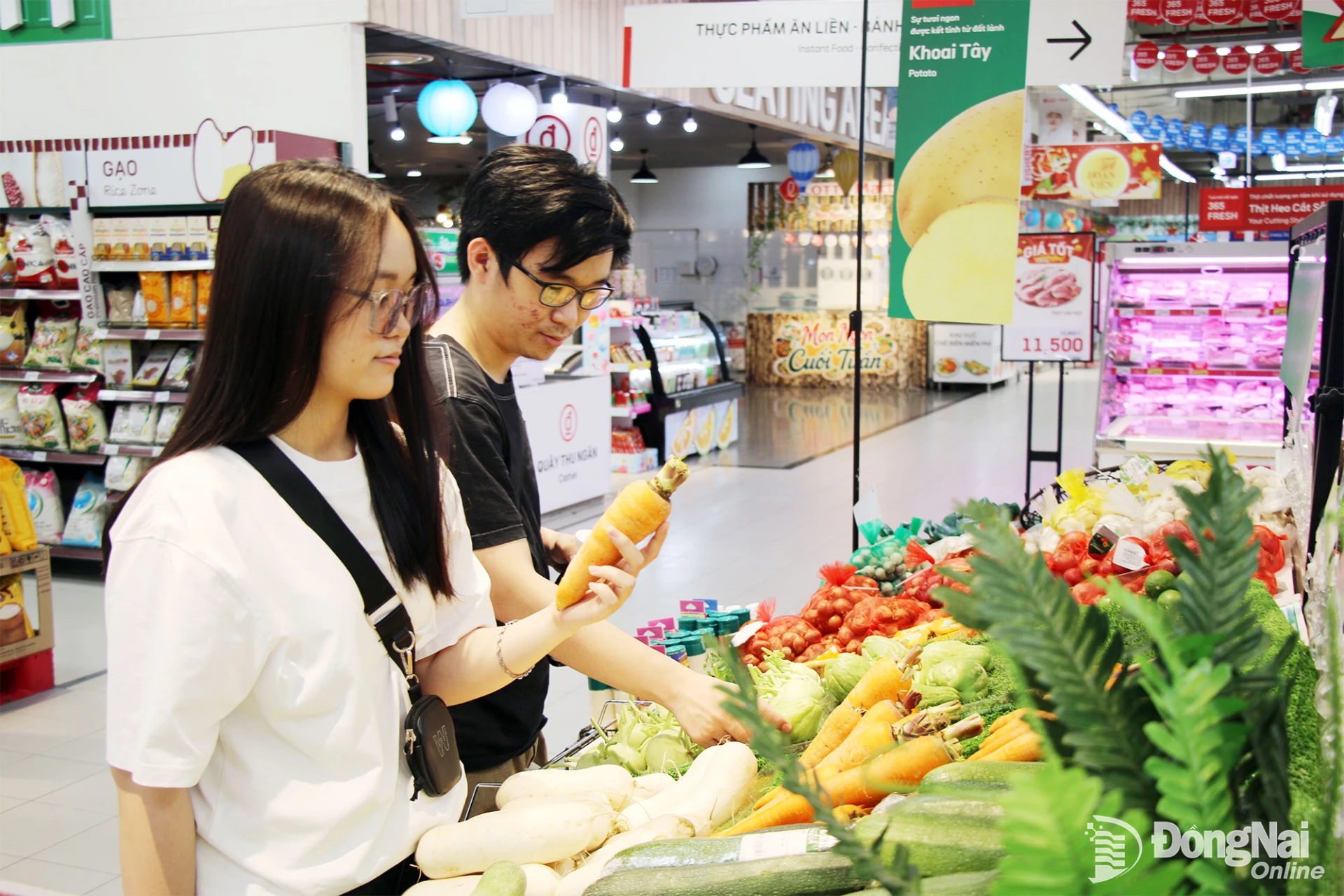 |
| Consumers shop for agricultural products at Lotte Mart Dong Nai in Long Binh Ward. |
The sector has considerable room for growth, with opportunities to diversify retail channels and expand consumer services to better meet local demand.
Boosting consumer demand
Retail and service activities across the city were brisk in the early months of 2026, particularly during public holidays and the Lunar New Year. Many supermarkets and shopping malls rolled out large-scale promotions to attract shoppers and boost sales and service revenue.
According to the city’s Statistics Office, trade, consumer services and tourism maintained their growth momentum in the first nine months of 2026. Many retailers combined shopping with dining and entertainment to draw customers, especially on weekends and holidays. Total retail sales of goods and consumer service revenue were estimated at more than VND344.1 trillion, up 17.4% year on year. Retail sales of goods increased by more than 16.3%, revenue from accommodation and food services rose 20.1%, travel services revenue grew 15.4%, and revenue from other services climbed nearly 19.2%.
Nguyen Quoc Minh, Director of Co.opmart Dong Xoai in Binh Phuoc Ward, said the supermarket regularly launched major promotional campaigns during public holidays, the Lunar New Year and peak shopping periods. For the National Day holiday on September 2, the supermarket ran its “30 years of pride in Vietnamese supermarkets” campaign, offering a series of promotions under different themes to encourage spending. The number of shoppers during the holiday rose by around 50–60% compared with a typical weekend and by approximately 25% from the same period in 2025.
According to the 2026 Vietnam E-commerce Business Index (EBI) report released by the Vietnam E-Commerce Association (VECOM), Dong Nai ranked sixth nationwide. The city also recorded relatively strong rankings in the component indices measuring business-to-consumer (B2C) and business-to-business (B2B) transactions.
Similarly, Director of Lotte Mart Dong Nai in Long Binh Ward, Le Duc Thuan, said the supermarket had expanded its promotional campaigns and special offers during public holidays and the Lunar New Year to encourage spending and attract shoppers. Many promotions focused on Vietnamese products, including food, agricultural produce, beverages, household goods and fashion. During the National Day holiday on September 2, purchasing power at the supermarket rose by around 20% compared with the same period in 2025.
Modern retail infrastructure, covering supermarkets, shopping malls and convenience stores, has grown rapidly in Dong Nai’s urban areas and industrial parks. The city currently has nine shopping malls and 19 supermarkets, alongside an expanding network of convenience stores and mini-supermarkets.
Meanwhile, traditional markets remain important distribution channels, particularly in rural areas, where they provide outlets for locally produced agricultural goods. E-commerce is also gaining ground, supported by local initiatives and action plans to promote the digital economy, including e-commerce.
Leveraging growth potential and advantages
Dong Nai has strong potential to develop its digital technology and innovation ecosystem, promote greener and more sustainable business models in trade and services, and expand e-commerce and digital services to meet growing consumer demand. These areas could become important drivers of the city’s future economic growth.
Nguyen Huu Tuan, Director of the Center for E-commerce and Digital Technology Development (eComDX) under the Ministry of Industry and Trade, said Dong Nai’s strategic location and transport links gave it significant advantages in strengthening regional connectivity and developing logistics and e-commerce services. With a well-developed transport network covering multiple modes, the city was well positioned to build a diverse and sustainable e-commerce ecosystem.
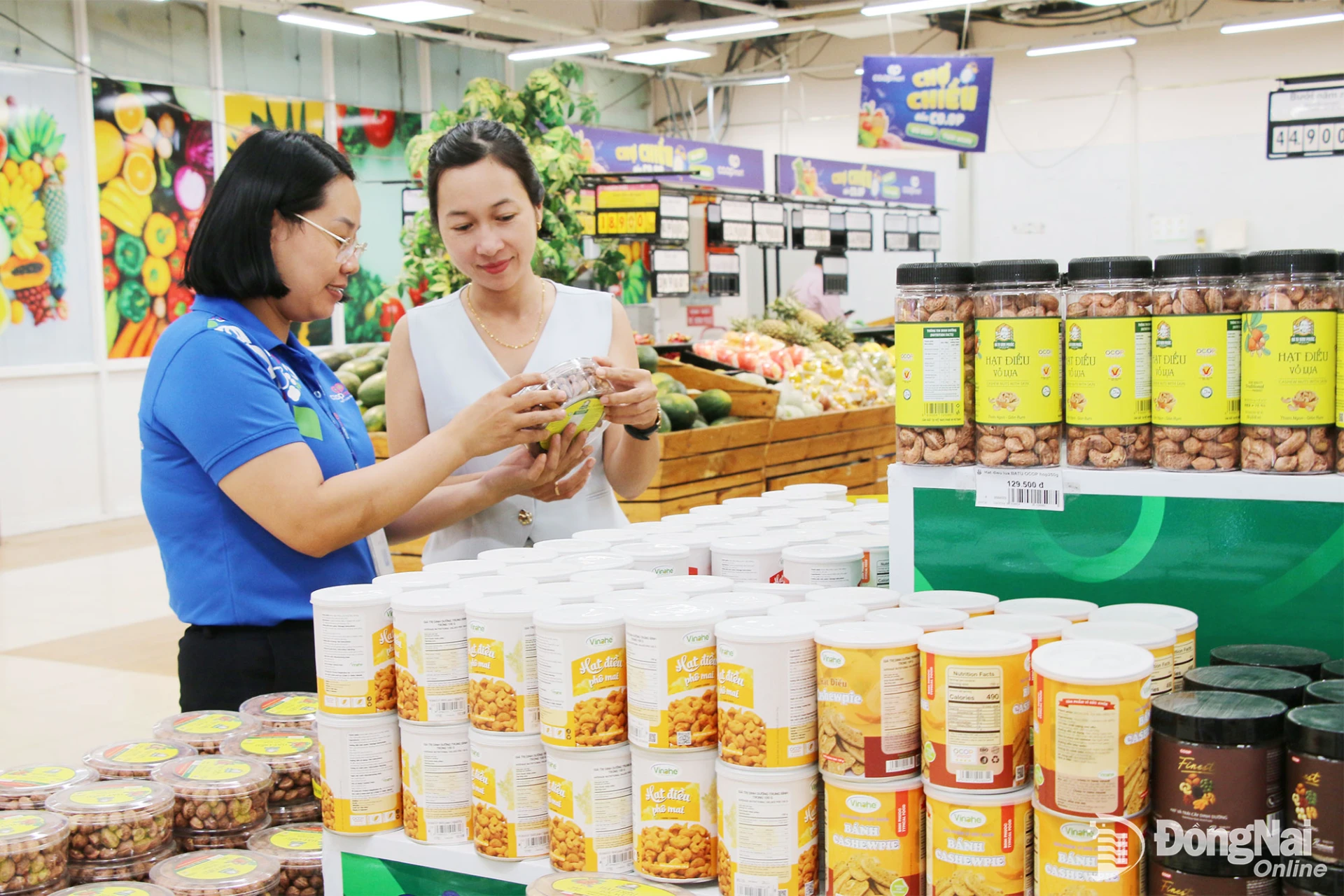 |
| Co.opmart Dong Xoai staff introduce local OCOP products. Photo: Hai Quan |
Meanwhile, municipal departments, agencies and local authorities have stepped up efforts to help local businesses and producers involved in One Commune, One Product (OCOP) program participate in trade promotion and business networking activities.
According to the municipal Department of Industry and Trade (DoIT), it had rolled out various initiatives in the first months of 2026 to help local businesses, OCOP producers and manufacturers connect with partners and expand their markets.
These included the “Dong Nai Mega Sale 2026” promotional event and support for local businesses attending a business-matching conference with Central Retail Vietnam to connect suppliers with buyers. The department also coordinated with the city’s Investment, Trade and Tourism Promotion Center to help local businesses and OCOP producers participate in trade promotion activities in domestic and international markets.
At a mid-September 2026 meeting with the DoIT, Deputy Secretary of the CPC Vo Tan Duc, called on the department to draw up a concrete action plan focused on key priorities. The meeting reviewed progress in implementing assigned tasks, identified major bottlenecks and considered solutions to meet the city’s development needs. Duc also urged the department to develop growth scenarios for the industrial and trade sectors through the end of 2026 and set out priorities for 2027.
Alongside export promotion, the city’s industry and trade sector should treat the domestic market as a key growth driver. It should review plans for the system of shopping malls, markets, supermarkets and distribution centers, while encouraging the night-time economy, e-commerce and modern retail models. The industry and trade sector should also help businesses, cooperatives and producers of local specialty products connect with major distribution networks, e-commerce platforms and domestic and international supply chains. Trade promotion must deliver tangible results, linking promotional activities to actual orders, market access and concrete business outcomes.
By H.Quan – Translated by M.Nguyet, Thu Ha




Thông tin bạn đọc
Đóng Lưu thông tin