
Airport cities and transit-oriented development (TOD)-based urban areas are among the new urban development models expected to take shape in Dong Nai City in the coming years, driven by major infrastructure projects that are already underway or planned for development.
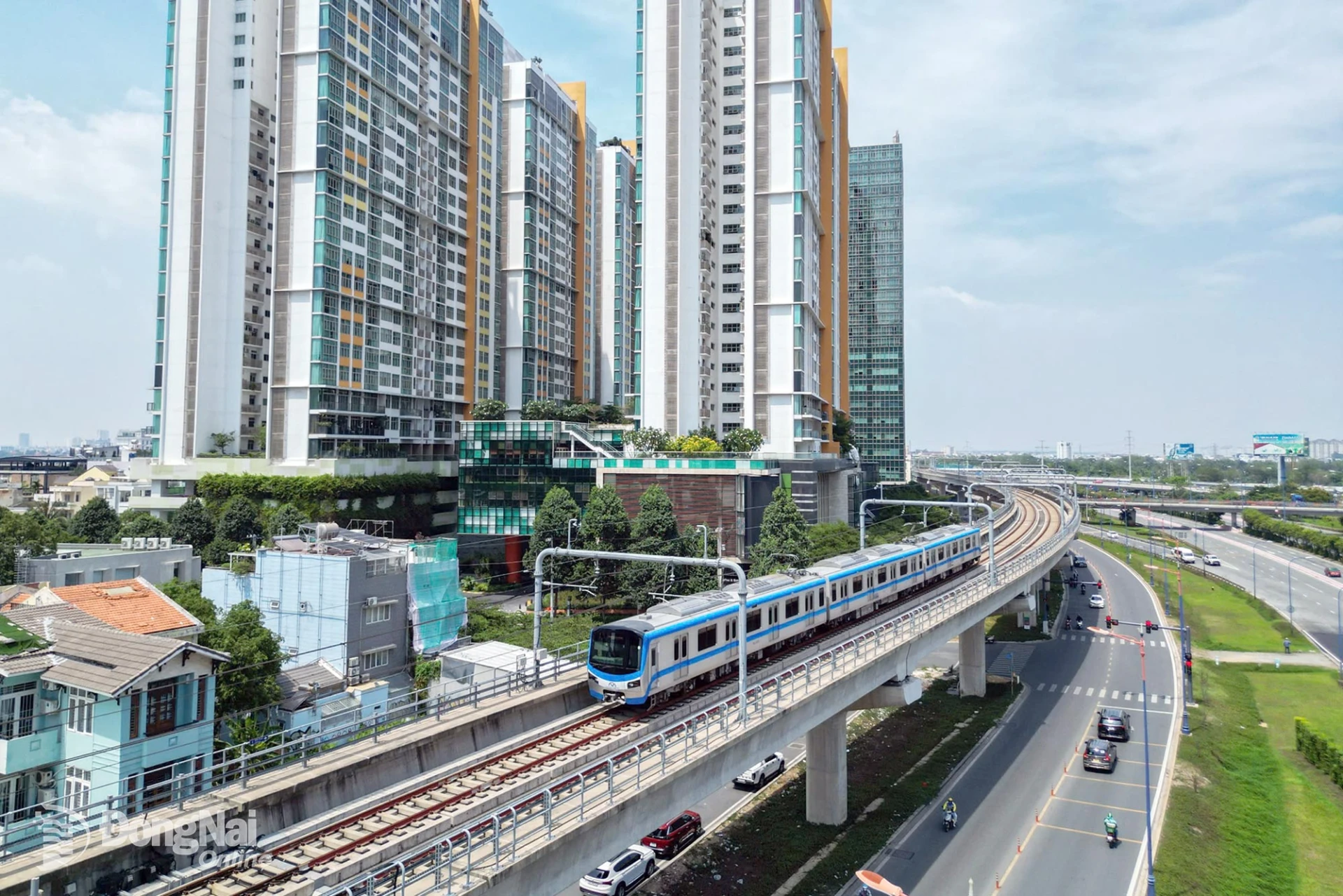 |
| The project to extend the Ben Thanh–Suoi Tien metro line to Dong Nai’s administrative center and Long Thanh International Airport opens up new opportunities for TOD development in the city. |
These emerging urban models are expected to serve not only as places for people to live but also as new engines of economic growth for the city.
New-generation urban areas
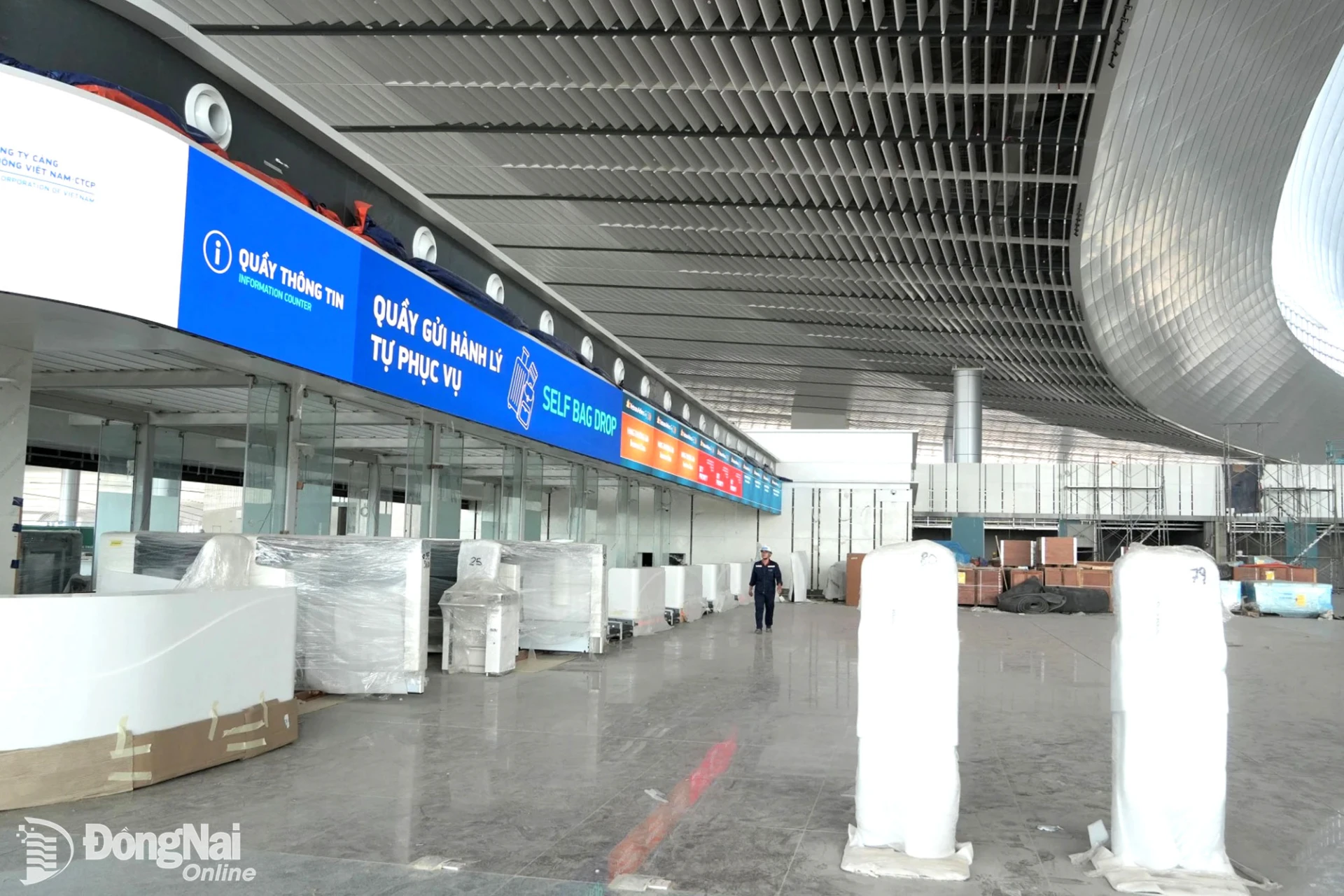
As planned, Phase 1 of Long Thanh International Airport is scheduled to begin commercial operations by the end of 2026. The airport is envisioned as Vietnam’s largest international aviation hub, with ambitions to be on par with major hubs in the region.
For Dong Nai City, Long Thanh Airport is more than a transport infrastructure project. It is also expected to provide a major boost to the city’s socioeconomic development. The airport city model centered on Long Thanh Airport has been identified as one of the city’s two new growth engines.
An airport city comprises interconnected transport corridors, clusters of mutually supportive businesses and complementary aviation-oriented industries, with access to the airport and other key urban transport infrastructure.
Resolution No. 16-NQ/TW, issued by the Politburo on July 21, 2026, on the development of Dong Nai City through 2035, with a vision to 2065, calls for the comprehensive development of Long Thanh Airport City and its surrounding areas as part of a regional connectivity network linking the Southeastern region, the Mekong Delta, the south-central coastal region, the Central Highlands and cross-border economic corridors. The aim is to establish the area as an important driver of growth that generates benefits across the city. Notably, the Resolution emphasizes that Long Thanh Airport City should not be developed as an isolated project around the airport. Instead, it should be integrated into a broader development model encompassing a polycentric urban structure, the digital economy, aviation industries, high-tech sectors and interregional logistics.
Alongside the airport city model, TOD-based urban area is also expected to become a major urban development approach in Dong Nai in the coming years. With 10 expressway projects under construction or development, Long Thanh Airport and, in particular, planned urban railway (metro) lines, the TOD-based urban area is considered to have considerable potential for establishment and development in the city.
Assoc. Prof. Dr. Tran Quang Phu, former Vice Rector of Ho Chi Minh City University of Transport, said Dong Nai was well positioned to develop TOD-based urban areas, with clear advantages by Vietnamese standards. Dong Nai’s potential for TOD-based urban development stems from major changes in the city’s transport structure and spatial development.
Unlocking new development spaces
Around the world, airport city models have emerged around major aviation hubs, including Schiphol in the Netherlands and Incheon in South Korea, demonstrating their ability to spur economic growth. These urban areas have evolved beyond residential centers to become important engines of economic activity.
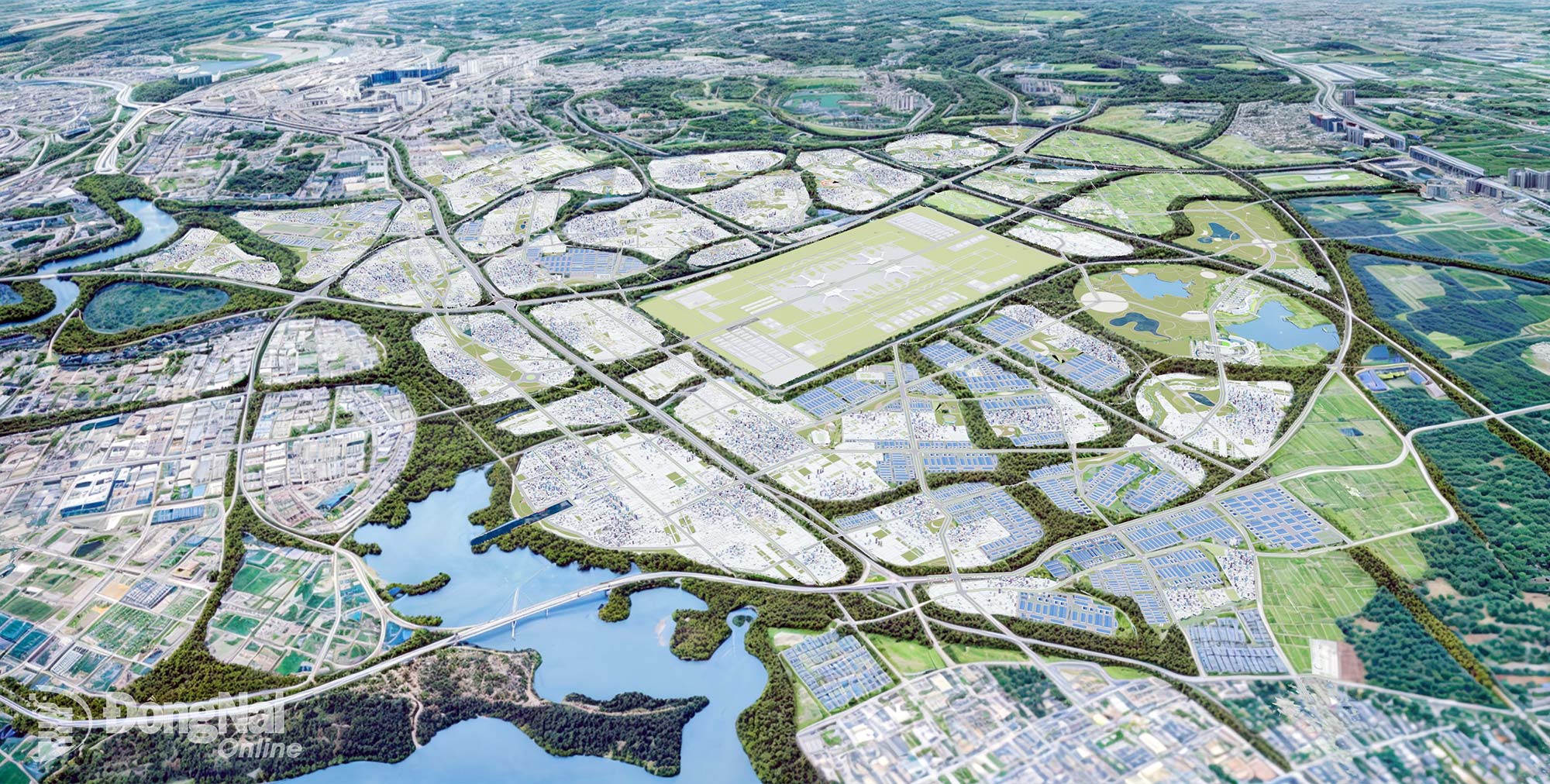 |
| A rendering of the winning proposal in the competition for the master plan of Long Thanh Airport City and its surrounding areas. |
Dong Nai City, with Long Thanh Airport City at its core, is expected to develop into an international hub for aviation, logistics and services. The city is currently preparing plans for the airport city model and a free trade zone (FTZ) linked to Long Thanh Airport. Under its development strategy, Dong Nai has identified Long Thanh Airport City and the Dong Nai River corridor as the city’s two new growth-driving areas.
Huynh Ho Dai Nghia, a public policy expert at the University of Social Sciences and Humanities under Vietnam National University Ho Chi Minh City, said Long Thanh represented far more than an airport for Dong Nai. It could serve as the nucleus of an entirely new economic ecosystem. “The greatest value of Long Thanh Airport lies not only in passenger and cargo transportation, but also in the wider range of services that can develop around it, including logistics, trade, engineering industries, education and training, healthcare, hotels, conferences, data, finance and international services,” he said.
Meanwhile, Assoc. Prof. Dr. Tran Quang Phu said that with sound planning, coordinated development and appropriate mechanisms to manage land use and capture land value around railway stations, TOD-based urban development model could become an important tool for Dong Nai City. Such a model could help the city shift away from urban growth driven largely by spatial expansion and private vehicle use toward a more structured urban form, with stronger connectivity, more efficient land use and greater sustainability.
Dong Nai City aims to start construction on the project to extend the Ben Thanh–Suoi Tien metro line to the city’s administrative center and Long Thanh International Airport by the end of 2026.
By Pham Tung - Translated by Mai Nga, Thu Ha


Thông tin bạn đọc
Đóng Lưu thông tin