
Finding markets for their products is a key concern for cooperatives. Trade promotion activities, from trade fairs and distributor networking to sales on digital platforms, are creating more opportunities for cooperatives in Dong Nai to expand their markets.
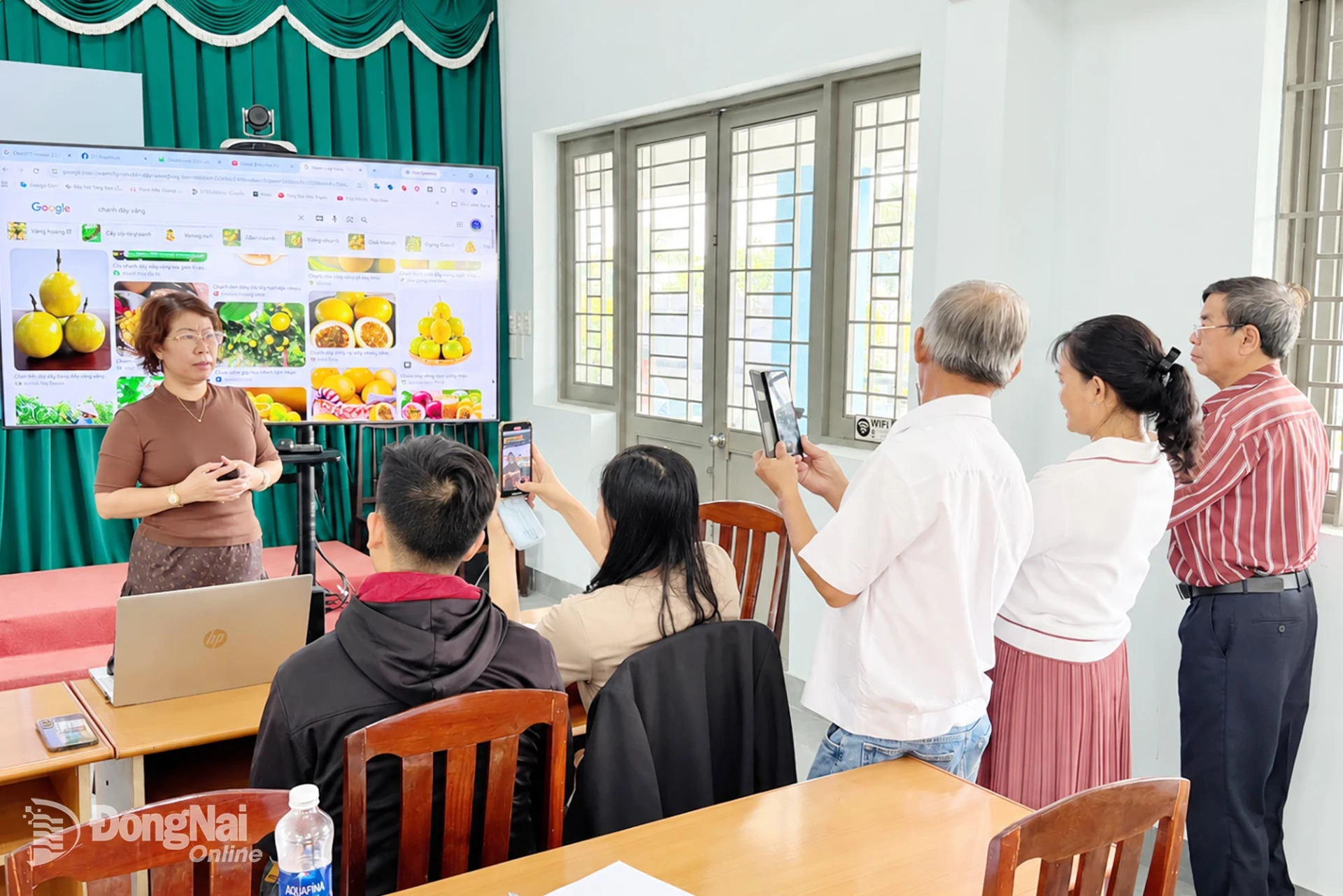 |
| Representatives of cooperatives participate in sales training in the digital environment organised by the Dong Nai Cooperative Alliance (DNCA) in coordination with the Southern Cooperative Training and Vocational School. Photo: Hong Quy |
However, to maintain a stable market presence, cooperatives need not only products that meet market demand but also stronger business capabilities, reliable supply capacity and long-term partnerships with their business partners.
Helping cooperatives reach buyers
For cooperatives, trade fairs and exhibitions provide opportunities to showcase products, reach consumers and seek distribution partners. Through these events, cooperatives can gauge consumer preferences, understand market requirements and expand their customer networks. However, the effectiveness of trade promotion is measured not only by the number of products displayed but also by the ability to turn interest into orders and sustain sales after the event.
Nguyen Thi Dao, a representative of Hang Gon Beekeeping–Trading–Service Agricultural Cooperative in Hang Gon Ward, said the cooperative is developing a diverse range of honey-based products. In recent years, it has actively participated in trade promotion programmes organised by departments, agencies and the DNCA to showcase its products and seek customers in other localities, while also expanding online sales. These efforts have helped the cooperative sell around 20 tonnes of products a year and develop about 20 processed products, with e-commerce platforms and social media accounting for an important share of its sales.
To support its members, the DNCA has in recent years worked with relevant agencies to organise trade promotion programmes, enabling cooperatives to participate in trade fairs and exhibitions, engage in business-matching activities and promote their products both within and outside the city. It has also organised training courses on technology, management and, in particular, digital sales to improve the skills of cooperative staff.
According to Vy Vu Hong Thao, Vice Chairwoman of the CCA, through these activities, cooperatives have gained more opportunities to reach consumers, businesses, distributors and buyers, particularly for agricultural products and products under the One Commune One Product (OCOP) programme. Some cooperatives have also participated in price-stabilisation programmes and mobile sales campaigns, helping to expand their sales channels in a long-term and sustainable manner. However, to get their products into distribution systems, cooperatives must meet specific requirements regarding quality, pricing, packaging, traceability and supply capacity.
Similarly, Nguyen Van Linh, Deputy Director of the Dong Nai City Investment, Trade and Tourism Promotion Centre, said trade promotion activities should combine product promotion with efforts to connect products with buyers. In addition to helping cooperatives participate in trade fairs and exhibitions, greater efforts should be made to connect them with distribution networks, supermarkets and major buyers so that they can gain direct insight into market demand.
Accordingly, cooperatives need to prepare complete information on their products, prices, supply capacity, packaging specifications and delivery arrangements. Packaging, product codes, barcodes and QR codes for traceability and quality documentation should be completed in line with the requirements of each distribution channel. Once products meet distributors’ requirements, opportunities created through business-matching programmes can be turned into actual orders and sales.
Strengthening capacity to retain markets
Market opportunities can only deliver lasting results when cooperatives have sufficient capacity to organise production, manage operations and ensure supply. As Dong Nai continues to develop its urban, industrial and logistics sectors, local cooperatives, particularly those operating in trade, need to upgrade their capabilities to meet the growing demand for goods distribution, transport, delivery, warehousing and services that support production and consumer needs.
Huynh Lam Phuong, Principal of the Southern Cooperative Training and Vocational School, said cooperatives could participate more deeply in emerging supply chains but need to address limitations in scale, management and linkages with businesses and distributors. Instead of operating independently, cooperatives need to develop clear business plans, identify target customer groups, calculate costs and organise supply in line with partners’ requirements.
According to Phuong, digital transformation should be viewed in terms of business efficiency. Technology should help cooperatives manage orders, revenue, costs and customers, thereby improving operational management and eliminating unnecessary intermediaries. Training should therefore be tailored to the practical needs of individual cooperatives. At the same time, cooperatives with solid operational foundations should be selected for more intensive support in management, financing, technology, branding and market access.
Alongside expanding trade promotion and business-matching programmes for businesses and cooperatives, greater attention should be paid to what happens after connections are made. Cooperatives need to proactively maintain contact with buyers, respond to feedback and ensure reliable supply. Meanwhile, trade promotion agencies should continue helping them connect with suitable partners and meet transaction requirements. The effectiveness of such programmes should be measured by their ability to generate orders, sustain contracts and expand markets, rather than simply by the number of trade-fair participants or products showcased.
In the long term, trade promotion will only be truly effective when products reach the right customers and cooperatives have sufficient capacity to meet long-term demand. Combining market support with improvements in product quality, management training and stronger linkages will help cooperatives in Dong Nai become more proactive in their business operations and gradually secure stable outlets for their members.
By V. The – Translated by M.Nguyet, Minho




Thông tin bạn đọc
Đóng Lưu thông tin