
In 2026, Vietnam’s One Commune, One Product (OCOP) program introduced more flagship agricultural products from localities nationwide. Many of these specialties have compelling OCOP stories and strong market potential, helping drive local economic development.
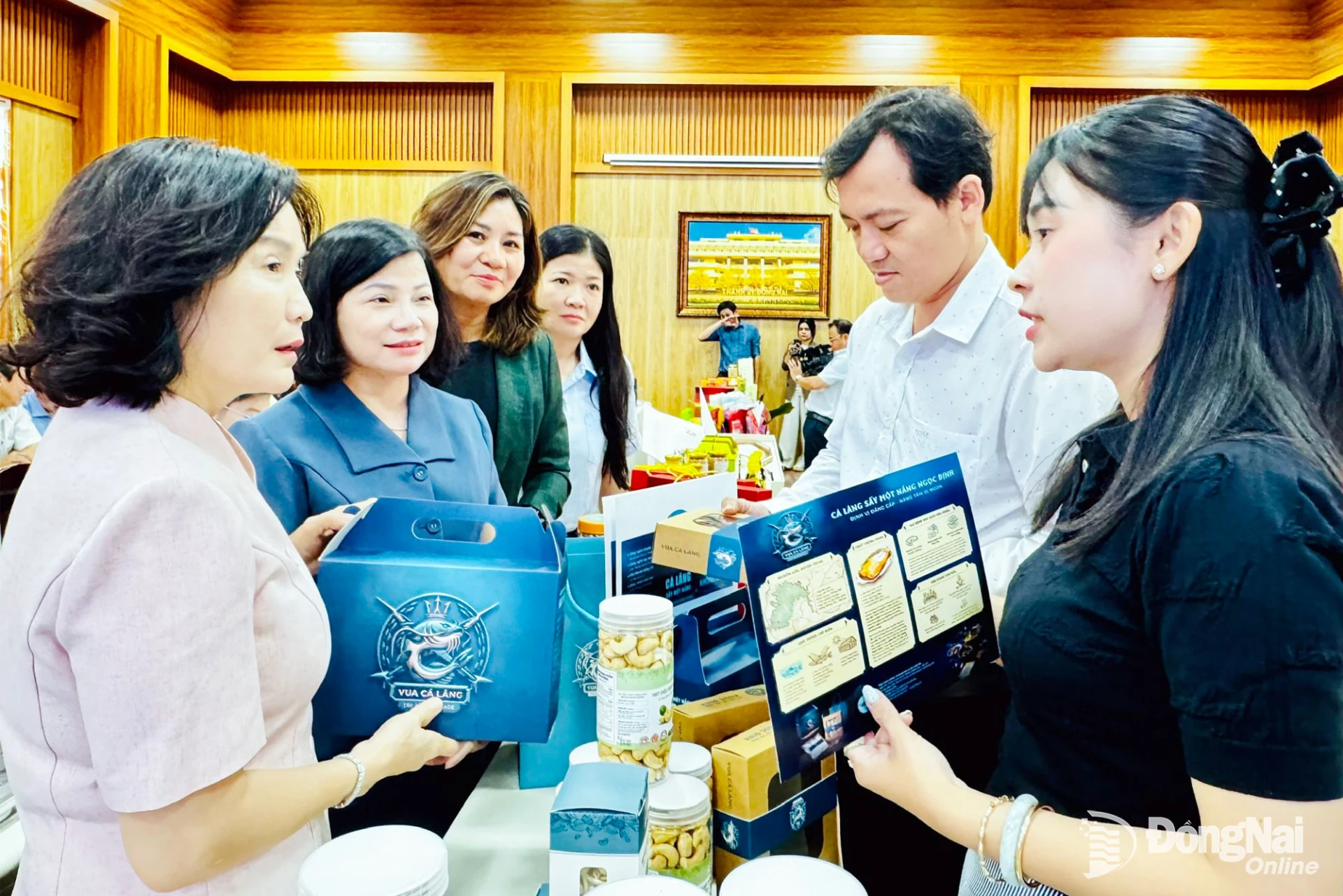 |
| Nguyen Thi Cat Tien, Vice Chairwoman of the Dong Nai City People’s Committee (far left), is briefed on products from the Dong Nai–Da Lat Agricultural Tourism Cooperative in Dinh Quan Commune. |
However, the OCOP program still faces several challenges, particularly in helping products achieve higher star ratings. Producers, local authorities and city-level agencies need to work together to improve product quality and meet the requirements for higher ratings. The aim is not only to promote local specialties but also to strengthen Dong Nai’s agricultural brands and expand their reach in domestic and international markets.
More local specialties showcased
In the first round of OCOP assessments in 2026, 21 entities across the city registered a total of 43 products for evaluation. The products showcased included many signature local specialties reflecting the strengths of their respective localities.
A representative of the Dong Nai–Da Lat Agricultural Tourism Cooperative in Dinh Quan Commune said: “Hemibagrus catfish, particularly the red-tailed variety, is a specialty of Tri An Lake. Through the OCOP program, we aim to introduce our semi-dried catfish to consumers and share the story behind this local product. We have developed a partnership model to source fish from local farmers operating on Tri An Lake. This helps create livelihoods for residents, strengthen community ties and showcase the cultural identity of the lake region.” The cooperative’s main goal is to work toward net-zero emissions by using green energy in its farming and processing operations. The fish are raised under semi-natural conditions, with farming and processing organized around a circular model. The cooperative has also invested in packaging and brand development, aiming to bring Dong Nai’s catfish products to markets across Vietnam and overseas.
Vinh Luong BIOGREEN One Member Limited Liability Company in Chon Thanh Ward introduced five products: turmeric starch, premium probiotic turmeric extract, probiotic turmeric nutrition powder, green banana powder and ginger powder. Doan Thi Minh Tram, the company’s director, said her turmeric-processing project had recently won first prize in the 2026 Dong Nai Women’s Innovative Startup Competition on Digital and Green Transformation. By applying modern technology and advanced processing methods, the company has developed a range of products with potential health benefits and higher economic value.
Le Thi Xuan Trang, Deputy Head of the Economic Division of Xuan Phu Commune, said the locality had submitted several mango-based products to the 2026 OCOP program, including concentrated mango syrup made from juice extracted during the production of dried mangoes. The new product makes fuller use of the fruit and supports a circular agricultural model. Xuan Phu also has other promising processed products that will participate in the OCOP program in the period ahead.
Other products certified under the OCOP program in 2026 include ginger-flavored soft-dried bananas from Doc Mo Farm Cooperative in Gia Kiem Commune, which links organic farming with ecotourism. Song Be Honey Co., Ltd in Dong Xoai Ward is also seeking to build a local brand for its Song Be royal jelly and Song Be bee pollen products.
Challenges in upgrading OCOP products
At the city’s conference to assess and classify OCOP products in the first round of 2026, 30 products received OCOP certification. All products identified as having the potential to achieve four- or five-star OCOP ratings were among those reassessed. Of the 20 products assessed for the first time, most received only three-star OCOP ratings. Many had the potential to achieve four-star ratings but faced difficulties meeting requirements relating to trademarks and ISO and HACCP certifications. The 10 products reassessed retained their previously recognized star ratings, with none upgraded to a higher category. This indicates that efforts to identify, select and support products with the potential to achieve higher OCOP star ratings have yet to yield clear improvements.
Le Thi Anh Tuyet, Deputy Director of the Department of Agriculture and Environment, said the products certified in the first round of 2026 met quality standards, with producers paying greater attention to packaging and design. OCOP producers were also focusing more on product traceability and e-commerce. She said OCOP products still had considerable room for growth. Local authorities should provide stronger support to producers in developing safe, certified raw-material supply chains and linking them with value-added processing. They should also help businesses standardize production, expand distribution channels and build stronger brands to increase added value and improve competitiveness.
Nguyen Thi Cat Tien, Vice Chairwoman of the City People’s Committee, affirmed that local OCOP products play an important role in promoting the development of household businesses and enterprises while contributing to the development of local agricultural product brands and raising the profile of Dong Nai’s agricultural products. The program also helps build consumer trust in product quality. Each OCOP producer must strive to continuously improve its products and strengthen its brand. OCOP producers and local authorities need to place greater emphasis on developing raw-material supply areas, ensuring product quality and building strong brands to maintain their competitiveness in the market.
Vice Chairwoman Nguyen Thi Cat Tien also called on OCOP producers to invest more in their product trademarks, noting that a brand is a long-term asset. She stressed the need to digitize the introduction and promotion of OCOP products.
By B. Nguyen – Translated by M.Nguyet, Minho




Thông tin bạn đọc
Đóng Lưu thông tin