
Dong Nai is emerging as a leading logistics hub and international trade gateway in Southern Vietnam.
With all five modes of transport, comprising road, inland waterway, air, rail and maritime, alongside an established industrial base and ample room for development, Dong Nai City is well positioned to gradually build a modern logistics-oriented urban center, enhance its competitiveness and strengthen its role as a major regional hub for cargo transshipment and coordination in the Southern Key Economic Region.
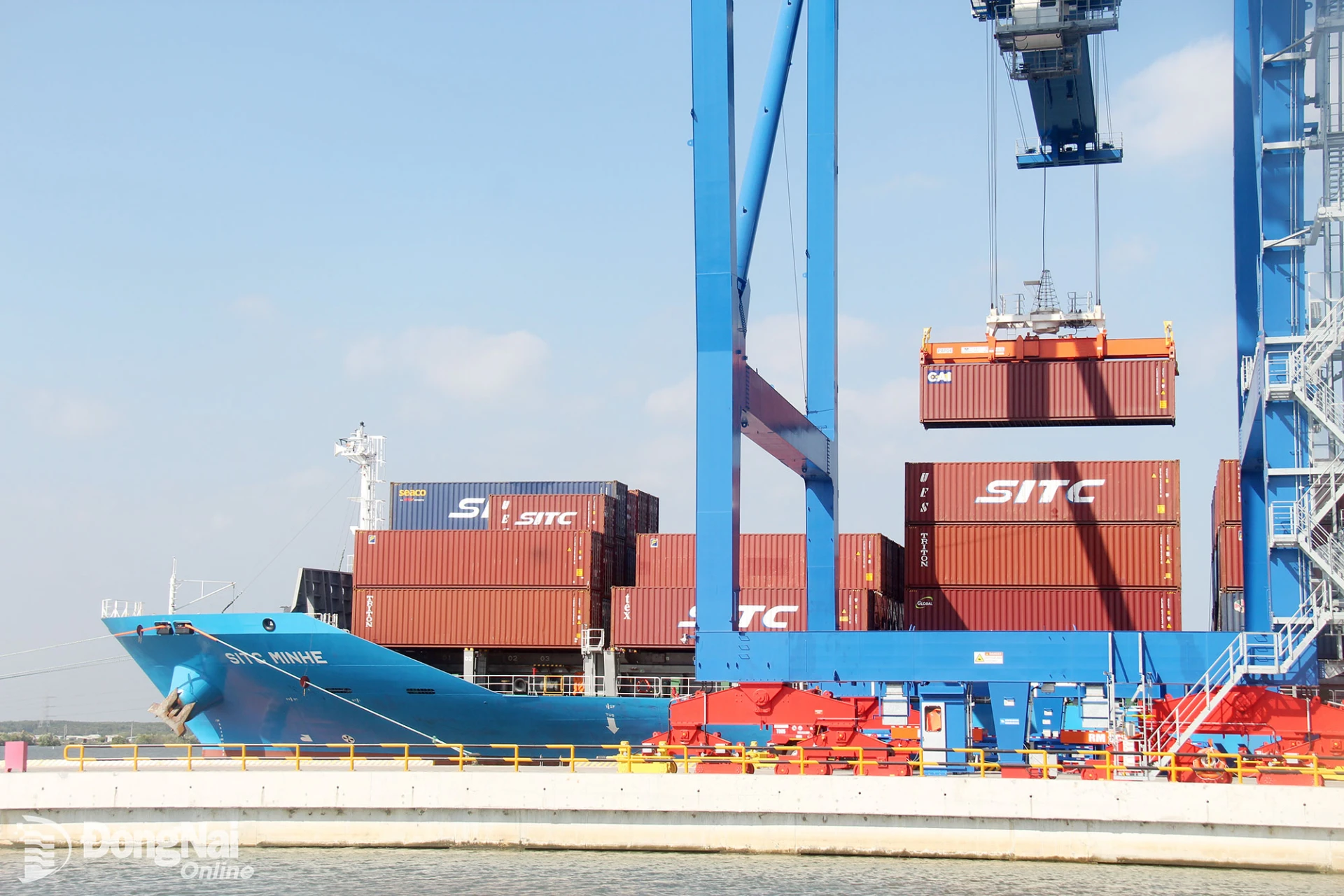 |
| Cargo handling operations at Phuoc An Port in Phuoc An Commune. Photo: Hai Quan |
Connecting regional and global supply chains
On July 21, 2026, the Politburo issued Resolution No. 16-NQ/TW on building and developing Dong Nai City through 2035, with a vision to 2065 (hereinafter referred to as Resolution No. 16). One of the six guiding principles outlined in the resolution is to develop a new growth model driven primarily by science and technology, innovation and digital transformation. The city is expected to become a multifunctional growth pole leading in aviation and aerospace industries, high-tech manufacturing, logistics, cross-border trade, high-tech agriculture and innovation, while leveraging its strategic position as an airport city with global connectivity and aspiring to match major airport cities in the region and internationally.
Dong Nai will promote digital technology infrastructure and support the integration of smart logistics with e-commerce, creating new momentum for exporting the city’s key industrial and agricultural products to global markets through cross-border e-commerce. The city’s border-gate system with the Kingdom of Cambodia, including Hoa Lu International Border Gate, will also help facilitate the development of cross-border trade corridors.
Under Resolution No. 16, the city must also prioritize investment in key transport routes that seamlessly connect logistics chains, as well as modern infrastructure linking Can Gio International Transshipment Port, Cai Mep Ha Port and Long Thanh International Airport. The aim is to establish major logistics hubs connecting production, distribution, imports and exports, and regional and international supply chains.
Nguyen Duy Hung, Standing Vice Chairman of the Dong Nai Logistics Association, said the province should capitalize on the advantages of the Dong Nai River system to develop logistics centers, ports and inland container depots (ICDs), including Phuoc An Port, the largest seaport in Dong Nai. He also called for closer cooperation in developing the port network and accelerating reforms of administrative procedures in logistics, import-export operations and related fields. These efforts aim to build a professional, modern and sustainable local logistics community.
Driving new growth momentum
Logistics has been identified as one of Dong Nai’s key pillars of infrastructure. Building an integrated logistics ecosystem is an important part of Dong Nai’s roadmap to achieve a higher level of development in the years ahead. The city also aims to attract greater participation from logistics companies, infrastructure investors and support service providers in developing local logistics chains.
According to the Department of Industry and Trade, 52 projects related to logistics services have been or are being implemented across the city. Of these, investment is currently underway in 14 logistics-related projects, including nine within industrial parks and five outside them. The city’s logistics system has also expanded significantly in recent years, with 439 transport companies and nearly 40,000 freight vehicles, including more than 4,300 container tractor units directly serving import and export activities.
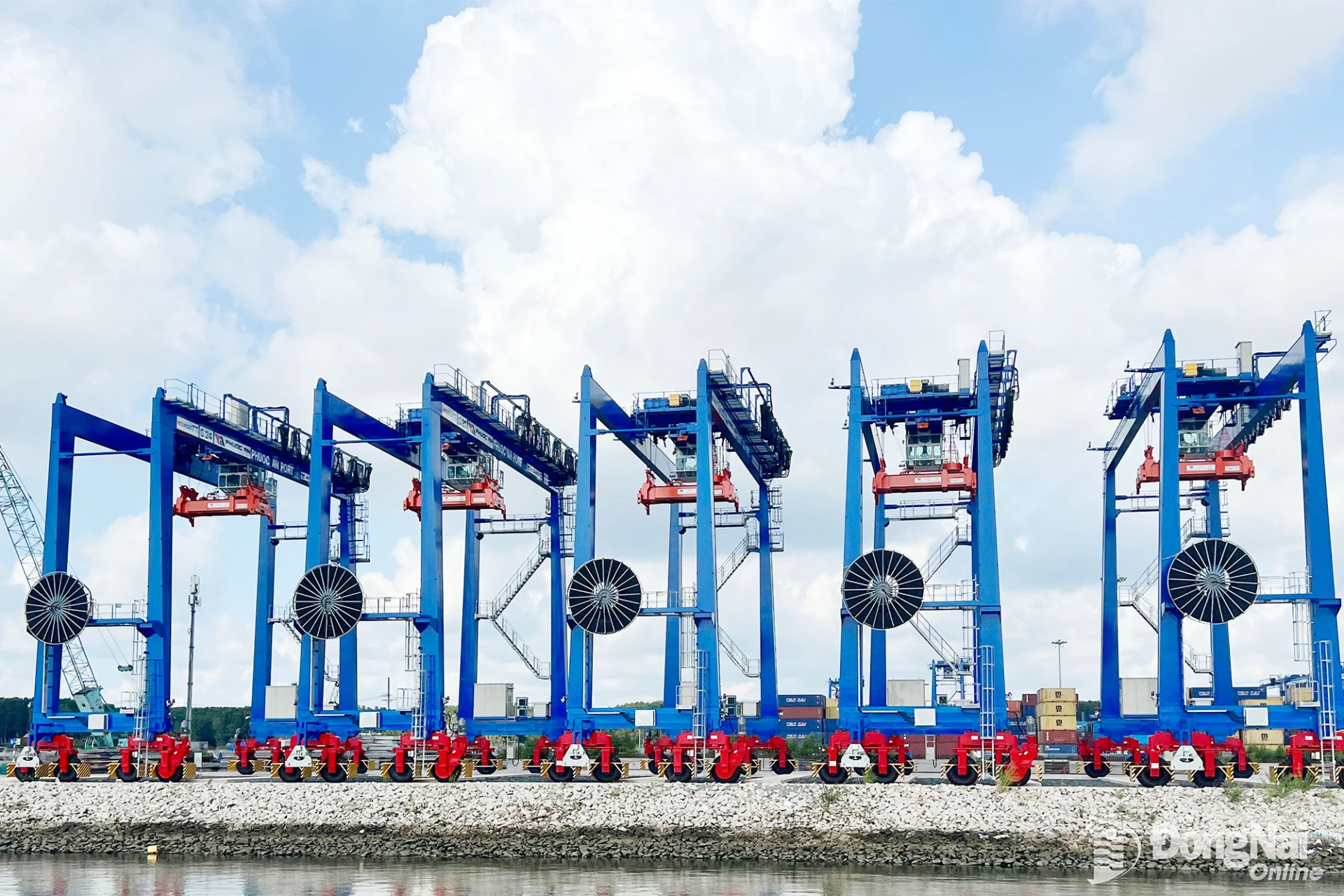 |
| Service operations at Phuoc An Port in Phuoc An Commune. |
Dang Thi Bich Loan, Director of Mekong Logistics Co., Ltd. in Tran Bien Ward, said Dong Nai has numerous advantages for developing logistics, particularly now that it has become Vietnam’s seventh centrally-run city. With the city’s strong potential for logistics development, especially once Long Thanh International Airport begins operations, local logistics businesses will have more opportunities to participate more deeply in the economy’s supply chains. In addition, local mechanisms and policies to support logistics development will encourage businesses to strengthen management capacity and improve competitiveness amid deeper international integration.
The city has significant advantages in strengthening connectivity and developing logistics infrastructure. Key projects, including Long Thanh International Airport, the expressway network, ring roads linking different regions and the logistics corridor connecting the Cai Mep–Thi Vai port complex, are gradually forming a comprehensive logistics infrastructure network for the region.
In mid-September 2026, during a working session with the Department of Industry and Trade on task implementation, existing bottlenecks and limitations, and proposed solutions and plans to meet the city’s future development needs, Vo Tan Duc, Deputy Secretary of the City Party Committee, emphasized that the department needed to develop a concrete action plan focusing on five key groups of tasks. Among other priorities, the department was tasked with compiling a list of industrial, logistics, trade and energy projects capable of driving growth during 2026–2030 to proactively attract investment. It was also asked to formulate plans for developing logistics in conjunction with Long Thanh International Airport and Phuoc An Port. In particular, one of the four major improvements expected from the industry and trade sector is for trade and logistics to become a new growth driver by fully harnessing the potential and advantages of Long Thanh International Airport and Phuoc An Port.
By Hai Quan – Translated by Mai Nga, Minho

Thông tin bạn đọc
Đóng Lưu thông tin