
On October 16, Vo Tan Duc, Deputy Secretary of the Dong Nai City Party Committee (CPC), met with officials from the Party Committee and leadership of the Dong Nai City Industrial Parks and Economic Zones Authority (DNIEZA) and relevant agencies to review progress in implementing assigned tasks, identify key bottlenecks and discuss measures to accelerate the development of industrial parks, economic zones and high-tech parks across the city.
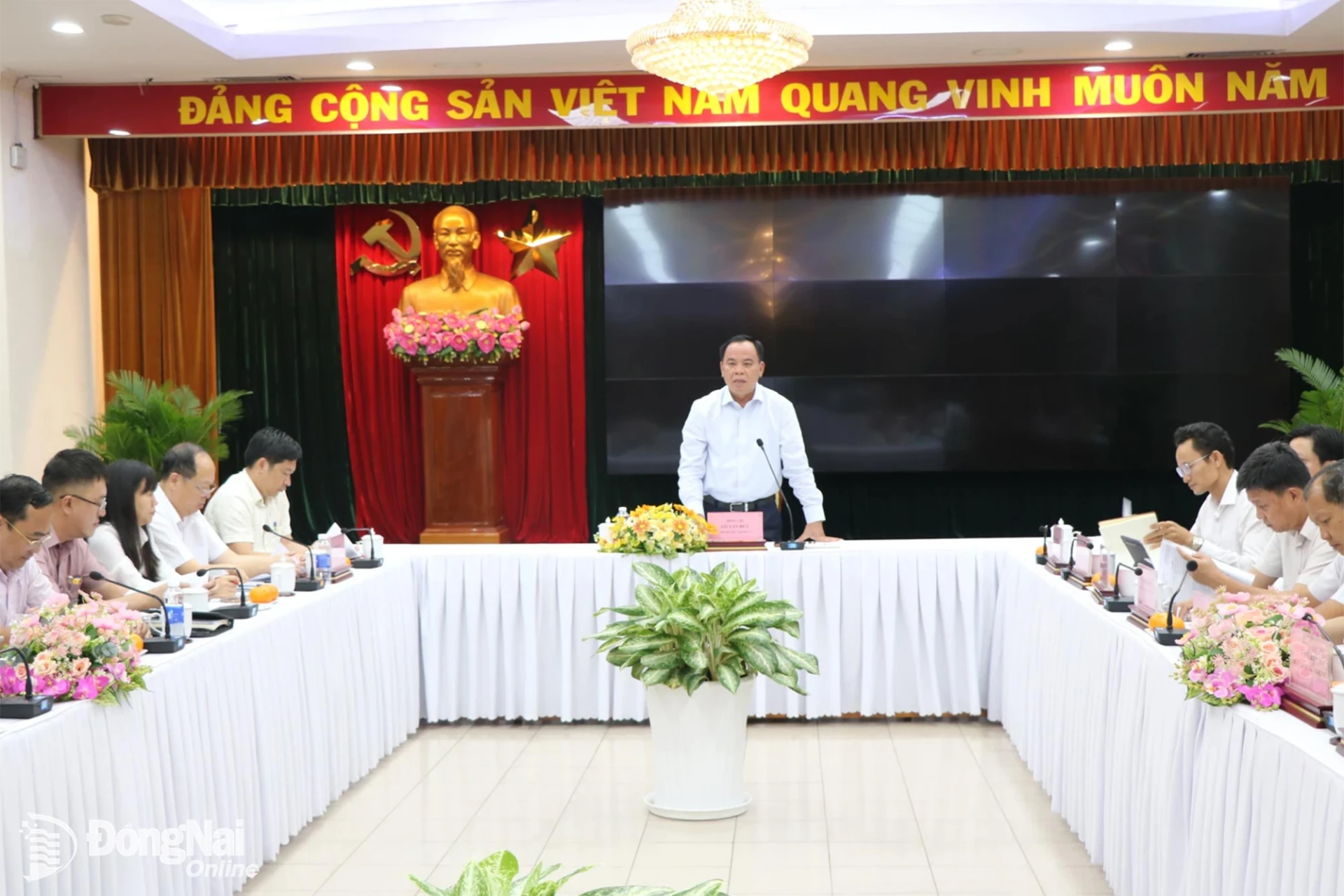 |
| Vo Tan Duc, Deputy Secretary of the CPC, speaks at the meeting. Photo: Vuong The |
According to a report presented at the meeting, newly registered and adjusted FDI capital exceeded US$1.7 billion in the first 9 months of 2026, reaching 118% of the annual target. Domestic investment topped VND8.4 trillion, equivalent to 168% of the target, while disbursed FDI capital exceeded US$1.47 billion, or 98.5% of the annual goal.
Dong Nai has 89 industrial parks (IPs) covering nearly 43,400 hectares under the city’s master plan. Of these, 44 IPs are operational, while the remaining 45 are planned for the 2021–2030 period. To date, the city’s IPs, economic zones and high-tech parks have attracted 2,813 projects from 45 countries and territories, including 1,969 FDI projects with total registered capital exceeding US$38.4 billion. These zones employ more than 812,000 workers.
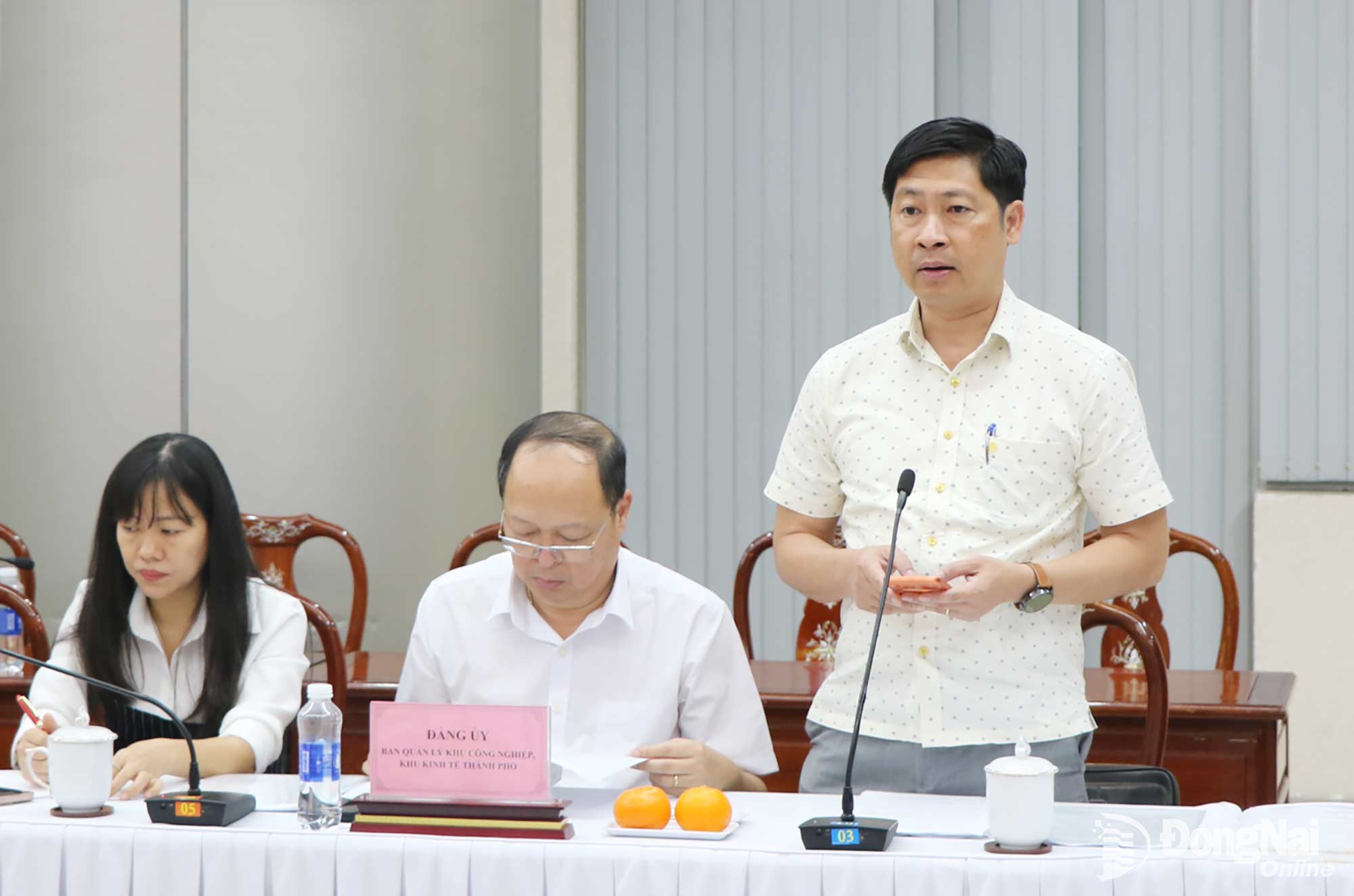 |
| Pham Viet Phuong, acting Deputy Head of the DNIEZA, presents a report on the DNIEZA’s performance. Photo: Vuong The |
Despite these gains, the board pointed to several bottlenecks, including inconsistencies in the legal framework, cumbersome planning and investment procedures, a shortage of cleared land, and constraints on technical infrastructure and energy supplies for large-scale projects. Linkages between FDI enterprises and domestic businesses also remain weak. Meanwhile, the provision of worker housing and social infrastructure, as well as the restructuring of industrial land use, requires further attention.
The board will focus on resolving policy and procedural bottlenecks, identifying land that is ready for handover to investors, and completing its database and investment promotion portal. It will also prioritise high-tech projects in semiconductors, data centres, automation, logistics and green manufacturing, while strengthening supply-chain linkages and the capacity of domestic supporting-industry firms.
Representatives of relevant departments and agencies discussed measures to address these issues and improve coordination in industrial park development. They also underscored the need to further improve the investment and business environment to sustain strong economic growth in Dong Nai.
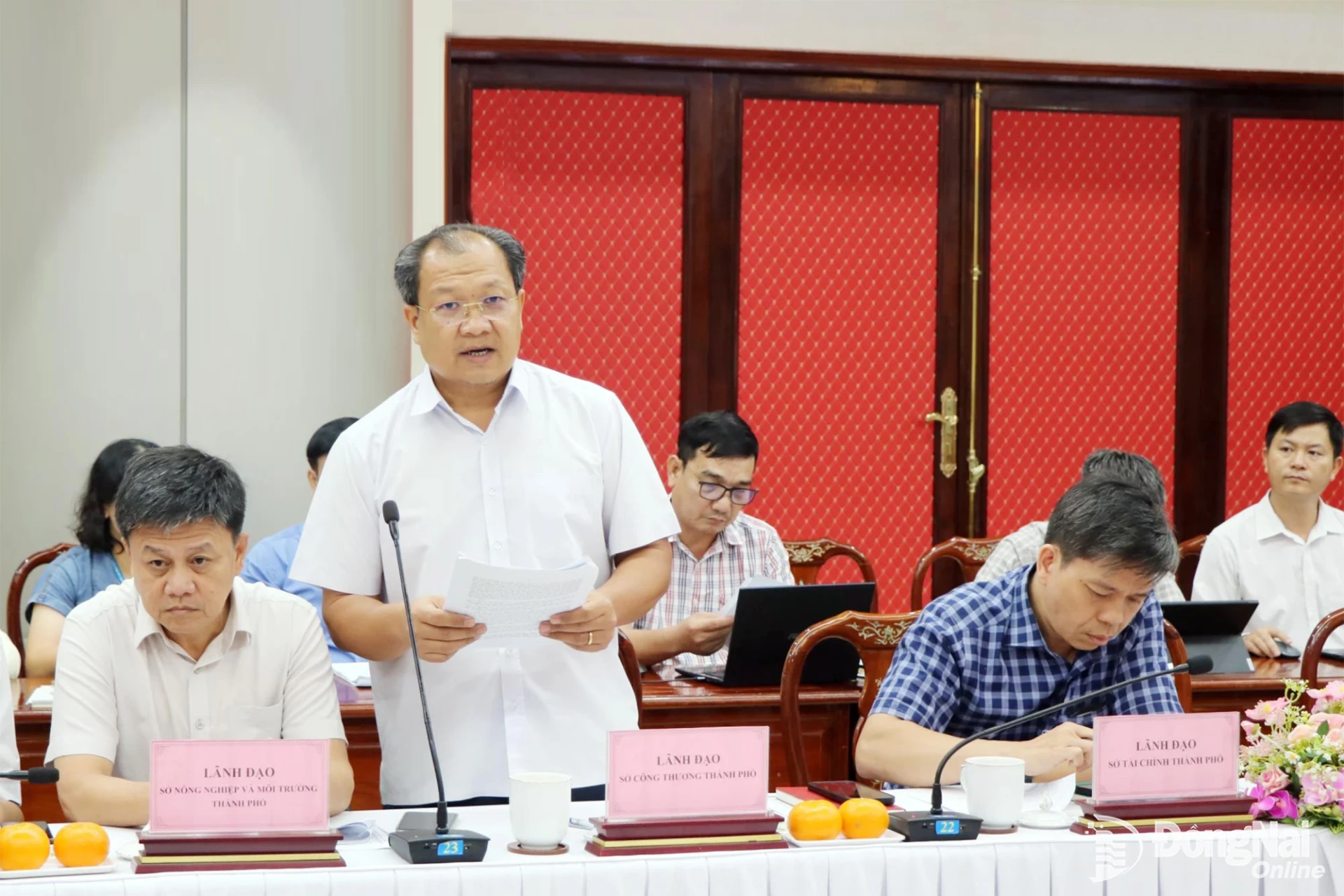 |
| Vu Sao Sang, Deputy Director of the Department of Industry and Trade, discusses electricity supply for industrial parks. Photo: Vuong The |
Speaking at the meeting, Vo Tan Duc urged the DNIEZA to give top priorities to attracting new investment, supporting production and speeding up investment disbursement for factory construction for the remainder of the year. To advance the city’s sustainable development goals and meet investors’ needs, relevant agencies must identify the root causes of existing problems and implement effective solutions. He stressed that investors must not be left in a situation where they are ready to commit capital but cannot find suitable land, infrastructure, electricity, water and essential services needed to make investment decisions.
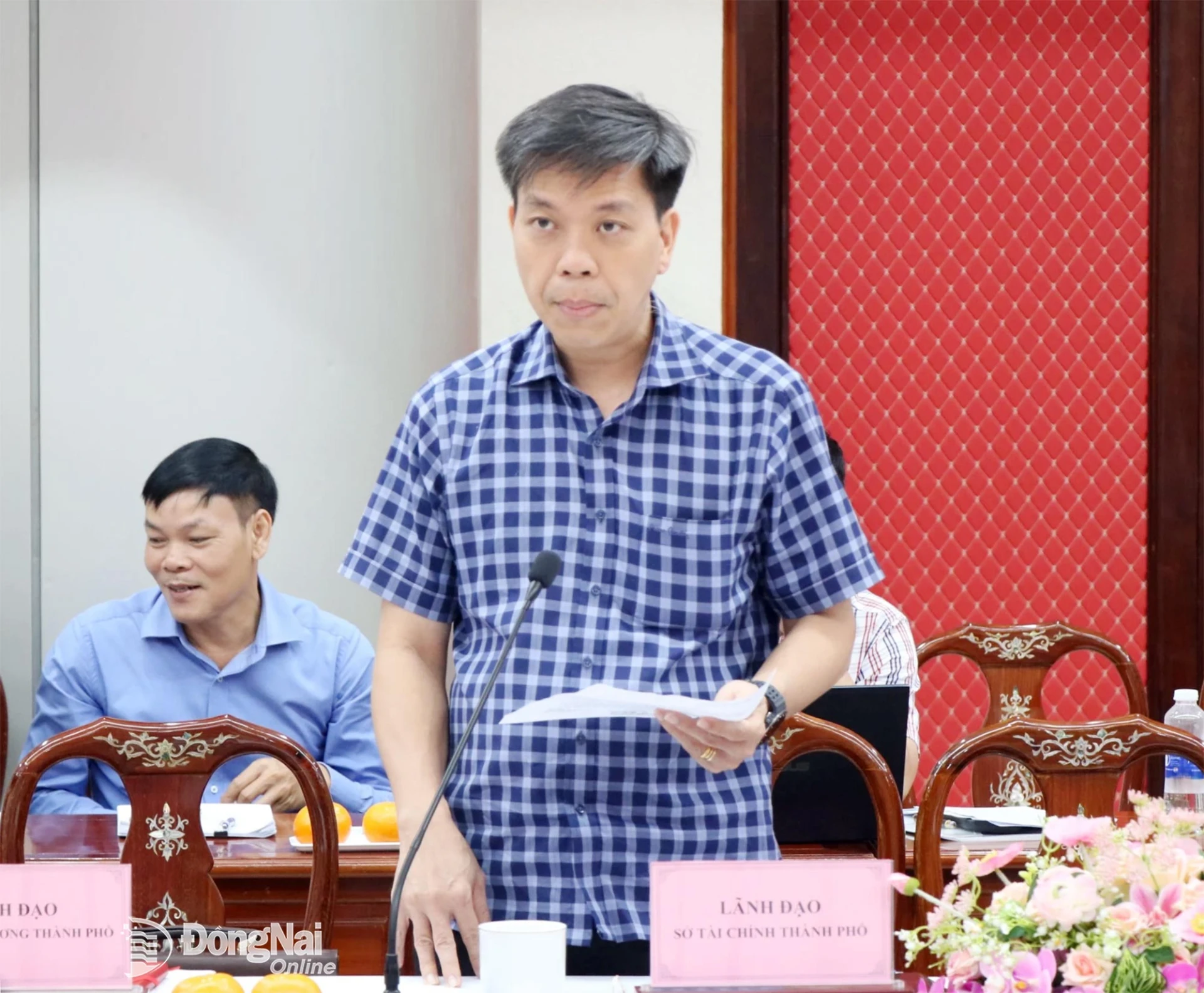 |
| Ngo Duc Thang, Deputy Director of the Department of Finance, speaks at the meeting. Photo: Vuong The |
Over the longer term, the DNIEZA and relevant agencies must work together to advise city leaders on restructuring industrial land use, attracting investment in higher-value-added industries, and developing green and eco-industrial parks. They should also propose tailored mechanisms and policies for investment in industrial parks and secondary projects, while shifting from an administrative approach to one that facilitates development. Another priority is to establish and effectively manage a database covering the city’s IPs and economic zones.
By V.The – Translated by M.Nguyet, Thu Ha



Thông tin bạn đọc
Đóng Lưu thông tin