
Dong Nai is rapidly emerging as one of Vietnam’s most dynamic urban growth hubs, supported by a rare concentration of strategic assets, including an international airport, seaport, international border gate, and an extensive industrial park network. Together, these advantages are opening up significant development space for the real estate market in the years ahead.
 |
| Leaders of the City People’s Committee and Bcons Group perform the groundbreaking ceremony for a real estate project in Tam Hiep ward in May 2026. |
Under its Housing Development Program for 2021–2030 and Housing Development Plan for 2026–2030, Dong Nai City has set the goal of building a transparent, stable, and sustainable real estate market capable of meeting residents’ genuine housing demand.
Large-scale projects accelerate implementation
Just over a month after Dong Nai officially became a city, Bcons Group held a groundbreaking ceremony for a high-rise mixed-use residential project in Tam Hiep ward with a total investment capital of nearly VND4.5 trillion and a scale of more than 2,800 apartments.
Nguyen Kiet, Standing Deputy General Director of Bcons Group, said Dong Nai’s strengths in transport connectivity, industrial development, logistics, and rapid urbanization had made the city a natural choice for the company’s investment in a modern residential complex integrated with commercial and service functions and synchronized infrastructure systems.
Construction is set to begin following the groundbreaking ceremony, with project completion targeted for 2028–2029. Throughout implementation, the developer will fully comply with regulations governing investment, construction, and environmental protection. Beyond the Tam Hiep project, the company is also exploring opportunities to expand into additional housing developments and other sectors across the city.
Another major project being accelerated is Aqua City in Long Hung ward. Duong Van Bac, General Director of Novaland Group, said the project has so far delivered more than 1,200 units to customers. During 2026–2027, the developer plans to hand over approximately 9,200 additional units.
Early completion and operation of the project are expected to generate roughly VND23 trillion in budget revenue during the 2025–2028 period, create jobs for thousands of workers, supplement the housing supply for the new city, and stimulate growth in the economy, services, and tourism.
According to statistics from the Department of Construction, Dong Nai currently has more than 370 commercial housing projects totaling around 395,000 housing units, along with 73 social housing projects projected to provide nearly 72,000 apartments.
Dong Nai’s real estate market has been showing increasingly positive momentum, particularly as a series of major infrastructure projects move toward completion, including Long Thanh International Airport, the Bien Hoa–Vung Tau Expressway, and Ho Chi Minh City’s Ring Road 3. Looking ahead, additional strategic projects, such as Ho Chi Minh City’s Ring Road 4, the Dau Giay–Tan Phu Expressway, and multiple railway corridors, are set to advance. The pattern is clear: wherever transport infrastructure expands, urban development and housing demand tend to follow.
Truong Thi Thanh Thao, Business Director of Tan Van Real Estate JSC, said the company is developing a project comprising more than 1,100 apartments aimed at genuine housing demand rather than land subdivision and plot sales. Under the schedule, the project is expected to top out in June 2026 and hand over units in the second quarter of 2027. Notably, around 300 apartments in the project have been earmarked by the city to meet housing demand among officials, civil servants, and public employees following administrative restructuring.
Toward a more transparent and sustainable market
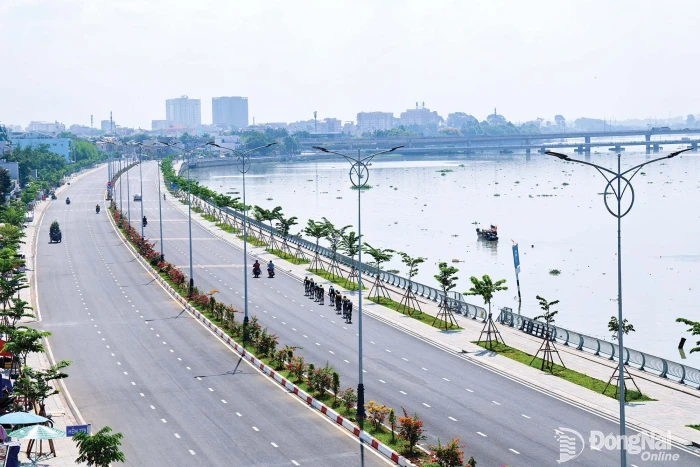
Dong Nai has revised its Housing Development Program for 2021–2030 and issued the Housing Development Plan for 2026–2030, focusing resources on key growth zones, including Long Thanh Airport, the airport urban area, the Dong Nai riverside corridor, industrial parks, and the free trade zone
 |
| Design of the high-rise mixed-use residential project in Tam Hiep ward scheduled for completion in 2028–2029. |
Do Thanh Phuong, Deputy Director of the Department of Construction (DoC), said the city is prioritizing development of modern, smart housing projects equipped with synchronized technical and social infrastructure. Particular attention is being paid to housing segments aligned with residents’ purchasing capacity, especially for middle- and low-income groups and workers in industrial parks.
At the same time, Dong Nai is promoting transit-oriented development (TOD) models linked to public transportation, aiming to build a green urban environment that can adapt to climate change.
To guide the real estate market toward healthier development, the DoC is focusing on measures such as publicizing planning information, legal status, implementation progress, and project selling prices on electronic portals to help residents access accurate information and reduce risks. The city is also tightening supervision of brokers and real estate exchanges while taking strict action against market manipulation, misleading advertising, and unjustified price escalation.
As part of efforts to foster sustainable market growth, Dong Nai plans to build a housing and real estate market database to monitor transaction flows more effectively and gradually establish a transparent and professional investment environment.
One notable addition to the 2026–2030 Housing Development Plan is the proposed establishment of the Dong Nai City Housing Fund to support social and rental housing development. Priority will be given to allocating public land near industrial parks, while authorities will tighten oversight of the mandatory 20% land quota within commercial developments reserved for social housing. Expanding housing supply for middle- and low-income groups is intended to create a more balanced market and ensure fairer access to housing opportunities.
Nguyen Kim Long, Standing Vice Chairman of the City People’s Committee, said the city will tighten management of real estate projects in the coming period, particularly regarding speculation and rampant land subdivision and plot sales. Priority will be given to projects that address genuine housing demand and encourage residents to settle and work in Dong Nai in the long term. According to Long, this approach will lay an important foundation for sustainable urban development, higher living standards, and Dong Nai’s rise as a major national growth pole.
By H.Loc – Translated by M.Nguyet, Minho


Thông tin bạn đọc
Đóng Lưu thông tin