
Dong Nai’s transition to a centrally governed city will serve as a new springboard and fresh impetus, positioning it as a national-level growth pole in the Southeastern region and the Southern key economic zone, thereby contributing to the implementation of the national urban development strategy.
 |
| A view of Binh Phuoc ward urban area in Dong Nai province. |
This also presents an opportunity for Dong Nai to accelerate the restructuring of its urban space, moving toward the development of a smart and modern city based on the application of information technology, and particularly digital technologies.
Toward a multi-centered urban model
Dong Nai is currently home to 22 urban areas. Under Decision No. 972/QD-UBND dated March 20, 2026 issued by the Provincial People’s Committee on the announcement of the list of tier-2 and tier-3 urban areas in accordance with Article 15 of Resolution No. 111/2025/UBTVQH15, the province’s transitional urban system includes three tier-2 urban zones, namely Bien Hoa, Long Khanh and Dong Xoai. In addition, there are 19 tier-3 urban areas across the province.
According to the revised Dong Nai provincial master plan for the 2021–2030 period, with a vision to 2050, urban development is designed with a strong focus on regional connectivity, following a model of sustainable, smart, green and climate-resilient urban areas, in line with the trend of modern and highly livable urban development and the province’s long-term development requirements.
Under Decision No. 615/QD-TTg dated April 4, 2026, the Prime Minister approved adjustments to the Southeast regional master plan for 2021–2030 period, with a vision to 2050.
The plan identifies the establishment of a centrally governed Dong Nai city as a key step to enhance the province’s role as a growth driver in the region. The plan also emphasizes closer and more balanced linkage with Ho Chi Minh City in shaping and developing the region’s economic and urban space.
“Furthermore, in line with emerging development trends, urban development in the province will be closely associated with the transit-oriented development (TOD) model, promoting compact and mixed-use development, and creating distinctive urban spaces around public transport stations,” said Truong Thi Huong Binh, member of the Provincial Party Standing Committee and Director of the Department of Finance.
Notably, according to the Provincial People’s Committee, becoming a centrally governed city will bring fundamental changes in planning approaches and urban spatial organization. This will provide Dong Nai with favorable conditions to enhance its urban architectural quality and gradually establish a synchronized, modern and distinctive landscape system.
Specifically, under the centrally governed city model, the urban planning system can be comprehensively reviewed and adjusted. Existing plans will need to be updated to meet new development requirements, particularly as major growth drivers are taking shape, including Long Thanh International Airport, international-scale logistics systems, inter-regional transport corridors and planned innovation hubs. Adopting an integrated, multi-sectoral planning approach will help better organize urban space, curb uncontrolled development and improve the overall quality of the urban living environment.
Accelerating urban spatial restructuring
Becoming a centrally governed city, with the goal of building a smart and modern urban system based on the application of information technology and especially digital transformation, is expected to shorten development timelines and enhance the effectiveness and efficiency of urban governance.
 |
| A view of Tran Bien ward, the central urban area of Dong Nai province. Photo: Pham Tung. |
This will accelerate the restructuring of urban space toward the model of a multi-centered city comprising Bien Hoa – Long Thanh – Nhon Trach – Long Khanh – Dong Xoai – and border areas, with organic linkages in infrastructure, human resources and ecological systems connecting to the broader urban network centered around Ho Chi Minh City.
Smaller urban areas in Dong Nai will also have greater opportunities for synchronized investment, thereby easing pressure on major urban centers.
Within Dong Nai’s multi-centered city model, the “triangle” of Bien Hoa – Long Thanh – Nhon Trach is identified as the most important growth engine area, serving as the core of the entire urban system in terms of economy, urban development, and logistics. Under this model, Bien Hoa will continue to function as the traditional administrative, financial and commercial center, while gradually transforming older industrial zones into service, innovation and high-quality urban areas. At the same time, riverside spaces along the Dong Nai River will be further developed into landscape corridors and public spaces, contributing to improved living conditions and a distinctive urban identity.
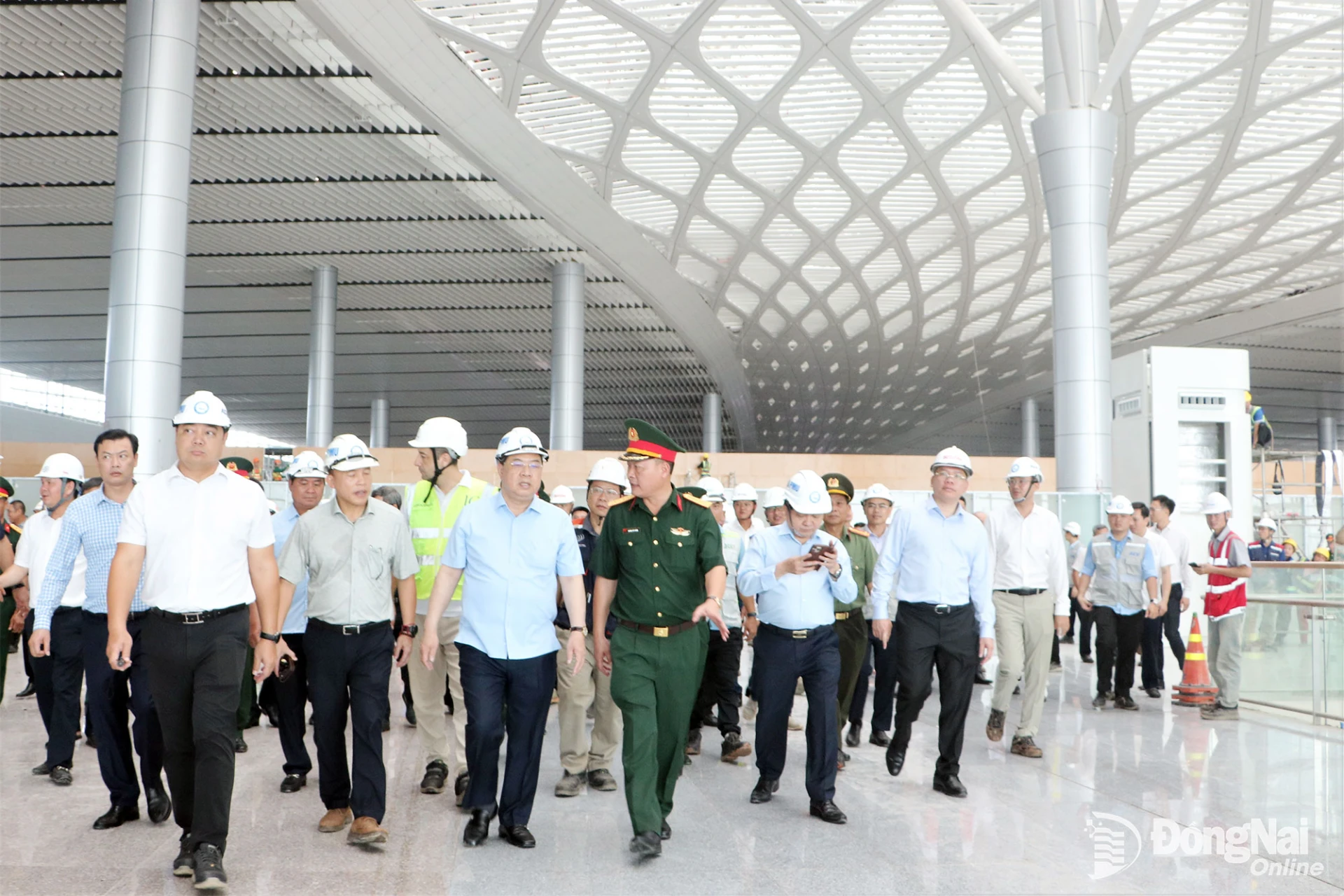
Meanwhile, Long Thanh is positioned as a new growth pole within the central urban region, closely linked to the development of Long Thanh International Airport and the airport city.
According to architect Khuong Van Muoi, former Vice President of the Vietnam Association of Architects, the Long Thanh airport city will take shape following the completion of the airport. As such, it is expected to attract well-structured, modern investment projects applying Industry 4.0 technologies and focusing on high-tech sectors.
For Nhon Trach urban area, with its location along strategic transport corridors, the area is set to develop into a large-scale riverside urban and industrial-logistics hub, playing a crucial role in connecting Dong Nai’s urban system with Ho Chi Minh City and the Southeastern region’s seaport network.
By P. Tung – Translated by M.Nguyet, Thu Ha


Thông tin bạn đọc
Đóng Lưu thông tin